WineAndTech’

Category: Saint-Tropez

  • Château Minuty in Gassin: inside the cellar of a Provence Cru Classé

    Château Minuty in Gassin: inside the cellar of a Provence Cru Classé

    ⏱ 6 min

    Some names, in the world of wine, need no introduction. Minuty is one of them.

    Perched on the hills of Gassin, between schist and clay, the estate has grown its vines in gobelet training since 1936, under the stewardship of the Matton-Farnet family. One of the 18 Crus Classés de Provence since 1955, no less.

    Cypress-lined driveway leading through the vines at Château Minuty in Gassin

    We went to understand what lies behind the unmistakable pale hue of their rosés. We left with a history lesson, an impressive cellar, and the discovery of a red we weren’t expecting.

    A terroir shaped by the mistral and the sea

    Gassin looks out over the Gulf of Saint-Tropez, and it shows in every bottle.

    The vines, trained low in gobelet fashion, sink their roots into schist and clay soils, sculpted by constant sea spray. The mistral plays the same role here as it does in Ramatuelle: it cools, disciplines, and shapes rosés with a paleness that has become the estate’s signature. It’s no accident that Minuty has established itself, year after year, as a reference point for Provence rosé.

    A family story since 1936

    Founded in the 19th century and rebuilt under Napoleon III, Château Minuty has belonged to the Matton-Farnet family since 1936. One of the 18 Crus Classés de Provence since 1955, which says a great deal about the rigour behind every bottle.

    Entrance façade of Château Minuty in Gassin

    What strikes you on arrival is the contrast between the quiet elegance of the façade and the scale of the work happening behind it. The tasting counter, tucked beneath a cascade of rosé bottles hanging from the ceiling, sums up the spirit of the place perfectly: serious in its craft, light in its atmosphere.

    Inside the cellar

    Stepping into Minuty’s cellar, you understand that the estate’s reputation isn’t built on a beautiful terroir alone.

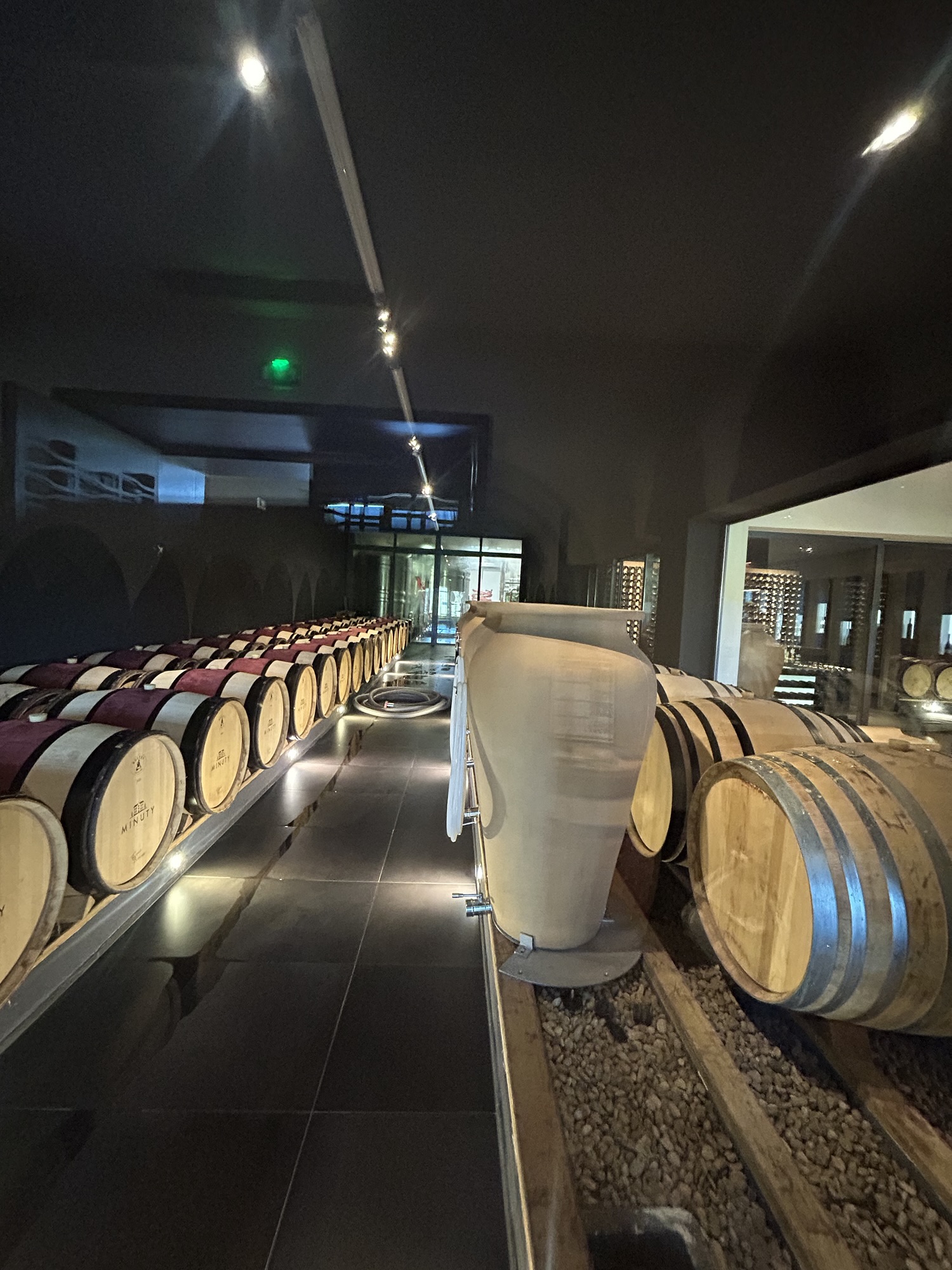
    Rows of oak barrels and a terracotta amphora in the Château Minuty cellar

    Entire rows of barrels, some engraved with the estate’s name, stretch out as far as the eye can see. A terracotta jar, discreet among the oak casks, is a reminder that Minuty also explores older ageing methods. Nothing is left to chance: every choice of vessel shapes the wine’s final character.

    Barrel cellar at Château Minuty

    The cuvées that make the estate’s reputation

    The 281 is Minuty at its most accomplished. A single parcel of old Grenache vines, hand-harvested and vinified without compromise. The estate’s top of the range, plain and simple.

    Bottle of the 281 cuvée from Château Minuty with a glass of rosé

    The Rouge et Or, on the other hand, surprises. You come looking for rosé and leave won over by a spicy, generous red, far from the image the estate is usually known for.

    Bottle of the Rouge et Or cuvée from Château Minuty with a glass of red wine

    And then there’s the “Limited Edition Lucia Vinti” display, a reminder that Minuty doesn’t just make good wine: the estate also cultivates the art of presentation, right down to its most exclusive editions.

    Behind the signature paleness of its rosés, Château Minuty hides a cellar that rivals the greatest estates, and a red that deserves your attention.
  • Behind the scenes at Domaine des Tournels

    Behind the scenes at Domaine des Tournels

    ⏱ 6 min

    We came for a tasting. We left with a lot more than that.

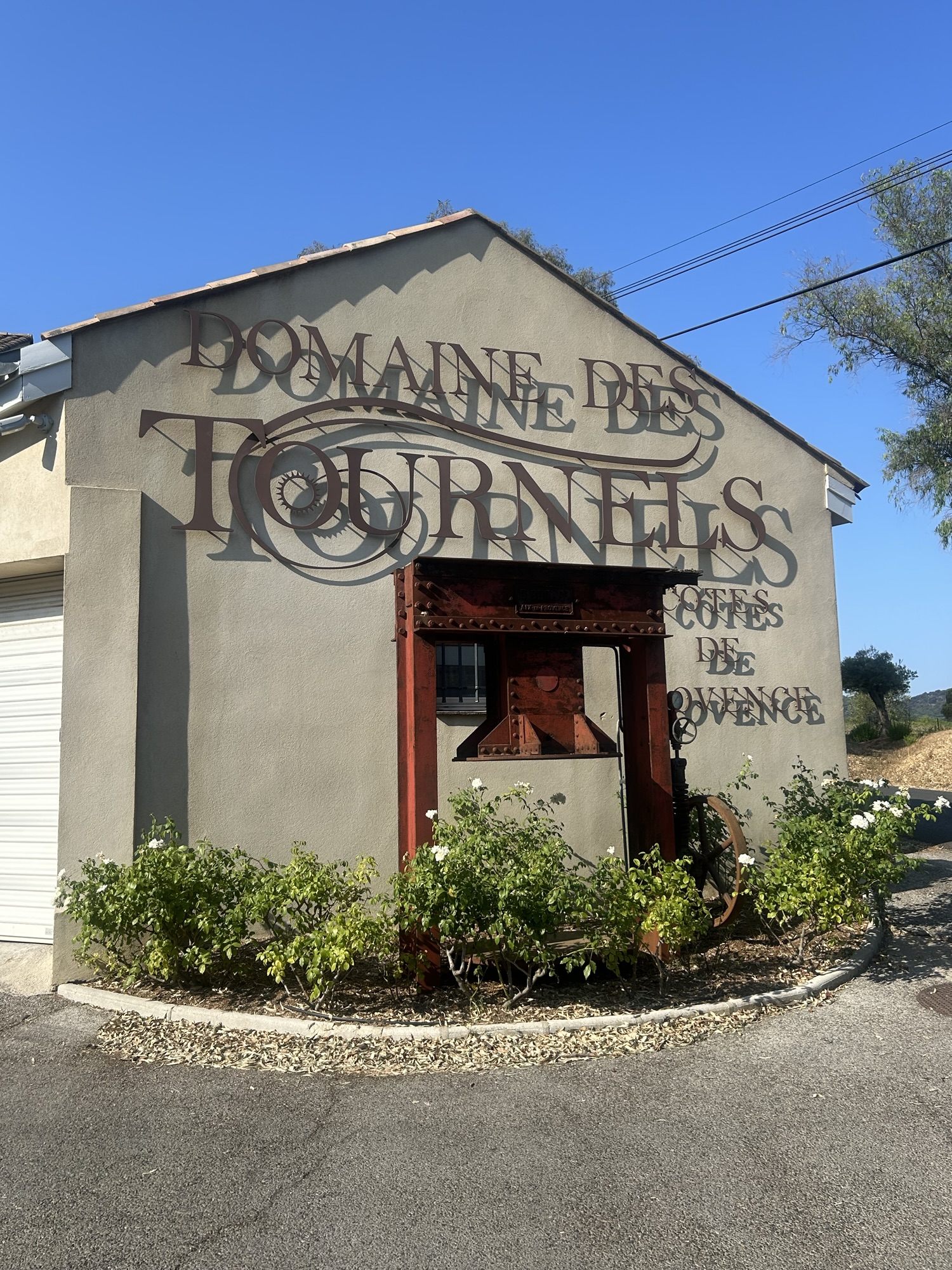
    Façade of Domaine des Tournels in Ramatuelle with an old wine press displayed outside the building

    Domaine des Tournels is, first and foremost, an address: perched on the hills of Ramatuelle, facing the bay of Pampelonne, between sea and hills. A vineyard named after a play of light, the « tournels » that dance across the Mediterranean on calm days.

    We went there to taste two cuvées. We left with a full tour, from the cellar to the bottling line, and a fair amount of respect for what actually goes into a bottle of rosé.

    A terroir shaped by the mistral

    The soil here tells a story of schist and clay, sculpted by centuries of sea spray and wind.

    The mistral is more than a local climate quirk. It cools the vines in the height of summer, keeps disease at bay, and imposes its own discipline on vines trained low and close together, built to bend rather than break.

    The proximity to the Gulf of Saint-Tropez, barely a few kilometres as the crow flies, explains much of the freshness you find later in the glass. Tibouren, a confidential and deeply Provençal grape, thrives here like nowhere else.

    Behind the scenes of production

    What strikes you on arrival is the contrast between the estate’s elegant façade and the near-industrial activity happening just behind it.

    Automated labelling line at Domaine des Tournels with a roll of labels ready to be applied

    Crates full of freshly filled bottles wait their turn. A machine runs non-stop, carefully placing each « Domaine des Tournels » label onto the still-damp glass. Nothing is left to chance: every step of the line contributes to the consistency expected of an estate this size.

    Crates of freshly bottled rosé wine at Domaine des Tournels, ready for labelling

    And yet, behind this well-oiled machine, a family signature remains. On the old wine press displayed in front of the building, « Aix-en-Provence » is engraved into the rusted metal, a quiet reminder of a craft passed down through generations, long before modern bottling lines arrived.

    A wall that speaks of rigour

    You can’t miss the wall of awards, right above the tasting bottles.

    Wall of awards at Domaine des Tournels with medals from the Concours Général Agricole and tasting bottles

    Bronze medal at the Concours Général Agricole in Paris 2022, silver in 2023, gold at the same competition in 2025. Several Vins de Provence distinctions, a High Environmental Value label. Tangible proof that it takes more than a beautiful terroir: it takes discipline to express it, year after year.

    Two cuvées, two faces of the estate

    The Rayne cuvée is Domaine des Tournels at its sunniest. White peach, citrus zest, a saline finish that gives away the estate’s closeness to the sea without any subtlety.

    The Marie-Nicole cuvée tells a different story. A tribute to family history, carried through an almost see-through robe and a face quietly embossed on the label. Two wines, two ways of approaching the same terroir.

    Bottle of the Marie-Nicole cuvée from Domaine des Tournels held in hand, showing the Côtes de Provence label

    Behind every label at Domaine des Tournels, there’s a bottling line that never stops running, and a family story that refuses to fade.