🇬🇧 Series · The Vinous Trinity · Article 6/15 · Spain · ⏱ 5 min
Rioja, Ribera del Duero, Rías Baixas. The three names international wine buyers know. The Spanish vineyard doesn’t stop there. Beyond these appellations, other regions are doing work that deserves attention: more confidential, with different priorities. Old terroirs, indigenous grape varieties, producers who have no interest in making wines that taste like anything else.
🗺️ Regions explored in this article
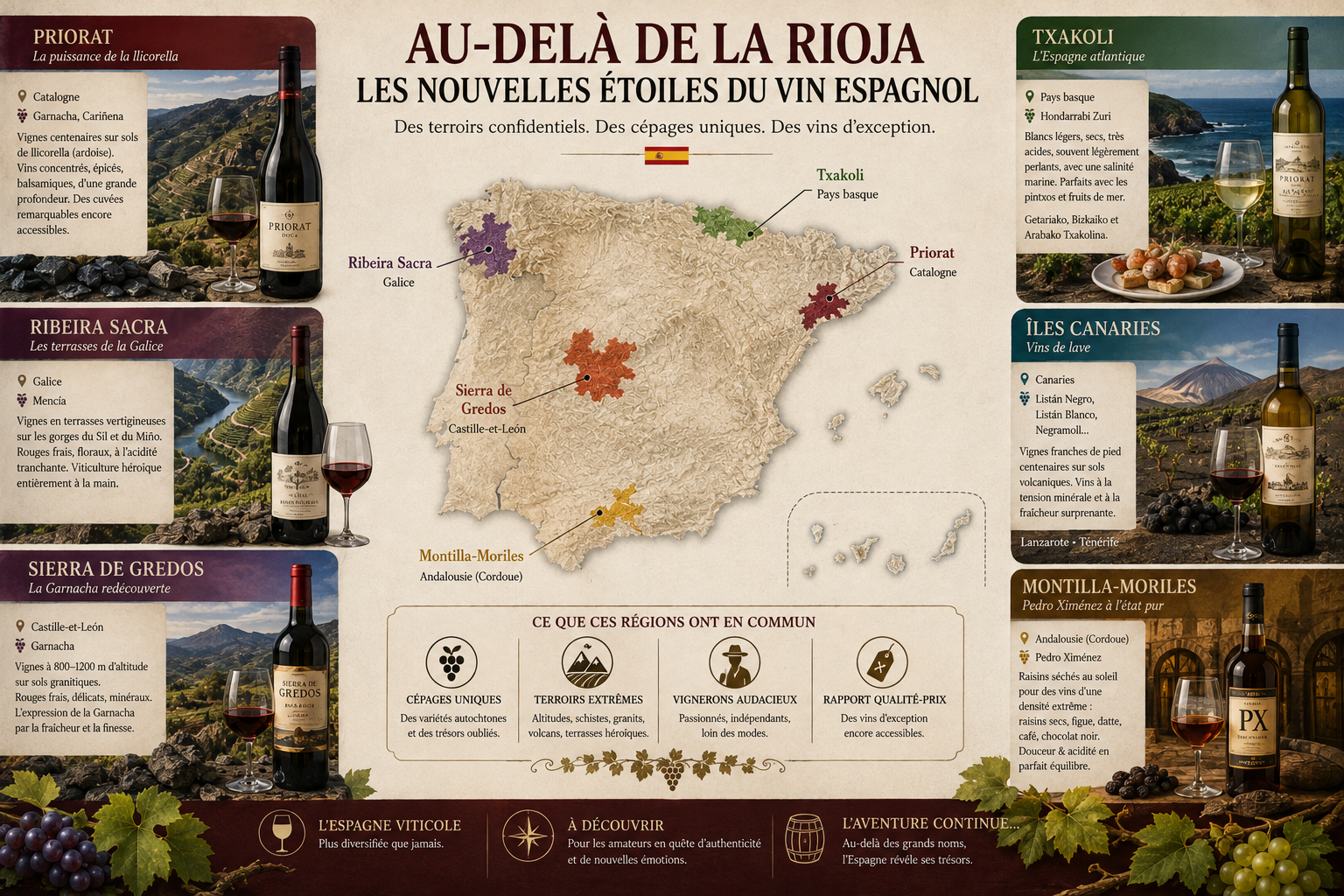
Priorat · Ribeira Sacra · Sierra de Gredos · Canary Islands · Txakoli · Montilla-Moriles
Priorat · the power of llicorella
Priorat (DOCa since 2000) built its reputation in the 1990s on something very specific: century-old Garnacha and Cariñena vines on llicorella, a crumbling black slate that gives wines their mineral grip and distinctive balsamic character. The result is concentrated, complex, long-lived. Among the top producers, prices have followed the reputation. But artisan winemakers here still craft remarkable bottles at prices that remain accessible.
Ribeira Sacra · Galicia’s terraced vineyards
In the gorges of the Sil and Miño in Galicia, Ribeira Sacra grows Mencía on vertiginous granite terraces that require entirely manual work. Fresh, floral, precise reds with a natural acidity that surprises anyone expecting southern Spanish weight. An appellation that was still little-known five years ago and is now on the radar of most serious sommeliers. Prices haven’t caught up yet.
Sierra de Gredos · Garnacha rediscovered
Between Madrid and Ávila, the Sierra de Gredos gave a handful of producers something they couldn’t find elsewhere: old Garnacha vines at 800 to 1,200 metres, on granite. Fresh, delicate, mineral reds. Producers like Comando G and Bernabeleva showed that Spanish Garnacha doesn’t have to mean extracted and heavy. The style they developed is now influencing producers across the country.
Canary Islands · wines from lava
The Canaries escaped phylloxera. The result is ungrafted vines, some over a century old, on black volcanic soils, with rare pre-phylloxera varieties: Listán Negro, Listán Blanco, Negramoll. Wines of mineral tension and freshness that are completely unexpected at these latitudes. Lanzarote and Tenerife both have serious producers. Prices are still reasonable.
Txakoli · Atlantic Spain
Txakoli is the Basques’ white wine: light (10-11% alcohol), often lightly sparkling, dry, very acidic, with a marine salinity that makes it an obvious match for pintxos and seafood. Three appellations: Getariako Txakolina, Bizkaiko Txakolina, Arabako Txakolina. Same philosophy throughout: a sharp, lively, genuine wine. Still affordable.
Montilla-Moriles · Pedro Ximénez in its purest form
Montilla-Moriles, in the Córdoba area, makes wine from Pedro Jiménez grapes dried in the sun until concentrated. The result: a dense, sweet wine full of raisins, fig, date, coffee and dark chocolate, with enough natural acidity to keep it balanced. Often available at lower prices than comparable wines from Jerez, for similar quality.
What connects these regions
It isn’t geography. It’s a certain stubbornness. Producers making wine from grape varieties nobody planted for decades, on terroirs nobody paid attention to. More sommeliers and wine merchants are noticing now. The prices haven’t fully caught up. That will change.
Spain has shown the world its Rioja. The rest is only now becoming visible.
