🇬🇧 Series · The Vinous Trinity · Article 13/15 · France · ⏱ 5 min
🇫🇷 Lire en français → [lien à ajouter] · Mon 🇫🇷 / Wed 🇮🇹 / Fri 🇪🇸
Three countries, twelve articles, fifteen weeks of The Vinous Trinity. Before arriving at the final chapter, a look back at what France has shown. And a glance at what lies ahead.
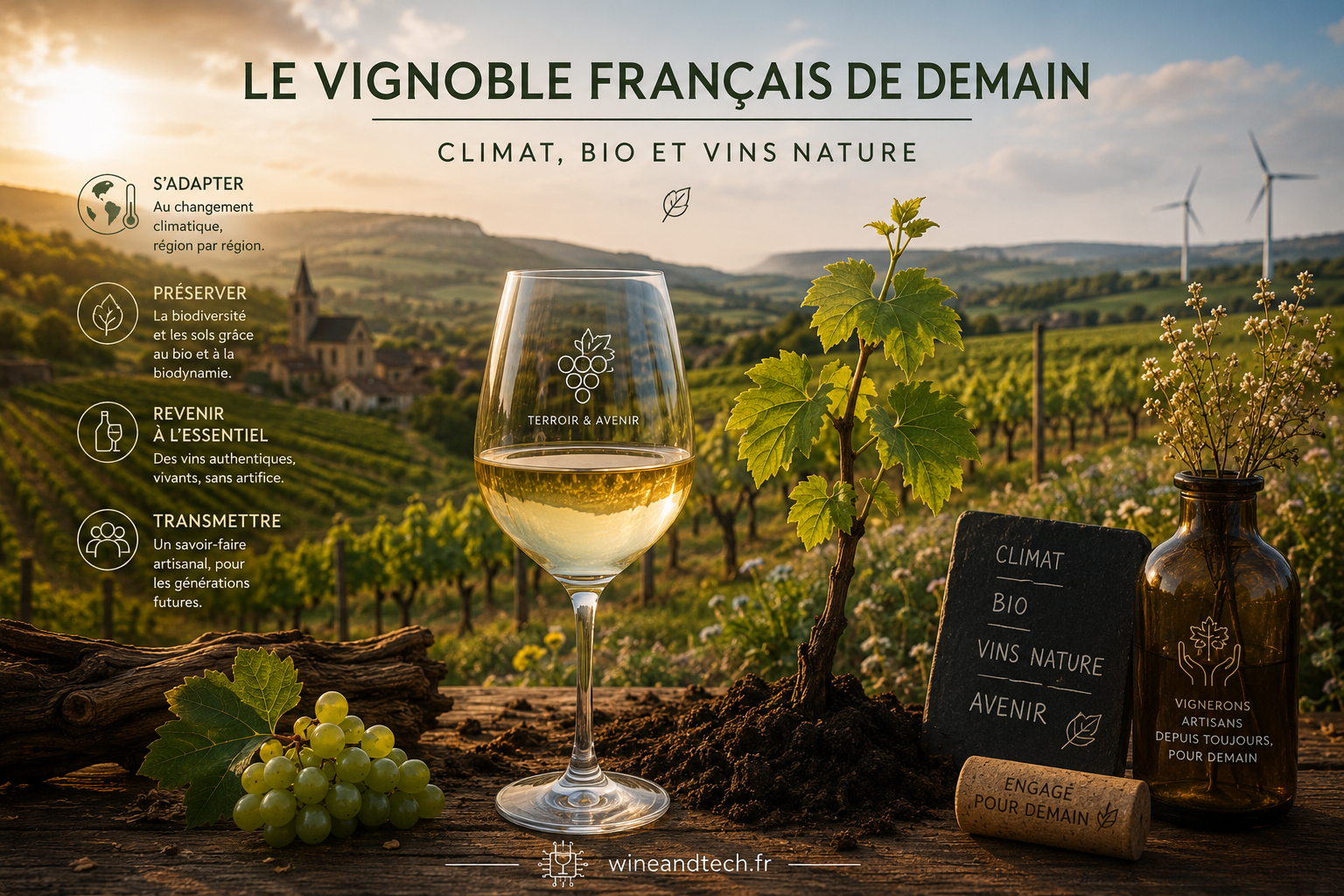
What the French vineyard has that is exceptional is its diversity. Not only in terms of regions or grape varieties, but in its approach to wine: as an expression of a place, a history, a person. The future of this vineyard is now playing out on three fronts: climate change, the rise of organic farming and the natural wine movement.
🇰 What we take away
France has profoundly shaped modern wine culture. The concept of terroir, the hierarchy of appellations, the great blending models, barrel ageing and the promotion of emblematic grape varieties have all contributed to its worldwide influence.
What the series will have shown: France is more diverse than its great names suggest. Beyond Bordeaux, Burgundy and Champagne, entire regions are working in relative obscurity, with grape varieties found almost nowhere else and wines that still sell at honest prices.
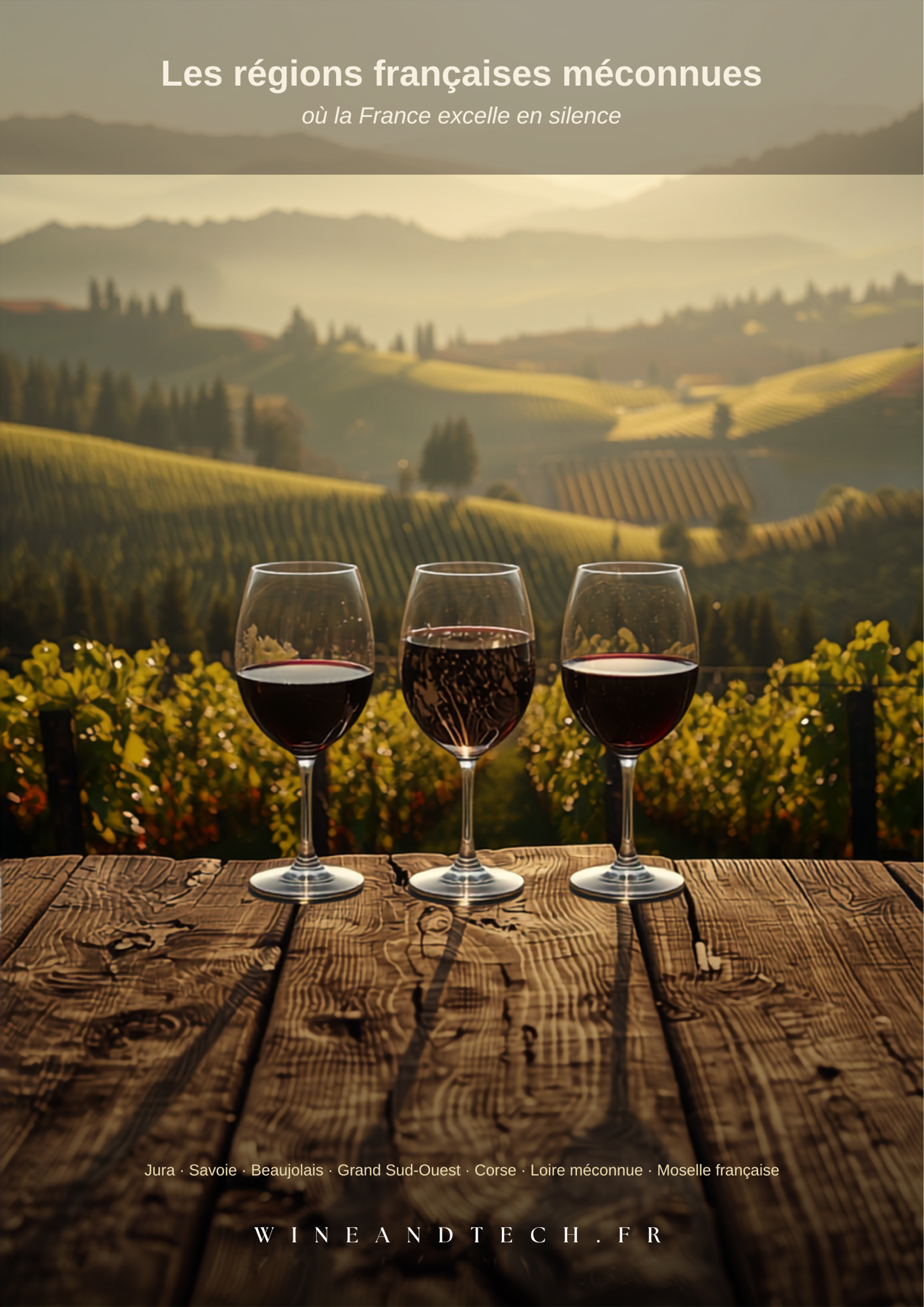
Jura, Savoie, the Beaujolais crus, the Grand South-West, Corsica, the secret Loire, French Moselle: territories that prove the French vineyard is far from having revealed everything. Behind each appellation, artisans practising this trade with complete independence, often for several generations.
🌡️ Climate change: a reality region by region
In Alsace, harvests have moved forward by more than three weeks over recent decades. In Champagne, preserving the acidity and freshness that are part of the wines’ identity is becoming more complex in a warming climate. In Languedoc, episodes of intense heat can lead to high ripeness levels and significant alcohol content.
The responses are diverse. Planting later-ripening varieties. Moving to higher altitudes. Rehabilitating forgotten local varieties, better adapted to current conditions. Irrigation, long tightly regulated in French appellations, is permitted in certain situations and is now the subject of new regulatory thinking.
The paradox: certain regions once too cold to produce quality wines are now benefiting. French Moselle, Auvergne, Haute-Savoie: terroirs gaining in potential at the very moment their more southerly neighbours are seeking to preserve their freshness.
🌿 Organic farming: a quiet transformation
France has become one of Europe’s leading organic vineyards. In 2023, around 22% of the French vineyard was managed organically, including certified and under-conversion operations, with more than 131,000 hectares already fully certified. The progression has been remarkable.
Behind this figure, a diverse reality. Some producers have been organic since the 1980s, often in pioneering regions: Alsace, Loire, Roussillon, Languedoc. Others have converted more recently, driven by demand or conviction.
Biodynamics, a distinct approach from organic farming and generally more demanding in its practices, is also progressing. In Burgundy, Alsace and Champagne, emblematic estates have worked biodynamically for decades. These practices are often invisible on the label, but very real in the cellar.
🍷 Natural wine: between Paris and the rest of the world
The natural wine movement took particular shape in France from the 1980s-90s, notably in Beaujolais and the Loire, around winemakers such as Marcel Lapierre, Jo Pithon, Pierre Overnoy and Nicolas Joly.
There is no single official definition of “natural wine”. The term generally refers to a production philosophy seeking minimal intervention, in both the vineyard and the cellar: grapes from low-intervention farming, spontaneous fermentations, limited oenological inputs and reduced use of sulphur, to varying degrees depending on the producer.
Today the movement is worldwide, but France remains its symbolic epicentre. Paris has become one of the world’s great natural wine capitals, with a remarkable concentration of specialist wine shops, wine bars and restaurants.
What was marginal in the 1990s has become, thirty years on, an underlying trend that influences even the most conventional producers.
What the series will have shown
French wine’s richness does not rest on its great names. It rests on the density of its artisan fabric. Thousands of small producers, dozens of lesser-known regions, hundreds of local grape varieties.
The future does not depend on a grand plan. It is built plot by plot, family by family, harvest by harvest.
France has not exhausted its surprises. It just needs people to keep looking for them.
🇫🇷 Lire cet article en français → [lien à ajouter après liaison Polylang]