WineAndTech’

Tag: France

  • World Wines Days

    World Wines Days

    Source : https://www.winetourism.com/international-wine-days/

    1st February – International Furmint Day

    18th February – World Drink Wine Day

    3rd March – Mulled Wine Day

    13th March – International Riesling Day

    14th April – Tannat Day

    17th April – Malbec World Day

    29th April – International Viognier Day

    6th May – International Sauvignon Blanc Day

    17th May – Pinot Grigio Day

    21st June – World Lambrusco Day

    24th June – International Rosé Day

    28th July – Shiraz Day

    1st August – International Albariño Day

    18th August – International Pinot Noir Day

    30th August – International Cabernet Sauvignon

    1st September – International Cap Classique Day

    10th September – International Port Wine Day

    16th September – International Grenache Day

    8th October – International Pinotage Day

    28th October – Champagne Day

    7th November – International Merlot Day

    10th November – International Tempranillo Day

    4th December – International Cabernet Franc Day

    10th December – International Tokaj Day

    16th December – Pinot Meunier Day

  • Château Malmaison: A Beautiful Love Story

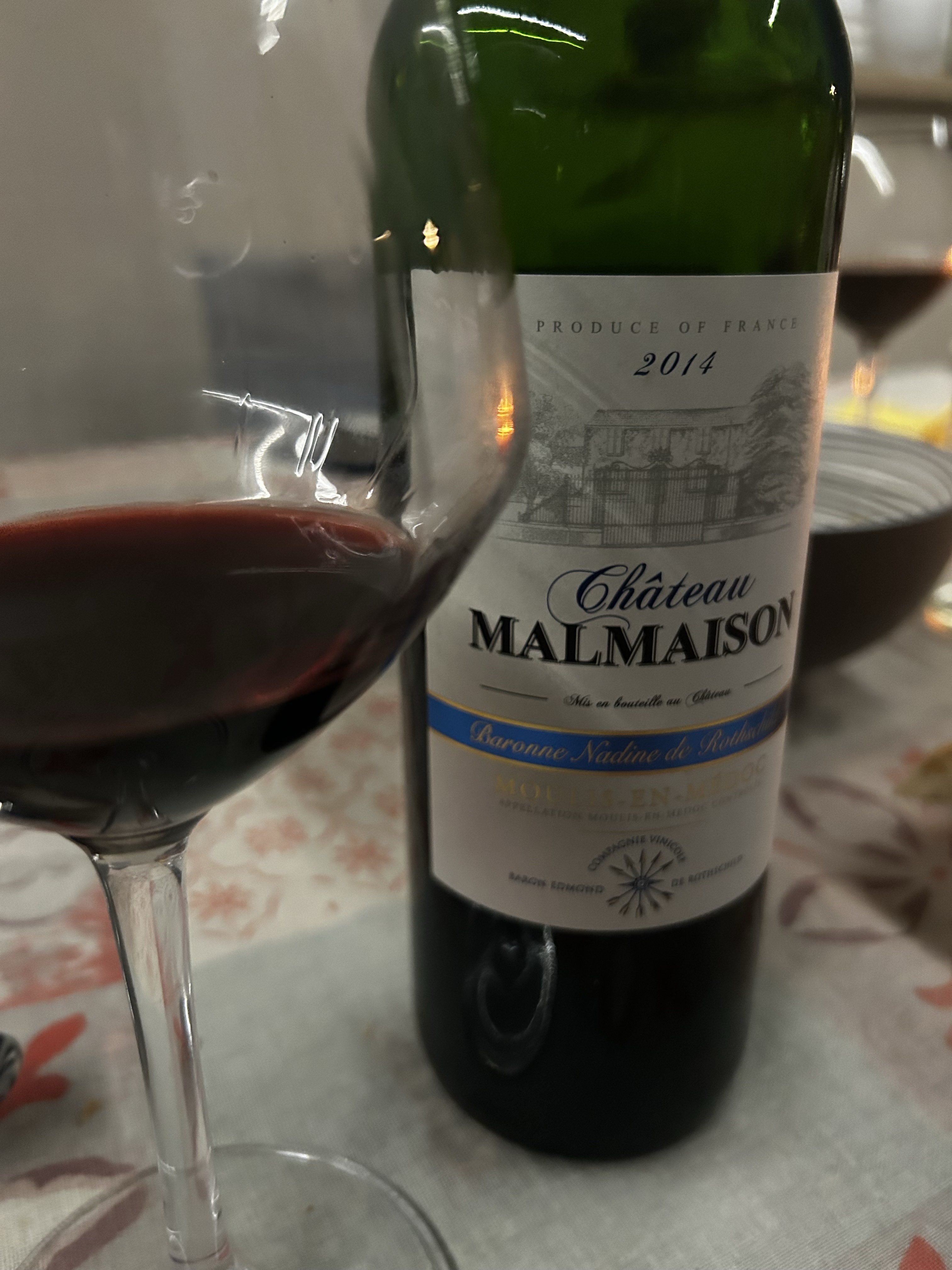
    Château Malmaison: A Beautiful Love Story

    Château Malmaison is a historic wine estate whose origins go back to the 17th century. It has belonged to the Rothschild family since 1978. The vineyard covers around 30 hectares and is planted mainly with the classic Bordeaux varieties: Cabernet Sauvignon, Merlot, Cabernet Franc and Petit Verdot.

    As a Moulis wine, Château Malmaison is prized for its quality and its value for money. It’s recommended to taste these wines after a few years of bottle ageing, to allow their full aromatic expression and the integration of their tannins.

    This wine came from the Baron’s wish to express his love for his wife, Baroness Nadine de Rothschild. Passionate about the art of gardens, she created here an enchanting garden in which the rose and the jacaranda play the leading roles.

    Source text – Image

    We had the chance to taste the 2014 vintage.

    The nose is very representative of these Moulis wines: red fruit and blackcurrant, lightly spiced over an aroma of leather. It’s beautiful, pleasant and very balanced. The nose test is a success!

    The robe is elegant, a ruby red — another characteristic hallmark that announces a lovely wine.

    On the palate it’s ample and generous; the tannins are powerful but respectful of the other aromas — they fill the space nicely, yet let wood and blackcurrant express themselves.

    Another test passed, with great elegance.

    With a length that’s a little quick and no acidity, you hurry to taste it again — but with great moderation.

    This 2014 is without doubt ready to drink, but it can also stay a while longer in your cellar. At a little over €30 depending on the vintage, this wine remains exceptional, with interesting value for money.

  • The Médoc Diversifies and Wants Into the Closed Circle of Exceptional Whites

    The Médoc Diversifies and Wants Into the Closed Circle of Exceptional Whites

    Wine route – Médoc

    For some time now, the Bordeaux grands crus have decided to ride the white-wine wave. Yet the market is already well stocked:

    Pinot Blanc and Pinot Gris, Gewürztraminer, Chardonnay, Chablis, Sauvignon Blanc, Auxerrois, Savoie, Burgundy, Alsace, but also the Jura and Touraine — not forgetting my beloved Luxembourg Moselle. In short, you’ll have gathered that it’s hard to carve out a place among these regions and vineyards that have become expert in crafting these lighter vintages.

    All the same, the Entre-Deux-Mers wines — unmissable around the Arcachon basin — had managed to stand out through their freshness. Paired with the white Graves and Pessac-Léognan, the offering is enticing:

    In Pessac-Léognan, Château Haut-Brion in Graves, and Château La Mission Haut-Brion in Pessac-Léognan, as well as Château Smith Haut Lafitte, are “signature” wines of these terroirs. In the Entre-Deux-Mers region, Château de Chantegrive and Château Ferran close out this prestigious parade. But that wasn’t enough for the Bordeaux King — more was needed.

    In the end, it’s to its lords of the Médoc that Bordeaux turns in order to shake up the hierarchy and bang the table!

    With a bottle under €10, we start with some safe bets:

    Dourthe N1 Sauvignon Blanc

    This very affordable dry white is no less pleasant for it, centred on citrus.

    Blanc de Maucaillou

    As good in white as in red, Maucaillou delivers woody aromas with this Sauvignon Blanc and its golden-yellow robe.

    Blanc de Chasse-Spleen:

    This “Blanc de Chasse-Spleen” is a white that leans towards the mineral and towards citrus.

    At more than €20 a bottle, it’s a bold gamble, because that’s a higher price bracket which demands a quality result. There’s no doubt Chasse-Spleen is capable of it, but the competition at that price level will be relentless.

    Alto, the white of Cantenac Brown

    This 90% Sauvignon Blanc stands out with a distinctive golden robe. Its floral and citrus aromas are synonymous with freshness. At a price above €25, there’s no doubt that here too perfection is an obligation.

    And the grands crus decide to speak up, to put Bordeaux definitively among the world’s elite of white wines

    Mouton Rothschild – Aile d’Argent

    “Aile d’Argent” is the second white wine of the famous Château Mouton Rothschild, one of Bordeaux’s five Premiers Grands Crus Classés. Château Mouton Rothschild is mainly known for its reds, but it has also produced this exceptional white since 1991.

    “Aile d’Argent” is made from various white varieties, mainly Sauvignon Blanc and Sémillon like all the others, which come from vineyards on the Château Mouton Rothschild estate. The name “Aile d’Argent” refers to the silver wings that have adorned the Château Mouton Rothschild label since 1924.

    It often offers notes of tropical fruit, citrus and white flowers, with a lovely freshness on the palate. Though less famous than Château Mouton Rothschild’s reds, “Aile d’Argent” remains an exceptional wine, at more than €120 a bottle.

    Château Margaux – Pavillon Blanc

    “Pavillon Blanc” is made from white varieties, mainly Sauvignon Blanc, sometimes with a small proportion of Sémillon. The grapes come from vines specially dedicated to producing this white wine on the Château Margaux estate. The winemaking is carried out with the same concern for excellence and attention to detail as for the estate’s reds.

    The result is a refined, elegant and complex white, offering subtle aromas of white fruit, citrus, flowers and sometimes mineral notes. Because of its rarity and Château Margaux’s renown, “Pavillon Blanc” is highly prized by collectors and connoisseurs of fine wines; you’ll struggle to find it below €350.

    Château Talbot – Caillou Blanc

    “Caillou Blanc de Château Talbot” is made from white varieties, mainly Sauvignon Blanc and Sémillon, sometimes with a small proportion of Muscadelle. “Caillou Blanc” is aged in barrel on its lees with Burgundian-style bâtonnage, which gives it a distinctive quality on the palate, favouring its silkiness. You’ll need to count on at least €35 to have it in your cellar.

    Blanc de Lynch-Bages

    Born in 1990, “Blanc de Lynch-Bages” is the result of blending the three traditional white varieties of the Bordeaux appellation, planted on some eight plots of Lynch-Bages’s historic terroir.
    These lines are taken from the link below; I’ll let you complete your reading, but you’ll need to spend at least €60 to taste it.

    https://www.lynchbages.mobi/fr/blanc-de-lynch-bages

    Cos d’Estournel Blanc

    In 2005, Cos entered the race for exceptional whites, thanks to the famous emblematic varieties of Sauvignon Blanc and Sémillon.

    This white, close to €150 a bottle, has to be exceptional.

  • Château Chasse-Spleen – Part 1: A Call to Joy and Pleasure

    Château Chasse-Spleen – Part 1: A Call to Joy and Pleasure

    Château Chasse-Spleen is a wine estate located in the Moulis-en-Médoc appellation, in the Médoc wine region of France. It’s renowned for producing wines of great quality, mainly from Cabernet Sauvignon, Merlot and Petit Verdot.

    The boots in front of the château are especially loved, but I’ll tell you about them soon 😉

    The château’s name, “Chasse-Spleen”, has a poetic origin. We’ll come to it a little further down the article, but I love using the phrase “chasing away the spleen” and the idea that tasting its wines brings real joy and drives away melancholy — always in moderation, of course.

    In 1820, the estate was divided in two: one half went to M. Gressier and the other to his sister, Madame Castaing, who then gave rise, in 1863, to the name Chasse-Spleen.

    Two origins are put forward for the name Chasse-Spleen. The first is attributed to Charles Baudelaire, referring to his collection “Les Fleurs du Mal”, which the Bordeaux painter Odilon Redon, a neighbour of the château, illustrated.

    The second would be to the credit of Lord Byron, a great wine lover who, during a visit to Chasse-Spleen in 1821, is said to have remarked that this wine had no equal for chasing away dark thoughts.

    The Castaing family remained owners until 1909, when the German merchant Segnitz took over in turn; the estate was then bought in 1920 by the Lahary family, before being sold on in 1976 to Jacques Merlaut. Céline Villars-Foubet, Jacques Merlaut’s granddaughter, has run Château Chasse-Spleen since 2000. Château Chasse-Spleen has been classified Grand Cru Exceptionnel in the Moulis appellation since 1932.

    The land on which Chasse-Spleen stretches today has been planted with vines for more than 400 years.

    The great witnesses of that era still keep watch — and it’s hard not to notice them at the corner of the property:

    In 1820, Gressier Grand Poujeaux was one of the first Crus Bourgeois of the Médoc and, up to a certain point in time, one of the jewels of the Moulis appellation. Château Gressier Grand Poujeaux always belonged to the same family, the Saint Affrique/Gressiers, from its creation until its sale to its neighbours at Chasse-Spleen in 2003.

    Walking through the vines, you can in fact spot this tribute and this echo of history, thanks to the names of certain plots on the estate.

    If you have the chance to taste a wine from Château Chasse-Spleen, I encourage you to do so and discover for yourself the quality and beauty of its wines.

    The estate produces 5 wines:

    Château Chasse-Spleen

    Oratoire de Chasse-Spleen, the second wine

    Héritage de Chasse-Spleen, previously called Ermitage de Chasse-Spleen, in the Haut-Médoc appellation

    Blanc de Chasse-Spleen

    Château Gressier Grand Poujeaux


    I looked for the most complete site at competitive prices to buy this wine, and here it is here

    That said, the first wine remains exceptional and of great quality, so it will be hard to find below €35 a bottle. The second wines, however — also of very great quality — start at around €15.

    In a future post I’ll take you inside the cellars and we’ll taste a little wine.

  • E. Guigal and Its Côte-Rôtie: The Brune et Blonde Blend

    E. Guigal and Its Côte-Rôtie: The Brune et Blonde Blend

    “Côte-Rôtie is the balance between finesse and power, a symphony of flavours that awakens the senses.”
    Gérard Gauby

    The French vineyards of Côte-Rôtie are nestled on the steep, narrow slopes of the hillsides on the right bank of the Rhône. The soils are mainly composed of schist and mica schist, which give the wines their distinctive character.
    Syrah is the main variety used in Côte-Rôtie wines, bringing deep aromas of black fruit, spice and violet. A small proportion of Viognier, a white variety, can be blended with the Syrah to add complexity and finesse to the wines.

    The Côte-Rôtie appellation has no official classification system. However, the vineyards are often divided into two distinct zones: the Côte Brune to the north, where the soils are richer in iron oxide, and the Côte Blonde to the south, characterised by sandier soils.

    Guigal produces a specific wine called “Brune et Blonde de Guigal” in reference to the two distinct zones of the Côte-Rôtie appellation, the Côte Brune and the Côte Blonde.

    “Brune et Blonde de Guigal” is a cuvée that represents the blending of grapes from these two terroirs. It’s a wine that seeks to capture the qualities of Côte-Rôtie wines that are at once powerful and elegant.

    I’d warned you in previous posts: I’m a fan of this estate, so I’m on the lookout for every good opportunity to discover all the E. Guigal wines.

    Let’s talk a little about this 2019: a deep, thick robe, of a streaming red; on the nose it’s lightly spiced with a leather/tobacco blend, and you can feel it holding back, not wanting to reveal everything to us.

    Softness and depth, but it doesn’t give everything away; it’s decidedly a little young, though the aromas of leather and spice are interesting. The tannins aren’t strong — they’re in balance and don’t make this wine too powerful.

    A length of persistent red fruit; a very light acidity makes way for the fruit, and towards the end I think I detect a little banana.

    The subtlety and complexity of this wine make it very good; it won’t leave anyone indifferent. That said, its price comfortably exceeds €50, which makes it an exceptional wine. But it’s a safe bet, and none of your friends will be left indifferent.

  • E. Guigal Crozes-Hermitage, a Controversial Wine

    E. Guigal Crozes-Hermitage, a Controversial Wine


    “Crozes-Hermitage is one of the most respected appellations of the Rhône Valley, offering wines of great depth, with aromas of black fruit, spice and liquorice.” – Decanter

    From the very start of this little adventure, I set myself a rule of conduct. To write honest articles that look like me, with no fuss — both about wines I’ve enjoyed and about those I haven’t.

    During the first months of writing and tasting, I concentrated mainly on safe bets that I know well and have a handle on; I felt confident and the articles came easily, one after another.

    After that period of confidence, I opened up and decided to venture into grape varieties and countries unknown to my palate. Some wonderful encounters, and tastings that stay with you.

    After a quick search, I decide to taste a white Guigal! E. Guigal — I’d announced it in a previous post: I’m a fan of this house and its production. We’re going for a Crozes-Hermitage; lovely reviews of this wine scroll across my screen and help make up my mind.

    Right, let’s taste!

    A lovely pale, mineral robe — astonishing purity. A fruity, fresh, pleasant nose… I amuse myself picking out citrus with scents of peach and mango.

    In we go! Very mineral from the outset, almost dry but fresh; it’s soft, agreeable — and then the wood quickly asserts itself and there it turns. My palate isn’t used to it: the power of that aroma makes me think of liquorice. That flavour will dominate right through to the end.

    I have to admit this tasting threw me. It’s a subtle balance, and I struggle to hold on to a feeling of satisfaction.

    I hesitated for a long time before writing this article; as I’ve said before, I’m a fan of the Guigals. It’s a peculiar feeling, something like disappointment.

    But there it is…

    I don’t regret this tasting; I even have a particular memory of it that has stayed with me. As I often say to people who have me taste wine, I try to be fair most of the time — these wines are always lovely discoveries. It’s rare, but from time to time I explain (in nice words, all the same) that I didn’t entirely enjoy a wine; I try to be precise and to bring out the positive points as well as those I liked less. This wine falls into that category.

    So I’m giving it a new WordPress category, created for the occasion: “unsettling”.

    But I’ll let you be the judge!

    Don’t worry, this won’t stop me being a fan and holding E. Guigal’s production in high respect. I fully intend to give Crozes-Hermitage another chance and try a different vintage.

    Go on! Step out of your comfort zone, because every tasting is an adventure!

  • Number 2: Maucaillou’s Second Wine, of Very Great Quality

    Number 2: Maucaillou’s Second Wine, of Very Great Quality

    “Moulis-en-Médoc produces wines of character, combining power and finesse, and offering excellent value for money.” – Decanter

    Château Maucaillou is a wine estate located in the Médoc region of France. It sits in the commune of Moulis-en-Médoc, in the Gironde département. The estate has a long history going back to the 17th century.

    The property makes its wines from classic Bordeaux varieties such as Cabernet Sauvignon, Merlot, Cabernet Franc and Petit Verdot.

    The estate covers around 90 hectares, of which 75 are planted with vines. The vines benefit from a quality terroir, with soils of gravel, clay and limestone. The harvest is picked by hand, which allows for rigorous selection of the grapes.

    The château itself is a magnificent building, typical of Bordeaux architecture. It’s surrounded by gardens and vines, offering a picturesque and peaceful setting; personally, I love crossing the railway line and strolling in front of the gardens.

    I’ll point you to the website if the history of this building interests you: https://www.maucaillou.com/maucaillou/le-chateau-maucaillou/

    What sets this château apart is its museum and its cellar tour — few estates in the Médoc offer this kind of experience. You can wander around and enjoy the wine with the guide’s advice, for just a few euros. You can normally turn up without booking, but a quick phone call the day before is advisable.

    I’m usually very critical of “second” wines. I’ve often been disappointed: you get the impression the big brother is so imposing that it commandeers the best vines and takes all the cellar team’s attention. What’s more, in the past the Maucaillou estate spread itself rather thin, creating a large number of wines that weren’t always successful.

    With this No. 2, Château Maucaillou has made a wine that has forged its own identity. It’s very different from its elder, naturally, but it must be pampered by its parents. You notice a strength, a care in its design — it’s impossible not to feel that great quality.

    Its robe is intense, a lovely ruby at the surface.

    Its nose is marked by wood and spice; powerful, with the wood clearly standing out. On the palate it’s round, and the aromas of wood, blackcurrant and vanilla are in subtle balance — it’s really very pleasant. The tannins are powerful, granted, but everything fits together perfectly. Even the length is a pleasure. For me, this 2019 is already ready to drink, but it can stay a few more years in your cellar.

    At under €15, this wine offers value for money that’s almost impossible to find in the Médoc at that price! No need to hesitate — it deserves a place in your cellar.

  • Can Le Télégramme Rival the Very Best?

    Can Le Télégramme Rival the Very Best?

    “Châteauneuf-du-Pape is an exceptional wine, one that deserves to be tasted with respect and admiration, like a masterpiece of nature and of man.” – Robert M. Parker Jr., American wine critic and founder of The Wine Advocate.

    I knew Châteauneuf, naturally, but it was a friend who passed on his passion for these wines. Châteauneuf-du-Pape has barely 2,500 inhabitants; I like to compare it to Saint-Émilion, a small town that produces wines known the world over!

    I’ve chosen here to tell you about a lovely discovery: Le Télégramme, from the Châteauneuf-du-Pape appellation, produced by Domaine du Vieux Télégraphe. The wine’s name refers to the estate’s history, as it was once used as a telegraph station.

    It’s the result of a skilful blend of different varieties typical of the region, notably Grenache, Mourvèdre, Syrah and Cinsault. The grapes are hand-harvested and the wine is aged in oak barrels for around 10 months.

    The result is a rich, powerful red, with aromas of black fruit, spice and garrigue. On the palate the wine is full-bodied with firm tannins and a long, persistent finish. This wine can be enjoyed young, but it’s also known to age remarkably well in the cellar.

    Le Télégramme is considered one of the finest wines of Châteauneuf-du-Pape, an appellation renowned for its rich and complex reds. Domaine du Vieux Télégraphe is also famous for its other wines, notably the traditional Châteauneuf-du-Pape, which is even more complex and elegant than Le Télégramme.

    My tasting of the 2019 vintage:

    A woody nose right from the start with a marked red fruit — blackcurrant — and a little vanilla at the end.
    You’ll note a lovely brownish colour along the upper edges; it stays a dark red. No doubt about it, it shows its colours from the outset.

    This generous wine has a length marked by wood; the red fruit isn’t omnipresent, but personally I’m fond of that. The wine is round and powerful. This one won’t disappoint me — like every Châteauneuf I’ve had the chance to drink. What consistency in the quality of these wines!

    This wine goes beyond €30 a bottle, which is no small budget, I’ll grant you. All the same, if you have the opportunity to keep it in your cellar, don’t hesitate.

    What’s more, there’s no need to wait: this 2019 is already ready to drink.

  • A Beautiful Region and Exceptional Wines: Châteauneuf-du-Pape

    A Beautiful Region and Exceptional Wines: Châteauneuf-du-Pape

    “Châteauneuf-du-Pape is an eternal wine, one that can be enjoyed from its youth but which gains depth and complexity with age.” – Robert M. Parker Jr.

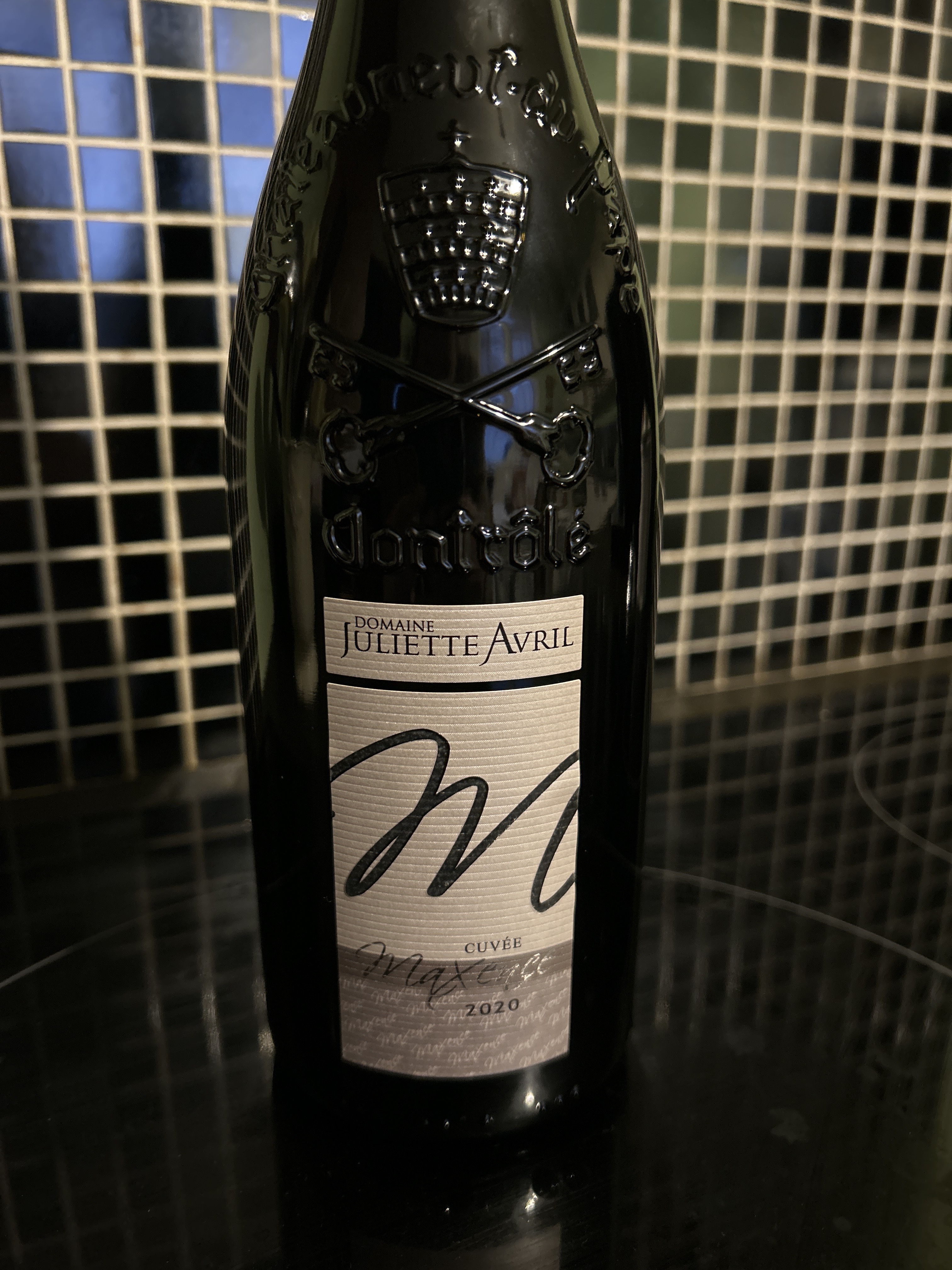
    Domaine Juliette Avril is a family estate covering around 22 hectares of vines, set on the rolled-pebble soils typical of the region. The vineyard is farmed sustainably and the harvest is picked by hand.

    The estate produces a range of red and white wines, but its main production is its red Châteauneuf-du-Pape. This wine is made from a blend of Grenache, Syrah and Mourvèdre, aged in oak barrels for 12 to 18 months.

    How about we move on to the tasting:

    A spicy, light nose with lovely leathery scents; discreetly, red fruit comes through and makes itself known.
    On the palate it’s soft, but it gradually builds to let a touch of acidity appear at the end of the journey.
    The wood is present and ample.
    Through the length it’s light — I’m a little disappointed on that point.
    This wine is good, pleasant, but it will need more time. This 2020 is without doubt one to keep.

  • Metz and Its Little Hideaways…

    Metz and Its Little Hideaways…

    “Metz is a city that has known many wars, but which has also known moments of peace and great prosperity. It is a city rich in history and culture.” – François Hollande, former President of the French Republic.

    For St Patrick’s Day 2023, we decided to celebrate in our own way and head to a wine bar, “La Quille”, on Place de Chambre.

    Intimate and refined in its decor, we were warmly welcomed, and I recommend the place:

    We were sensible, and I let myself be tempted by a wine from Chinon.

    The estate is located in the village of Cravant-les-Coteaux, around 8 kilometres south-west of the town of Chinon. It covers about 12 hectares of vineyards, all on the left bank of the Vienne, the region’s main river. The vines are planted on clay-limestone soils and farmed using environmentally friendly methods.

    The owner explains that he selects his wines for their commitment to the environment. The wines of Domaine Fabrice Gasnier are renowned for their elegance, their freshness and their finesse.

    Let’s pair it with a little something to nibble on and see what happens!

    This wine is beautiful and very pleasant. Oh, it’s no Beaujolais — but I make out an aroma of banana!

    It announces a quick, light wine; I’m worried, and then experience puts me back on track! Don’t judge by appearances! And indeed, this wine turns out to be a real treat. Thanks La Quille for this lovely discovery…