Tag: Médoc

  • Cabernet Sauvignon: The King of Grape Varieties — Why Does It Dominate the World?

    Cabernet Sauvignon: The King of Grape Varieties — Why Does It Dominate the World?

    📚 Grape Varieties of the World · Episode 1  |  ⏱ Reading time: 7 minutes

    Every year, millions of bottles of Cabernet Sauvignon are opened across the globe. From the great châteaux of Bordeaux to Californian estates, from Chilean vineyards to Australian terroirs, few grape varieties have conquered so many territories while retaining such a recognisable identity. Robust, built for ageing and capable of producing some of the planet’s greatest wines, Cabernet Sauvignon has established itself as the undisputed king of red grape varieties.

    In this first episode of our Grape Varieties of the World series, we unpack a global dominance that has lasted for more than three centuries.


    A Botanical Accident Turned Global Superstar

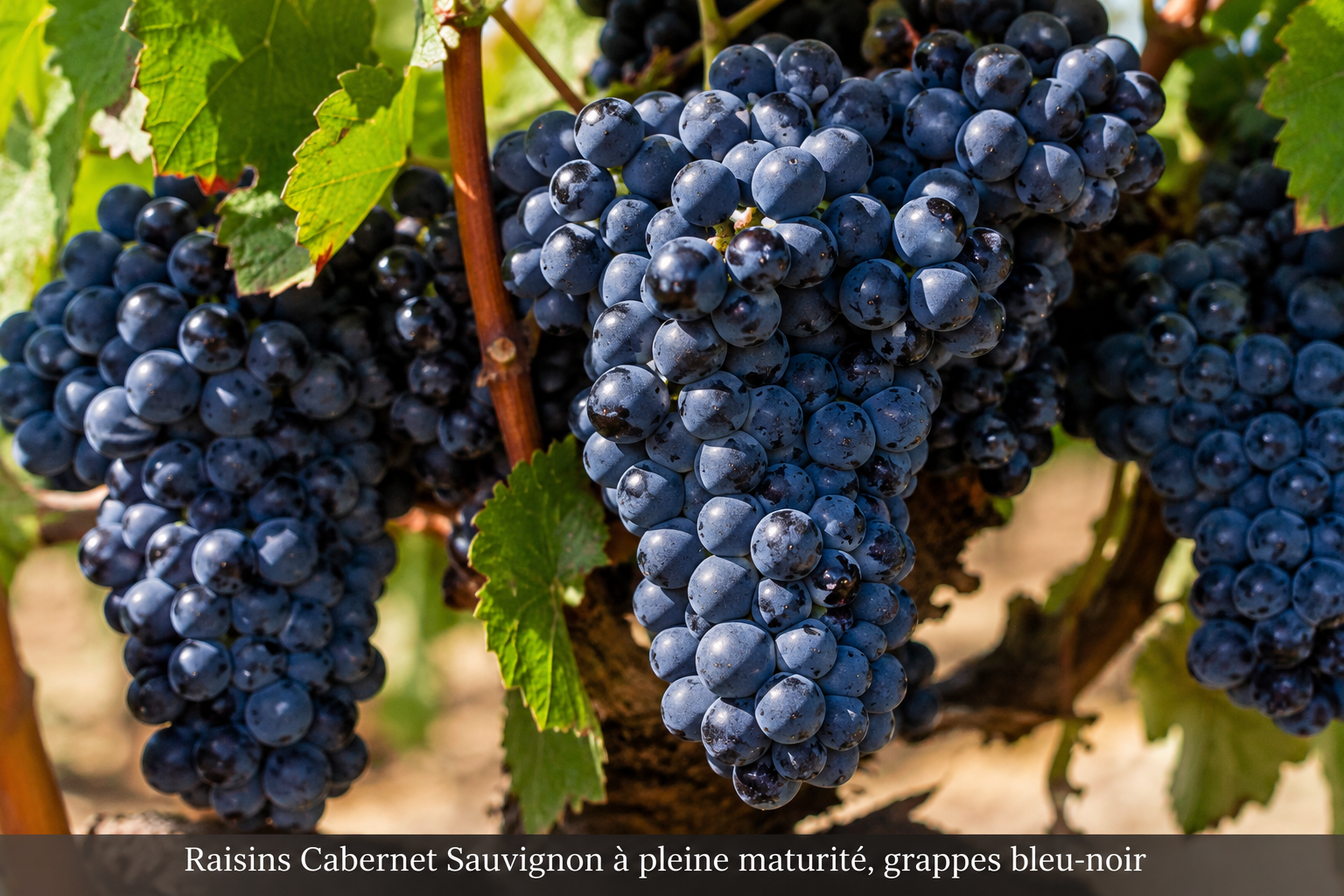
    Cabernet Sauvignon was not created by a visionary winemaker, nor selected in a laboratory. It was born from a botanical accident. Probably in the 17th century, in the Bordeaux region, two grape varieties growing in close proximity crossed naturally: Cabernet Franc, already well established in south-west France, and Sauvignon Blanc, celebrated for its aromatic expression. From this chance encounter came a vigorous, late-ripening variety particularly rich in tannins.

    For a long time, this origin remained nothing more than a hypothesis passed down from generation to generation.

    🔬 The Science Behind the Grape

    In 1996, a team of geneticists at the University of California, Davis, led by John Bowers and Carole Meredith, scientifically confirmed the parentage of Cabernet Sauvignon through DNA analysis. This discovery explained why the variety inherits the structure of Cabernet Franc while exhibiting specific aromatic compounds: methoxypyrazines, responsible for the green pepper notes that appear when grapes are harvested before full maturity. Molecular biology at the service of the sommelier.

    From Bordeaux to Napa: A Grape That Travels Remarkably Well

    The Bordeaux region is the historical birthplace of Cabernet Sauvignon. It is in the Médoc that it found its most iconic expression. The gravelly soils, made up of pebbles deposited by the Garonne river during the Quaternary period, provide exceptional drainage. The vine is forced to send its roots deep in search of water, encouraging slow ripening and a remarkable concentration of tannins and aromas. This combination shaped the reputation of Pauillac, Margaux and Saint-Julien.

    Its extraordinary capacity for adaptation is one of its greatest strengths. Four major expressions illustrate this versatility:

    • 🇫🇷 Médoc, Bordeaux — elegance and slow ageing, blended with Merlot and Cabernet Franc, complexity that reveals itself over decades
    • 🇺🇸 Napa Valley (Rutherford, Oakville) — more generous and sun-drenched wines, powerful structure, pronounced fruit maturity
    • 🇨🇱 Maipo Valley, Chile — fresh expression, characteristic minty notes, the signature of large day-to-night temperature swings
    • 🇦🇺 Coonawarra, Australia — terra rossa (red clay over limestone), dense, spiced wines of remarkable longevity
    Carte des principaux vignobles de Cabernet Sauvignon dans le monde ✦ VITICULTURE MONDIALE ✦ Carte des principaux vignobles de Cabernet Sauvignon dans le monde Les 4 grands terroirs mondiaux · Ancien & Nouveau Monde Bordeaux — Médoc · Pauillac (France) ★ Bordeaux France Ribera del Duero — Castille-et-León (Espagne) Ribera del Duero Espagne Toscane — Bolgheri · Super Toscans (Italie) Toscane Italie Napa Valley — Oakville · Rutherford (Californie, USA) ★ Napa Valley Californie, USA Washington State — Columbia Valley (USA) Washington State USA Maipo Valley — Puente Alto (Chili) ★ Maipo Valley Chili Mendoza — Luján de Cuyo (Argentine) Mendoza Argentine Coonawarra — Terra Rossa (Australie) ★ Coonawarra Australie Margaret River — Australie-Occidentale (Australie) Margaret River Australie Stellenbosch — Cap-Occidental (Afrique du Sud) Stellenbosch Afrique du Sud Équateur 50°N 30°N 30°S 50°S ★ Terroir emblématique Vignoble reconnu Europe · Ancien Monde Bordeaux · Ribera del Duero · Toscane Amérique du Nord Napa Valley · Washington State Amérique du Sud Maipo Valley · Mendoza Hémisphère Sud Coonawarra · Margaret River · Stellenbosch Le Cabernet Sauvignon s’épanouit entre 30° et 50° de latitude Nord et Sud · wineandtech.fr
    Carte des principaux vignobles de Cabernet Sauvignon dans le monde — wineandtech.fr

    The Wines That Built Its Legend

    No discussion of Cabernet Sauvignon would be complete without the wines that forged its worldwide reputation:

    • 🇫🇷 Château Latour & Château Mouton Rothschild — the mastered power of the Médoc, wines capable of evolving over several decades
    • 🇺🇸 Opus One (1979, Robert Mondavi × Baron Philippe de Rothschild) — proof that the New World could rival the finest Bordeaux classified growths
    • 🇨🇱 Almaviva — the successful alliance of Bordeaux expertise and Andean terroirs
    • 🇦🇺 Penfolds Bin 707 — Australia’s benchmark Cabernet, known for its intensity, aromatic richness and immense ageing potential

    One Style, A Thousand Faces

    On the palate, Cabernet Sauvignon is immediately recognisable by its assertive tannic structure and aromas of blackcurrant, blackberry and dark fruit. Depending on climate and ripeness level, notes of cedar, graphite, tobacco, green pepper, eucalyptus or mint can enrich its aromatic profile.

    In Bordeaux, it is rarely vinified alone — it typically forms the backbone of blends with Merlot, Cabernet Franc or Petit Verdot. In warmer climates such as California or Australia, it is more often crafted as a single variety: wines gain in breadth, fruit maturity and richness, with a more pronounced oak influence.

    🍷 Classic Tasting Note

    💃 Colour: Deep red, purple hues in youth, brick tones with age
    👃 Nose: Blackcurrant, blackberry, plum · cedar, graphite, tobacco, leather at maturity
    👄 Palate: Firm yet silky tannins, good acidity, long and persistent finish
    🍽️ Food pairing: Roast lamb, rib-eye steak, aged cheeses, rich meat dishes

    Cabernet Sauvignon and Climate Change

    Long regarded as a natural ally of global warming due to its late-ripening nature, Cabernet Sauvignon is now seeing its equilibrium shift. Increasingly early harvests are driving up alcohol levels while progressively reducing acidity. In the warmest vintages, this evolution can diminish the freshness that forms a key part of the variety’s identity.

    Faced with these new conditions, winemakers are adapting their practices: rebalancing blends, seeking out cooler plots, and experimenting with newly authorised varieties. At the same time, Cabernet Sauvignon is conquering new territories — southern England, British Columbia, high-altitude vineyards in Argentina and Chile. Its world geography is in full transformation.

    Why It Remains Unbeatable

    Sunset grape harvest, adaptation to viticultural climate change (Kent Porter / The Press Democrat)

    Resilient, adaptable, equally comfortable in a blend or as a single variety, gifted with an exceptional ageing potential and able to express the character of a terroir with rare precision: Cabernet Sauvignon brings together all the qualities that explain its enduring success. It remains today the most widely planted red grape variety in the world, ahead of Merlot and Syrah.

    From Bordeaux to Coonawarra, via Napa and the Maipo, it continues to write the story of a botanical accident that became one of wine’s greatest ambassadors.

    📌 Key Takeaways

    • Born from a natural cross between Cabernet Franc × Sauvignon Blanc (17th century, Bordeaux)
    • Parentage confirmed by DNA analysis in 1996 — University of California, Davis
    • The world’s most planted red grape variety
    • 4 major expressions: Bordeaux · Napa Valley · Chile · Australia
    • High tannic structure → ideal for ageing (10 to 30+ years)
    • Evolving in the face of climate change

    ➡️ Next Episode — 1st September

    Its aromatic identity is surprisingly understated — and that is precisely what allows it to reveal, with rare faithfulness, the terroirs from which it comes. Mineral in Chablis, rich and generous in California, taut in Champagne or complex in Burgundy, it shifts character without ever losing its elegance.

    Next up: Chardonnay — how did such a versatile grape become the most planted white variety in the world?
  • Château Malmaison: A Beautiful Love Story

    Château Malmaison: A Beautiful Love Story

    Château Malmaison is a historic wine estate whose origins go back to the 17th century. It has belonged to the Rothschild family since 1978. The vineyard covers around 30 hectares and is planted mainly with the classic Bordeaux varieties: Cabernet Sauvignon, Merlot, Cabernet Franc and Petit Verdot.

    As a Moulis wine, Château Malmaison is prized for its quality and its value for money. It’s recommended to taste these wines after a few years of bottle ageing, to allow their full aromatic expression and the integration of their tannins.

    “This wine came from the Baron’s wish to express his love for his wife, Baroness Nadine de Rothschild. Passionate about the art of gardens, she created here an enchanting garden in which the rose and the jacaranda play the leading roles.“

    Source text – Image

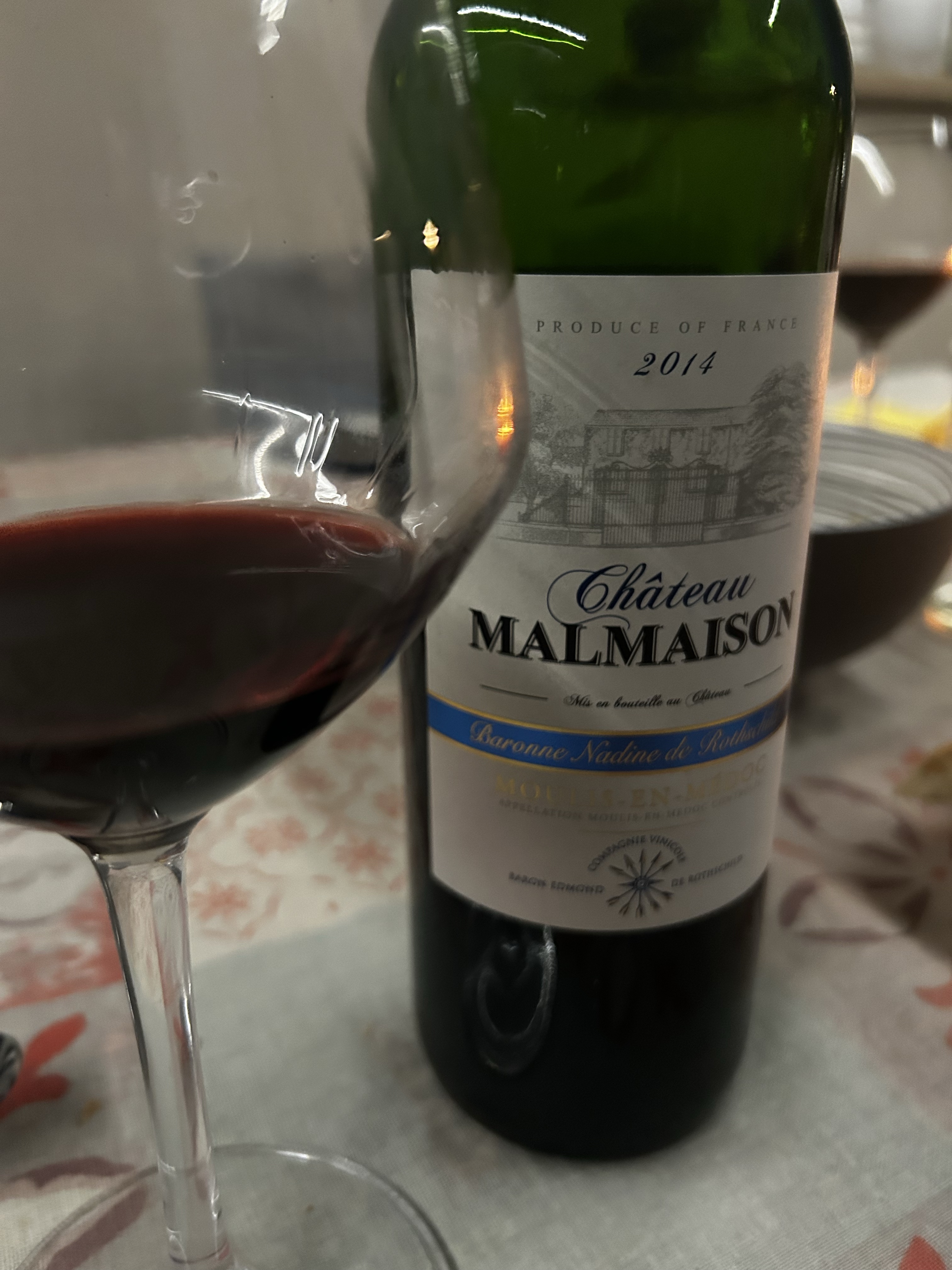
    We had the chance to taste the 2014 vintage.

    The nose is very representative of these Moulis wines: red fruit and blackcurrant, lightly spiced over an aroma of leather. It’s beautiful, pleasant and very balanced. The nose test is a success!

    The robe is elegant, a ruby red — another characteristic hallmark that announces a lovely wine.

    On the palate it’s ample and generous; the tannins are powerful but respectful of the other aromas — they fill the space nicely, yet let wood and blackcurrant express themselves.

    Another test passed, with great elegance.

    With a length that’s a little quick and no acidity, you hurry to taste it again — but with great moderation.

    This 2014 is without doubt ready to drink, but it can also stay a while longer in your cellar. At a little over €30 depending on the vintage, this wine remains exceptional, with interesting value for money.

  • The Médoc Diversifies and Wants Into the Closed Circle of Exceptional Whites

    The Médoc Diversifies and Wants Into the Closed Circle of Exceptional Whites

    Wine route – Médoc

    For some time now, the Bordeaux grands crus have decided to ride the white-wine wave. Yet the market is already well stocked:

    Pinot Blanc and Pinot Gris, Gewürztraminer, Chardonnay, Chablis, Sauvignon Blanc, Auxerrois, Savoie, Burgundy, Alsace, but also the Jura and Touraine — not forgetting my beloved Luxembourg Moselle. In short, you’ll have gathered that it’s hard to carve out a place among these regions and vineyards that have become expert in crafting these lighter vintages.

    All the same, the Entre-Deux-Mers wines — unmissable around the Arcachon basin — had managed to stand out through their freshness. Paired with the white Graves and Pessac-Léognan, the offering is enticing:

    In Pessac-Léognan, Château Haut-Brion in Graves, and Château La Mission Haut-Brion in Pessac-Léognan, as well as Château Smith Haut Lafitte, are “signature” wines of these terroirs. In the Entre-Deux-Mers region, Château de Chantegrive and Château Ferran close out this prestigious parade. But that wasn’t enough for the Bordeaux King — more was needed.

    In the end, it’s to its lords of the Médoc that Bordeaux turns in order to shake up the hierarchy and bang the table!

    With a bottle under €10, we start with some safe bets:

    Dourthe N1 Sauvignon Blanc

    This very affordable dry white is no less pleasant for it, centred on citrus.

    Blanc de Maucaillou

    As good in white as in red, Maucaillou delivers woody aromas with this Sauvignon Blanc and its golden-yellow robe.

    Blanc de Chasse-Spleen:

    This “Blanc de Chasse-Spleen” is a white that leans towards the mineral and towards citrus.

    At more than €20 a bottle, it’s a bold gamble, because that’s a higher price bracket which demands a quality result. There’s no doubt Chasse-Spleen is capable of it, but the competition at that price level will be relentless.

    Alto, the white of Cantenac Brown

    This 90% Sauvignon Blanc stands out with a distinctive golden robe. Its floral and citrus aromas are synonymous with freshness. At a price above €25, there’s no doubt that here too perfection is an obligation.

    And the grands crus decide to speak up, to put Bordeaux definitively among the world’s elite of white wines

    Mouton Rothschild – Aile d’Argent

    “Aile d’Argent” is the second white wine of the famous Château Mouton Rothschild, one of Bordeaux’s five Premiers Grands Crus Classés. Château Mouton Rothschild is mainly known for its reds, but it has also produced this exceptional white since 1991.

    “Aile d’Argent” is made from various white varieties, mainly Sauvignon Blanc and Sémillon like all the others, which come from vineyards on the Château Mouton Rothschild estate. The name “Aile d’Argent” refers to the silver wings that have adorned the Château Mouton Rothschild label since 1924.

    It often offers notes of tropical fruit, citrus and white flowers, with a lovely freshness on the palate. Though less famous than Château Mouton Rothschild’s reds, “Aile d’Argent” remains an exceptional wine, at more than €120 a bottle.

    Château Margaux – Pavillon Blanc

    “Pavillon Blanc” is made from white varieties, mainly Sauvignon Blanc, sometimes with a small proportion of Sémillon. The grapes come from vines specially dedicated to producing this white wine on the Château Margaux estate. The winemaking is carried out with the same concern for excellence and attention to detail as for the estate’s reds.

    The result is a refined, elegant and complex white, offering subtle aromas of white fruit, citrus, flowers and sometimes mineral notes. Because of its rarity and Château Margaux’s renown, “Pavillon Blanc” is highly prized by collectors and connoisseurs of fine wines; you’ll struggle to find it below €350.

    Château Talbot – Caillou Blanc

    “Caillou Blanc de Château Talbot” is made from white varieties, mainly Sauvignon Blanc and Sémillon, sometimes with a small proportion of Muscadelle. “Caillou Blanc” is aged in barrel on its lees with Burgundian-style bâtonnage, which gives it a distinctive quality on the palate, favouring its silkiness. You’ll need to count on at least €35 to have it in your cellar.

    Blanc de Lynch-Bages

    Born in 1990, “Blanc de Lynch-Bages” is the result of blending the three traditional white varieties of the Bordeaux appellation, planted on some eight plots of Lynch-Bages’s historic terroir.

    These lines are taken from the link below; I’ll let you complete your reading, but you’ll need to spend at least €60 to taste it.

    https://www.lynchbages.mobi/fr/blanc-de-lynch-bages

    Cos d’Estournel Blanc

    In 2005, Cos entered the race for exceptional whites, thanks to the famous emblematic varieties of Sauvignon Blanc and Sémillon.

    This white, close to €150 a bottle, has to be exceptional.

  • Château Chasse-Spleen – Part 1: A Call to Joy and Pleasure

    Château Chasse-Spleen – Part 1: A Call to Joy and Pleasure

    Château Chasse-Spleen is a wine estate located in the Moulis-en-Médoc appellation, in the Médoc wine region of France. It’s renowned for producing wines of great quality, mainly from Cabernet Sauvignon, Merlot and Petit Verdot.

    The boots in front of the château are especially loved, but I’ll tell you about them soon 😉

    The château’s name, “Chasse-Spleen”, has a poetic origin. We’ll come to it a little further down the article, but I love using the phrase “chasing away the spleen” and the idea that tasting its wines brings real joy and drives away melancholy — always in moderation, of course.

    In 1820, the estate was divided in two: one half went to M. Gressier and the other to his sister, Madame Castaing, who then gave rise, in 1863, to the name Chasse-Spleen.

    Two origins are put forward for the name Chasse-Spleen. The first is attributed to Charles Baudelaire, referring to his collection “Les Fleurs du Mal”, which the Bordeaux painter Odilon Redon, a neighbour of the château, illustrated.

    The second would be to the credit of Lord Byron, a great wine lover who, during a visit to Chasse-Spleen in 1821, is said to have remarked that this wine had no equal for chasing away dark thoughts.

    The Castaing family remained owners until 1909, when the German merchant Segnitz took over in turn; the estate was then bought in 1920 by the Lahary family, before being sold on in 1976 to Jacques Merlaut. Céline Villars-Foubet, Jacques Merlaut’s granddaughter, has run Château Chasse-Spleen since 2000. Château Chasse-Spleen has been classified Grand Cru Exceptionnel in the Moulis appellation since 1932.

    The land on which Chasse-Spleen stretches today has been planted with vines for more than 400 years.

    The great witnesses of that era still keep watch — and it’s hard not to notice them at the corner of the property:

    In 1820, Gressier Grand Poujeaux was one of the first Crus Bourgeois of the Médoc and, up to a certain point in time, one of the jewels of the Moulis appellation. Château Gressier Grand Poujeaux always belonged to the same family, the Saint Affrique/Gressiers, from its creation until its sale to its neighbours at Chasse-Spleen in 2003.

    Walking through the vines, you can in fact spot this tribute and this echo of history, thanks to the names of certain plots on the estate.

    If you have the chance to taste a wine from Château Chasse-Spleen, I encourage you to do so and discover for yourself the quality and beauty of its wines.

    The estate produces 5 wines:

    Château Chasse-Spleen

    Oratoire de Chasse-Spleen, the second wine

    Héritage de Chasse-Spleen, previously called Ermitage de Chasse-Spleen, in the Haut-Médoc appellation

    Blanc de Chasse-Spleen

    Château Gressier Grand Poujeaux


    I looked for the most complete site at competitive prices to buy this wine, and here it is here

    That said, the first wine remains exceptional and of great quality, so it will be hard to find below €35 a bottle. The second wines, however — also of very great quality — start at around €15.

    In a future post I’ll take you inside the cellars and we’ll taste a little wine.

  • The Lilian Mystery…

    The Lilian Mystery…

    I have to confess something: I hesitated for a long time before writing this post. This wine, you see, made me doubt my ability to grasp all its subtleties.

    Let’s start with a little history:

    The Lilian Ladouys vineyard was founded in the 18th century. Over the years, the estate has had several owners and undergone many transformations, but it has always been recognised for the quality of its wines.

    In 2008, the Lilian Ladouys vineyard was acquired by the Lorenzetti family, owners of the prestigious Château Pédesclaux in Pauillac. Since then, significant investment has been made to modernise the facilities and improve the quality of the wines that run across the property’s 47 hectares.

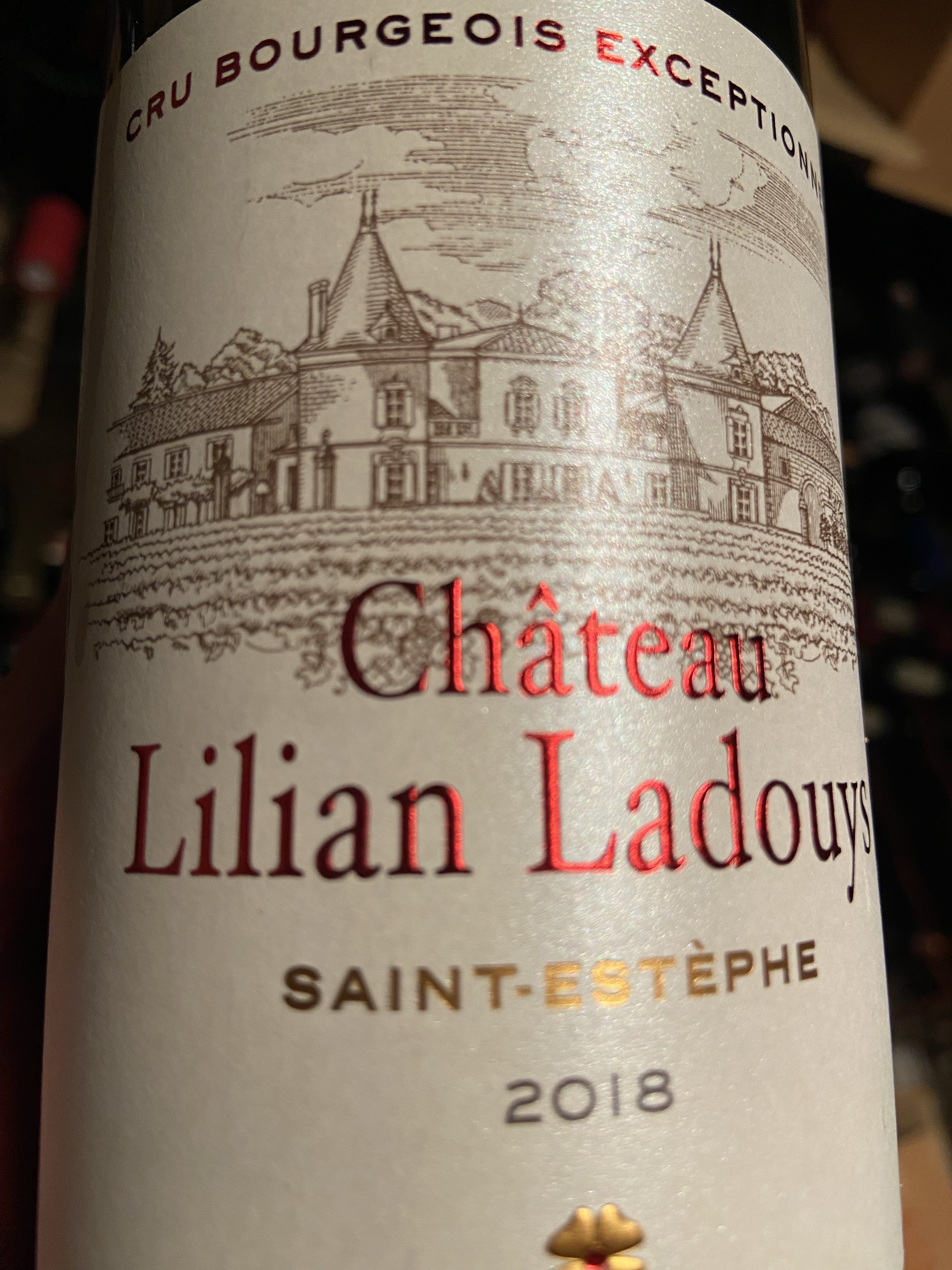
    The Lilian Ladouys 2018 is a red wine from the Saint-Estèphe area, in the Médoc in Bordeaux. It’s produced from Merlot, Cabernet Sauvignon, Cabernet Franc and Petit Verdot, and was aged in oak barrels for around 12 months.

    Now that the introductions are done, on to the tasting:

    I found this wine very hard to understand; on the first glass I was surprised, because it isn’t like the Saint-Estèphes I’d tasted in the past. I have a particular feeling about this terroir — perhaps because my father was born there…

    I was expecting a powerful wine with plenty of body and as tannic as you like! In short, the “Saint-Estèphe” trademark!

    And then, as if by magic, you come across a wine of unsuspected balance. A soft yet pronounced nose, but an elegant robe. On the palate, this wine tenderly caresses you. And there go my preconceptions, blown to pieces.

    Once all that was set aside, I had to pour another glass and start again from the beginning — and there, this wine’s balance will trap you, and the length on the palate is present and subtle. It will take a lot of willpower to share it with the other guests around the table.

    This 2018 is already good to drink, but with a lot of perseverance you can also wait a few years to be surprised all over again.

    At around €25, it will go with a fine piece of meat….

  • Château Moulin de la Rose — An Exceptional Family Saint-Julien

    Château Moulin de la Rose — An Exceptional Family Saint-Julien

    Passers-by, you are entering the ancient and celebrated cru of Saint-Julien; pay your respects!

    Motto of the commune of Saint-Julien-de-Beychevelle

    The Saint-Julien appellation is one of the four communal appellations of the Médoc, alongside Margaux, Pauillac and Saint-Estèphe.

    The most famous estates of Saint-Julien include names such as Château Léoville-Las Cases, Château Léoville-Poyferré, Château Léoville-Barton, Château Ducru-Beaucaillou, Château Gruaud-Larose and many others. Today I’m telling you about an estate less in the spotlight than these grands crus: Château Moulin de la Rose.

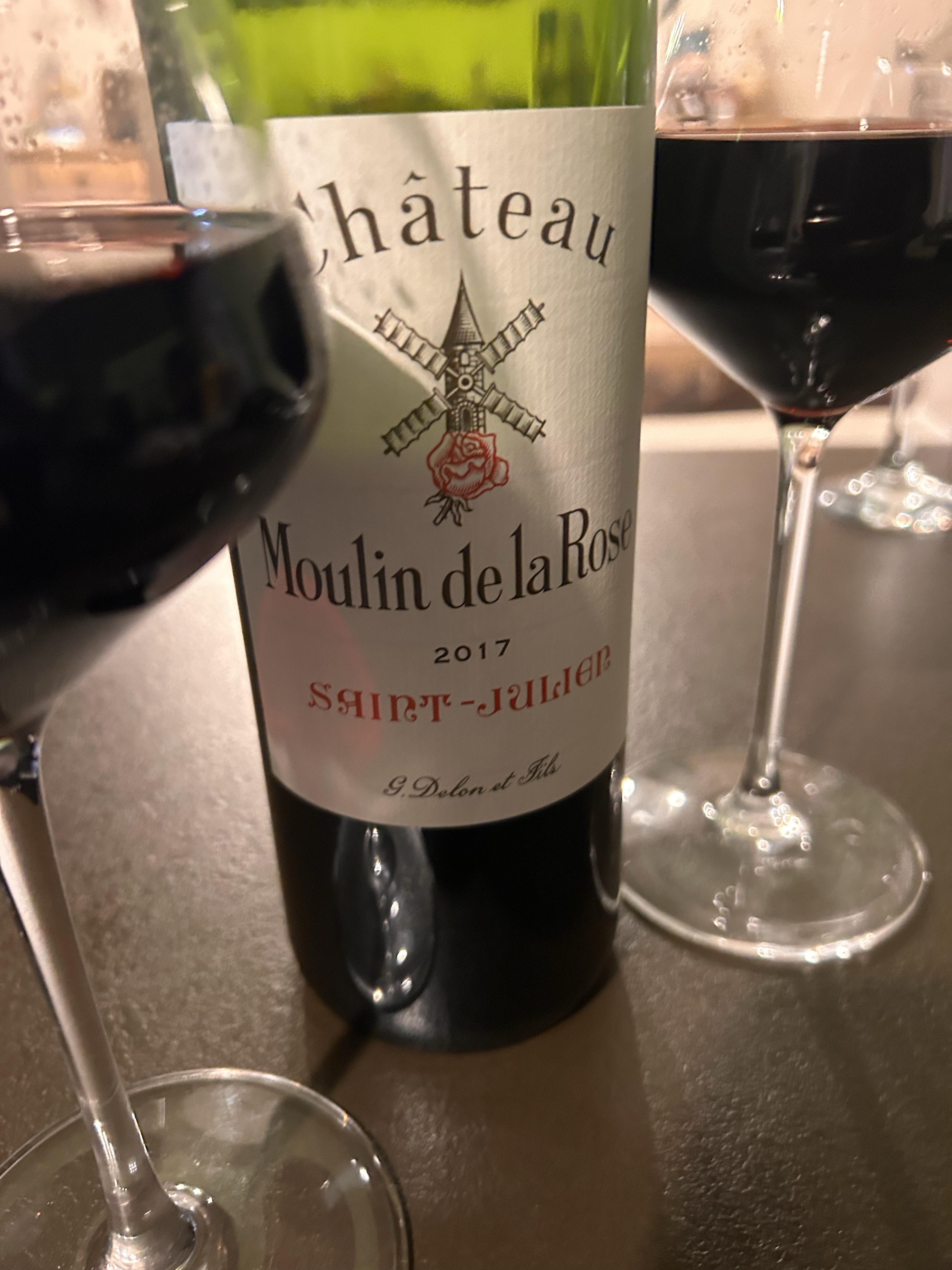
    Since 1971, Guy Delon — together with his children Jean-François and Guylène, the first in the vines, the second handling the commercial side — has worked to produce an exceptional wine, and the result is sublime for this Lord of Saint-Julien.

    You look at it, and quickly a lovely deep red with lighter, almost chocolatey edges appears as you swirl it.

    The robe is highly nuanced; this brownish red is a warning: careful, you’d better get ready — we already sense it, we’ve got something good here!

    On the nose it plays hide-and-seek. You have to hunt for the fruit — redcurrant, then vanilla — but leather and wood are ever-present. It nonetheless keeps a very steady balance; it won’t come and prickle your nose.

    It’s confirmed: this wine is good — and yet we haven’t even tasted it.

    After smelling and observing it, you feel this wine is extremely carefully crafted, every detail counts; no doubt the team is meticulous. I almost want to stop there, hardly daring to taste it for fear my eyes and nose might disappoint me.

    Still, it’s hard to tell my host, “I won’t taste it!”.

    On the palate, quickly it’s wood, wood and more wood… the tannins aren’t all that powerful but enough to remind us of its origin, typical of the great Médocs of Saint-Julien; the balance is striking and then, at last, the second curtain reveals the fruit.

    The length begins with a little spike that reveals the wine’s maturity; it will be present and long.

    Yes, it’s good, it’s very very good. The value for money is exceptional: at a price of around €30, it gives you access to an exceptional Saint-Julien! This 2017 is perfectly ready to drink and will surprise the most demanding guests. Don’t hesitate to pair this wine with a fine red meat, or poultry in sauce. No time? No problem — a nice pizza will do the trick.