Author: Jean-Sébastien LASSERE

  • Beaujolais Nouveau Has Arrived!

    Beaujolais Nouveau Has Arrived!

    A little history……

    The tradition of Beaujolais Nouveau dates back to 19th-century France, but it really took off in the mid-20th century. It’s closely tied to wine production in the Beaujolais region, just north of Lyon.

    Originally, Beaujolais winemakers produced a young wine from the Gamay grape, meant to be drunk soon after the harvest. This light, fruity wine was sold locally in the weeks following the harvest, often to celebrate its end with farm workers and local people.

    Made official in the 1950s

    In 1951, regulations on the appellations d’origine contrôlée (AOC) were introduced to restrict the sale of wines before 15 December of the harvest year. However, Beaujolais producers obtained a waiver allowing them to sell their wine en primeur before that date. And so, on 13 November 1951, “Beaujolais Nouveau” was officially recognised.

    Marketing success

    The tradition took on a national and then international dimension thanks to a dynamic promotional strategy, notably driven by the Union Interprofessionnelle des Vins du Beaujolais (UIVB). In the 1970s, advertising campaigns and festive events pushed the idea of “Le Beaujolais nouveau est arrivé!” (“Beaujolais Nouveau has arrived!”), turning this young wine into a cultural phenomenon.

    Bistros, wine merchants and wine bars quickly adopted the tradition, marked by convivial celebrations every third Thursday of November.

    International expansion

    In the 1980s, the tradition spread beyond France’s borders, notably to Japan, where Beaujolais Nouveau became hugely popular. Today it’s exported to more than 110 countries, often accompanied by local celebrations.

    A festive moment

    Beaujolais Nouveau has become a symbol of conviviality and celebration. It’s usually enjoyed in a relaxed atmosphere, alongside simple dishes such as charcuterie or cheese.

    This tradition is thus the product of a blend of wine culture, local history and a successful marketing campaign, making it an eagerly awaited annual event.

    The Beaujolais appellation and its crus boast many talented winemakers, some of whom have become renowned for their quality work and their role in the region’s international recognition.
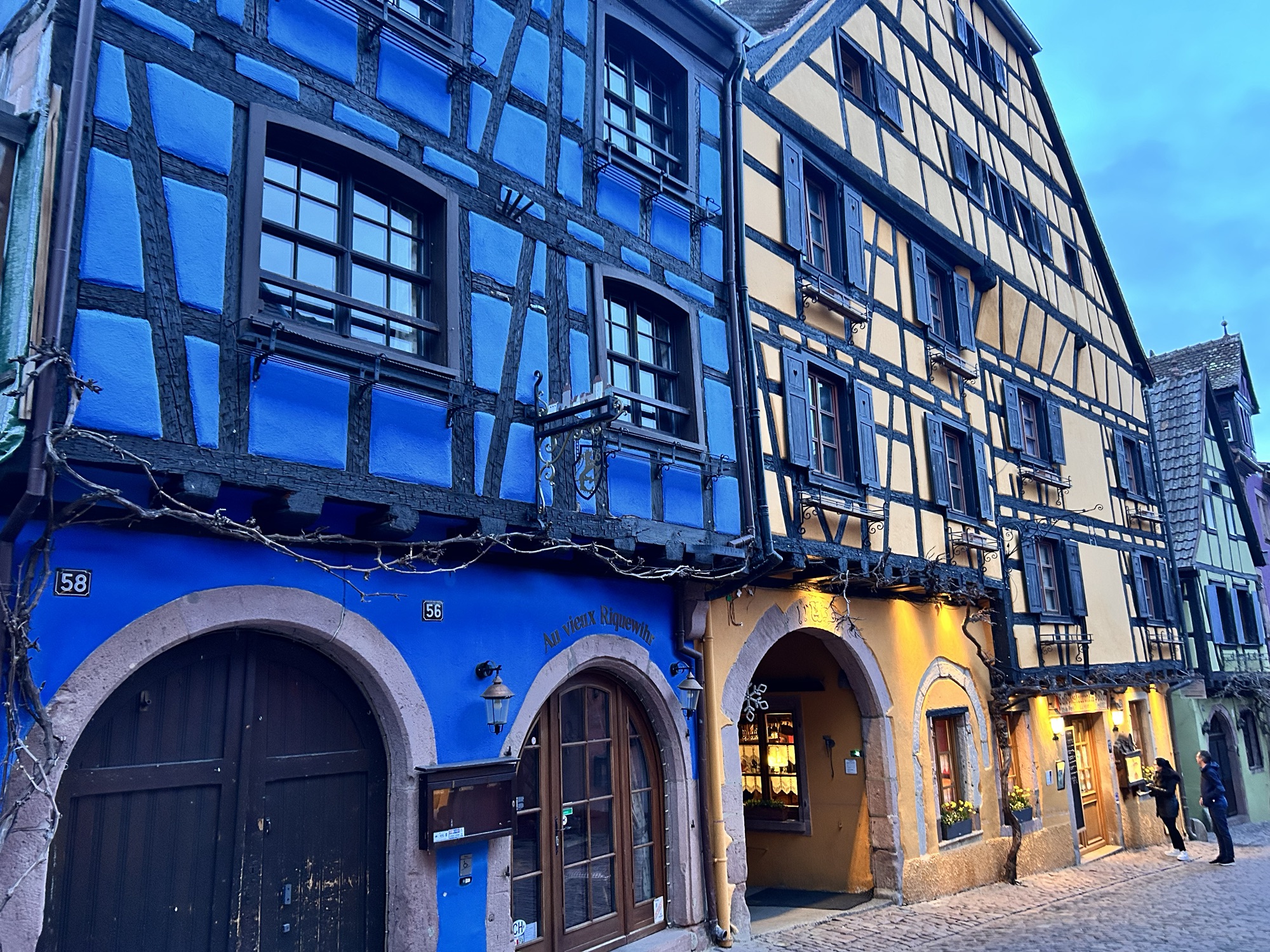
  • Alsace – Part 1: Riquewihr

    Alsace – Part 1: Riquewihr

    “Riquewihr is like a living painting, where every street is a work of art and every glass of wine a poem.”

    Located a few kilometres from Colmar, Riquewihr is one of those Alsatian villages you absolutely must see if you’re a fan of wine tourism.

    The fortified architecture, combined with the typical style of Alsatian houses, makes this village one of the most representative of the local art. Add winemaking excellence to that, and it becomes a paradise on earth for wine lovers.

    This village is an extraordinary place that has managed to showcase all of its heritage.

    Over the centuries, Riquewihr enjoyed a period of prosperity thanks to its vineyard, producing renowned wines such as Gewurztraminer and Riesling.

    Thanks to the preservation of its architectural heritage, Riquewihr draws visitors for its historic charm, its vineyards and its setting within the Ballons des Vosges Regional Nature Park.

    Speaking of the vineyard: Riquewihr is famous for its wines thanks to several key factors that contribute to the exceptional quality of its production. Here are a few of the main ones:

    • Microclimate and exceptional terroirs: Riquewihr benefits from a microclimate and unique terroirs that are ideal for winegrowing. The village is protected from westerly winds by the Vosges massif and enjoys a semi-continental climate with dry, hot, sunny summers.
    • A thousand-year-old winegrowing tradition: Winegrowing in Riquewihr dates back centuries, allowing winemakers to perfect their methods and pass their expertise down from generation to generation.
    • Grands Crus: Of the 51 terroirs classified as “Grands Crus” in Alsace, 13 lie in the Ribeauvillé and Riquewihr area, a testament to the superior quality of the wines produced here.
    • Geological diversity: The Riquewihr vineyard sits on a geological fault line, offering a great diversity of subsoils — from granite to limestone, taking in volcanic and sandstone soils along the way. This diversity lets the different grape varieties thrive to the full.

    These elements combined, along with the winemakers’ expertise, make Riquewihr’s wines not only among the best in Alsace but also internationally recognised for their quality.

    You only have to wander through the village to see it for yourself:

    But we’ll also take the time to linger in the cheese shops and ageing cellars — a rather unique place that carries on a celebrated know-how. Whatever you do, don’t go in! You’ll give in for sure.

    As you know, we love sharing our lovely discoveries with exceptional quality-to-price ratios! So we couldn’t end this article without telling you about a charming estate in Riquewihr:

    MITTNACHT-KLACK, Domaine Les Tuileries — and we had the chance to taste their lovely Pinot Gris:

    That golden colour charmed us, and the Pinot Gris did the rest; at under €15 a bottle, it’s perfect for any occasion.