The Xavier Vignon estate is a Rhône Valley wine producer offering a varied and original range of cuvées. Xavier Vignon is an oenologist passionate about blending, who creates wines by breaking free from traditional codes. In particular, he draws on reserve wines from several vintages, rare grape varieties and innovative ageing techniques.
Xavier Vignon’s most popular wines are those that reflect his bold, creative blending style, which lets him produce original, high-quality cuvées:
The Anonyme cuvée from Châteauneuf-du-Pape, a blend of 25% Merlot, 25% Grenache Noir, 25% Mourvèdre and 25% Syrah — highly unusual for this appellation. This wine is powerful, complex and elegant, with aromas of black fruit, spices, liquorice and chocolate. Price: under €50
The Arcane Le Pape cuvée from Châteauneuf-du-Pape, a blend of 17 different vintages, from 1998 to 2016. This wine is a genuine technical feat, offering exceptional aromatic richness, with notes of candied fruit, flowers, honey, truffle and undergrowth. Price: under €100
The Réserve cuvée from Châteauneuf-du-Pape, a tribute to Champagne’s reserve wines, bringing together several earlier vintages. This wine is harmonious, fresh and fruity, with nuances of red fruit, peach, lemon and brioche. Price: under €50
With a price range between €10 and €100, Xavier Vignon’s wines suit every budget — but always with enormous pleasure in the tasting.
Xavier Vignon is a devotee of blending, which allows him to create complex, harmonious wines that express the potential of each grape variety and each terroir.
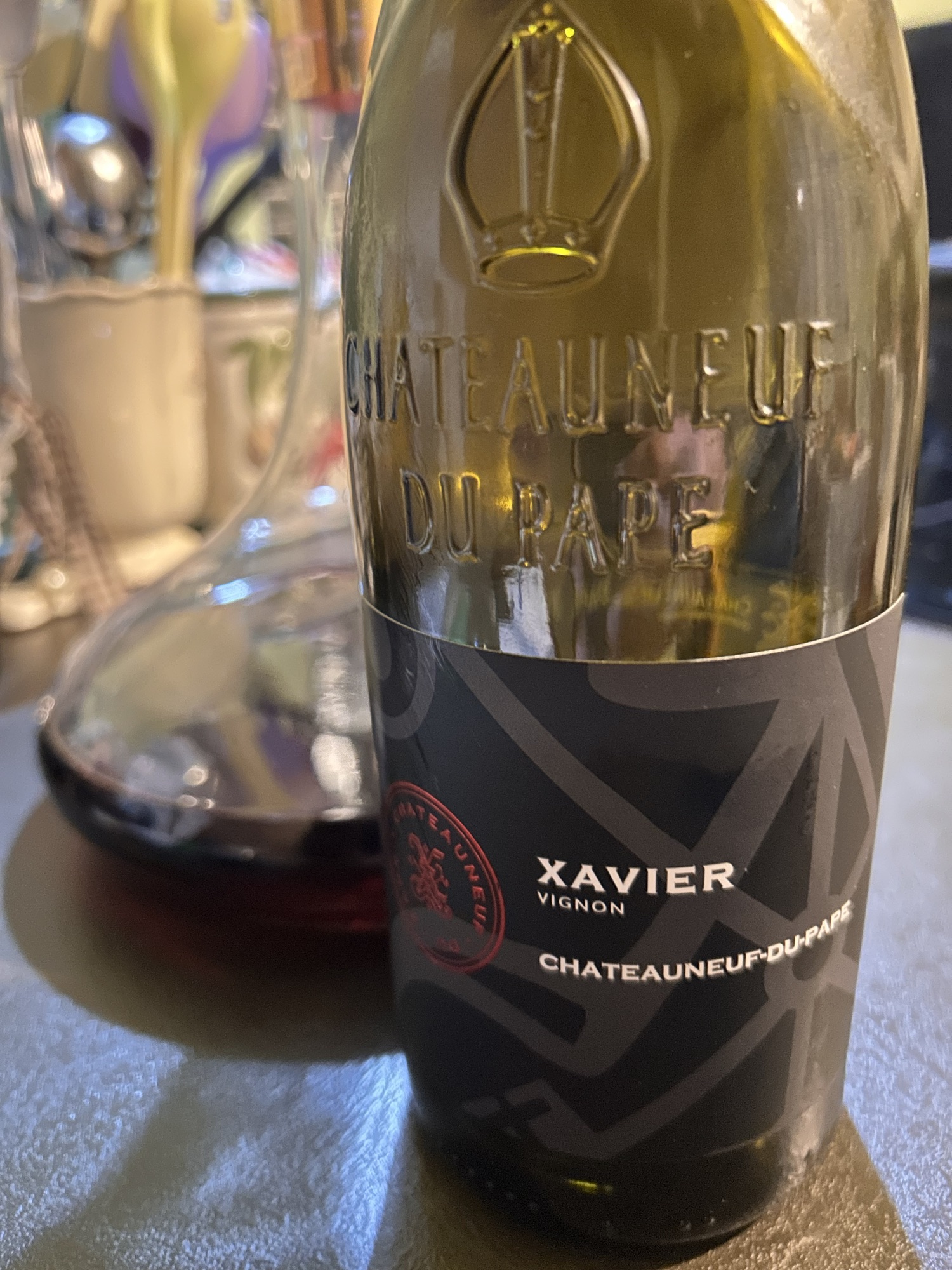
Xavier Vignon’s Châteauneuf-du-Pape “Red” is a red wine from the Châteauneuf-du-Pape appellation in the Rhône Valley. It comes from a blend of 75% Grenache Noir, 10% Syrah, 10% Mourvèdre and 5% Clairette.
We tasted the 2019 vintage:
This wine is defined by its richness, complexity and elegance, with aromas of red and black fruit, spices, tobacco, flowers and liquorice. It has a lovely ruby colour and a full, velvety palate — red fruit, chocolate, tobacco — with a long, fresh, fruity finish.
This wine can be enjoyed now or kept until 2030.
It’s a perfect match for meat dishes such as bœuf bourguignon or roast wild boar. Price: under €50
A little over a year since Wineandtech got going and, with more than 70 wines tasted in 2023 (all right, we started a bit before that…), it’s time to take stock! It was very, very hard to narrow it down to just a few references. Every wine that inspired us last year could have been in this round-up. But we’ve tried to keep the favourites, and above all the wines that produced a “Wooow, what is this wine?”
2023 was a real wine odyssey, in which we had the pleasure of tasting and discovering a plethora of captivating wines, each offering a unique sensory story. Among the many gems tasted, here are a few of the wines that particularly marked our palates and our minds during this memorable year:
Côte-Rôtie Brune et Blonde – E. Guigal
A true treasure of the Rhône Valley, the Côte-Rôtie by E. Guigal embodies the elegance and finesse of this iconic region’s wines. It was impossible not to include this estate’s wines in the selection. With its bewitching aromas of red fruit, spice and violet, this captivating red reveals a delicate structure and silky tannins on the palate. Every sip is an invitation to explore the richness and complexity of the Côte-Rôtie terroirs, while savouring the exceptional craftsmanship of the Guigal house.
Guigal’s Brune et Blonde is an emblematic Côte-Rôtie cuvée, coming from two distinct areas of the appellation: the Côte Brune and the Côte Blonde. The Côte Brune is renowned for its soils rich in iron and manganese, which yield powerful, tannic, structured wines. The Côte Blonde is characterised by its lighter, sandier soils, which produce finer, more elegant and aromatic wines.
At a price approaching €50, this wine is pricier than the ones we usually want to introduce you to, but if you can, don’t hesitate to keep a few bottles in your cellar — you won’t regret it.
We simply had to include the Guigal house in this first selection, so much did this estate amaze us with such high-quality production; we could also have mentioned their famous Côtes du Rhône red, a wine under €10 with EXCEPTIONAL value for money! The Guigal house is a benchmark, and it won’t be hard to find at your favourite wine merchant.
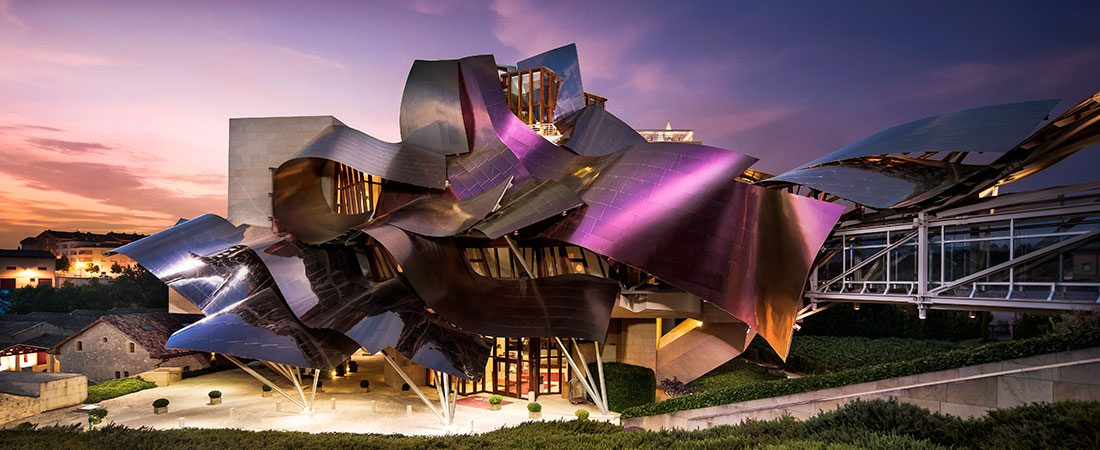
Rioja wines are renowned for their distinctive character and remarkable quality, and the Marqués de Riscal Rioja is no exception. This emblematic red, made from Tempranillo, Graciano and Mazuelo, offers an unforgettable sensory experience, with its notes of ripe fruit, vanilla and subtle oak. It reflects the region’s unique terroir and the centuries-old expertise of the Marqués de Riscal cellar, which has been producing wines since 1858.
This wine perfectly embodies the wines we look for: “characterful on the palate and light on the wallet”. At under €20, it will find its place on your table. It surprised us with the strength of its tannins and its incredible value for money. A Rioja, by definition, will be tannic and fruity, but also balanced and persistent. By heading here, you’ll find it easily.
The Château de Vaux – Molozay, “les Hautes-Bassières”, is a Pinot Noir that dazzled us with its quality and originality. This wine from the French Moselle is one of the great discoveries of 2023, and we’re delighted to have unearthed it right at the start of our Wineandtech adventure. It’s this wine that inspired us for this story, because it defies convention. It’s powerful, tannic, complex, and it reveals all the richness and diversity of Pinot Noir, at an affordable price. It’s a wine that enchants us, all the more so as it comes from a region little known for its red wines. Don’t hesitate to go to their website to order online here; the shipping costs are reasonable.
Just before summer, we tested a multitude of wines — whites, rosés, reds, sparklings. We were looking for a “go-anywhere” wine to open at the start of an aperitif and that could also go with grilled food and salads. We’d already discovered a New Zealand Sauvignon Blanc with refreshing citrus, which I’ll tell you about later, but we wanted something else, a wine out of the ordinary. Once again, the Moselle surprised us with this 8-9° wine (you read that right!), fruity, fresh and lightly sparkling. It’s smooth and pleasant on the palate, and always at a small price. This pretty blue bottle adds charm to the wine, ideal for a refreshing, summery experience: the Frizzant d’Été! You’ll have to go through the Moselle to find it, or through here.
Rimapere is a wine estate in New Zealand, in the Marlborough region, the result of a collaboration between Benjamin de Rothschild and Terry Peabody, owner of Craggy Range. The name Rimapere means “five arrows” in Maori, a nod to the Rothschild family emblem and to New Zealand culture. Rimapere is an exquisite white wine that expresses all the typicity of the New Zealand terroir. It gives off bewitching aromas of tropical fruit, lime and white flowers, which charm from the very first glass. Its vibrant freshness and lively palate make it an ideal partner for fresh seafood and summer salads. We were won over by its freshness and its exoticism, heightened by citrus notes. Even though we’ve known it for a few years, it felt essential to place it in the first WineandTech selection. At around €20, you’ll find it mainly on specialist sites such as Twil.
The Domaine Père Benoit – Brouilly is a red wine that illustrates the authenticity and tradition of Beaujolais, an emblematic wine region. This Brouilly gives off seductive aromas of cherry, blackberry and sweet spices, heralding an elegant, fine palate, with supple tannins and a persistent, slightly vanilla-tinged finish.
This wine is one of those incredible discoveries we made over the course of our visits and encounters. We wandered, we crossed paths, we chatted, and the magic happened. Located in Saint-Lager, this property has belonged to the Brunier family for six generations; the estate produces red, white and rosé wines from varieties such as Gamay, Chardonnay and Pinot Noir, on clay-limestone and granitic soils. The Brouilly is a red wine made from Gamay, from vines more than 90 years old, on the foothills of Mont Brouilly.
What we loved at this estate was meeting a family of passionate winemakers offering an exceptional wine at a reduced price. Made from century-old vines, this Beaujolais, at under €20 a bottle, is one of our “must-haves”. Don’t hesitate to order from their online shop here; other interesting references are available.
2023 was a remarkable year for wine exploration, letting us discover exceptional wines from the four corners of the globe. We travelled through the iconic wines of Bordeaux and the Rhône Valley, but also through the more surprising wines of Beaujolais, such as Brouilly, or of Châteauneuf-du-Pape. We also explored the wines of the world, with New Zealand, Spain, Italy, Portugal, Luxembourg, and our little-known treasures from the Moselle, like the Frizzant d’Été. Every tasting was an enriching experience that made us appreciate the diversity and richness of the world of wine. In 2024, WineandTech has other surprises in store for you, to help you discover even more flavours and terroirs.
Don’t hesitate to follow us on Instagram so you don’t miss any of our wine adventures.
This summer’s heatwave has put one word back at the centre of every conversation: restraint. In wine, we think first of the vine — the harvest pressing on, water stress, grape varieties suffering. And yet, when you measure the carbon footprint of a bottle, the surprise lies elsewhere. The grape isn’t the main culprit. The container is.
THE CONTAINER WEIGHS MORE THAN THE VINE
The carbon anatomy of a litre of wine
The figures from the French Vine and Wine Institute (IFV) are unequivocal: the sector’s carbon footprint sits at around 1.20 kg CO2 equivalent per litre, and nearly half comes from the glass bottle alone — making it, then handling it at end of life. The rest is split between winegrowing (around 22%), transport (17%) and winemaking (11%). ADEME’s Agribalyse database puts the full range between 1,000 and 1,500 gCO2eq per litre, depending on the estate and the calculation method.
The practical upshot is counter-intuitive: to cut its footprint, a winemaker often has more to gain by acting on packaging than by optimising work in the vines alone. The real environmental impact is decided as much on the shop shelf as in the cellar.
THE CARBON VERDICT: WEIGHT RULES
Lightening the glass, the first reflex
The weight of the glass: the first lever for decarbonising wine.
Even before changing format, the most immediate lever comes down to one word: weight. A 690 g bottle shows a footprint of 1 kg CO2 equivalent per litre; the same bottle, lightened to 395 g, drops to 0.6 kg. The IFV estimates that trimming 100 g from a bottle saves 134 to 148 gCO2eq per litre — roughly, in order of magnitude, the equivalent of half a traditional baguette. Add tinted glass, richer in cullet (recycled glass), and you claw back a few more points.
To get our bearings, a reminder about volumes is in order: the reference format — the one that fills the shelves and accounts for almost all sales — remains the 75 cl bottle (750 ml); its big brother, the magnum, holds double, at 1.5 litres. So it’s on this 75 cl standard that most of the match is played out. The problem is that the average weight there stays high: an empty 75 cl bottle today weighs around 550 g, and some prestige cuvées comfortably exceed 800 g — for exactly the same contents. For those 750 ml of wine, the glass can account for anywhere from 395 g to 800 g: only the container, never the wine, makes the difference. Weight that often serves only to flatter the feel in the hand.
Bag-in-box, can, PET: the carbon drops
Switching the container outright tips the scales faster still. Bag-in-box, aluminium can and PET bottle — polyethylene terephthalate, the light, transparent plastic of water and soda bottles — all show a carbon footprint per litre well below that of glass: less material, so less manufacturing energy and less weight to transport. The bag-in-box does especially well — folded flat when empty, it cuts the number of lorries needed to deliver a given volume several times over. For everyday wines, the ones drunk within the year (nearly 90% of production), the carbon argument is hard to dispute.
BUT CARBON ISN’T THE WHOLE STORY
What the carbon count forgets to measure
This is where the comparison takes its turn. To reduce a piece of packaging to its carbon footprint alone is to look at the world through a keyhole. A full life-cycle assessment (LCA) — one that also measures toxicity, resource depletion and soil pollution — tells a more nuanced story.
The IFV notes it explicitly: the can, because of the aluminium, has the highest impact of all containers — glass included — on the human-toxicity indicator, since producing primary aluminium pollutes air, soil and water with heavy metals. Plastics, for their part, weigh heavily on the depletion of non-renewable resources. As for the bag-in-box, its multilayer pouch combining plastic film and aluminium remains, in practice, very hard to recycle: the excellent carbon score masks a real end-of-life problem.
Carbon isn’t the only environmental impact: each material shifts the problem rather than erasing it.
Summary of the IFV’s work on packaging
The real match: single use versus reuse
If you’re looking for the move that really changes things, it lies neither in plastic nor in aluminium. It lies in the deposit-return scheme. Comparing reused glass with single use, ADEME puts the savings at -51% water, -76% energy and -79% greenhouse-gas emissions — and the advantage is secured from the bottle’s second use.
The decisive factor isn’t even the weight of the glass, but the return rate: the more a bottle goes back into circulation, the more its footprint collapses. At Château de l’Éclair, an experimental estate in Beaujolais, they use a 560 g reusable bottle — heavier than the usual 420 g — and the balance still comes out ahead from the second cycle. Lawmakers are pushing in this direction: since 2023, France’s AGEC law has required the largest market players to reuse 5% of their packaging, with a target of 10% by 2027.
Reuse: from its second life, glass regains the advantage.
SO WHY DO WE STILL BUY HEAVY?
The weight of prestige
Here’s the paradox. The technical solutions exist, they win on carbon, and yet the market stays hooked on the heavy bottle. The reason isn’t technical, it’s cultural. In the consumer’s mind, the weight of the glass signals quality: a dense bottle, a deep punt, and the wine seems more serious before it’s even tasted.
Two very real arguments come on top of that: glass remains the container best suited to ageing and the most neutral for wine in physico-chemical terms, and it reassures buyers on export markets, where the image of the appellation trumps all else. The result: a winemaker who lightens the bottle or switches to bag-in-box takes a commercial risk that few dare to shoulder on their top cuvées. The technology has made its call; minds haven’t, not yet.
The right container in the right place
The comparison, ultimately, doesn’t crown a single winner. For an ageing wine that will cross the Atlantic, lightweight tinted glass remains the most sensible choice. For a summer rosé drunk on a terrace — seasonal, precisely — the can or the bag-in-box cut the footprint without sacrificing any of the pleasure. And for the everyday wine bought again each week, the deposit-return scheme is by far the most virtuous route. Real progress doesn’t lie in finding the perfect packaging, but in ceasing to wrap the same heavy glass around every wine, whatever its use. Restraint, here as elsewhere, begins with the right tool in the right place.
Sources: French Vine and Wine Institute (IFV) — carbon footprint of the wine sector and packaging levers; ADEME — Agribalyse database and the study “Environmental assessment of deposit-return schemes for the reuse of glass packaging” (parts A & B, 2023-2025); Réussir Vigne, January 2026; AGEC law (2020) and the 3R Strategy. Data cross-checked in July 2026.
The tradition of Beaujolais Nouveau dates back to 19th-century France, but it really took off in the mid-20th century. It’s closely tied to wine production in the Beaujolais region, just north of Lyon.
Originally, Beaujolais winemakers produced a young wine from the Gamay grape, meant to be drunk soon after the harvest. This light, fruity wine was sold locally in the weeks following the harvest, often to celebrate its end with farm workers and local people.
Made official in the 1950s
In 1951, regulations on the appellations d’origine contrôlée (AOC) were introduced to restrict the sale of wines before 15 December of the harvest year. However, Beaujolais producers obtained a waiver allowing them to sell their wine en primeur before that date. And so, on 13 November 1951, “Beaujolais Nouveau” was officially recognised.
Marketing success
The tradition took on a national and then international dimension thanks to a dynamic promotional strategy, notably driven by the Union Interprofessionnelle des Vins du Beaujolais (UIVB). In the 1970s, advertising campaigns and festive events pushed the idea of “Le Beaujolais nouveau est arrivé!” (“Beaujolais Nouveau has arrived!”), turning this young wine into a cultural phenomenon.
Bistros, wine merchants and wine bars quickly adopted the tradition, marked by convivial celebrations every third Thursday of November.
International expansion
In the 1980s, the tradition spread beyond France’s borders, notably to Japan, where Beaujolais Nouveau became hugely popular. Today it’s exported to more than 110 countries, often accompanied by local celebrations.
A festive moment
Beaujolais Nouveau has become a symbol of conviviality and celebration. It’s usually enjoyed in a relaxed atmosphere, alongside simple dishes such as charcuterie or cheese.
This tradition is thus the product of a blend of wine culture, local history and a successful marketing campaign, making it an eagerly awaited annual event.
The Beaujolais appellation and its crus boast many talented winemakers, some of whom have become renowned for their quality work and their role in the region’s international recognition.
“Riquewihr is like a living painting, where every street is a work of art and every glass of wine a poem.”
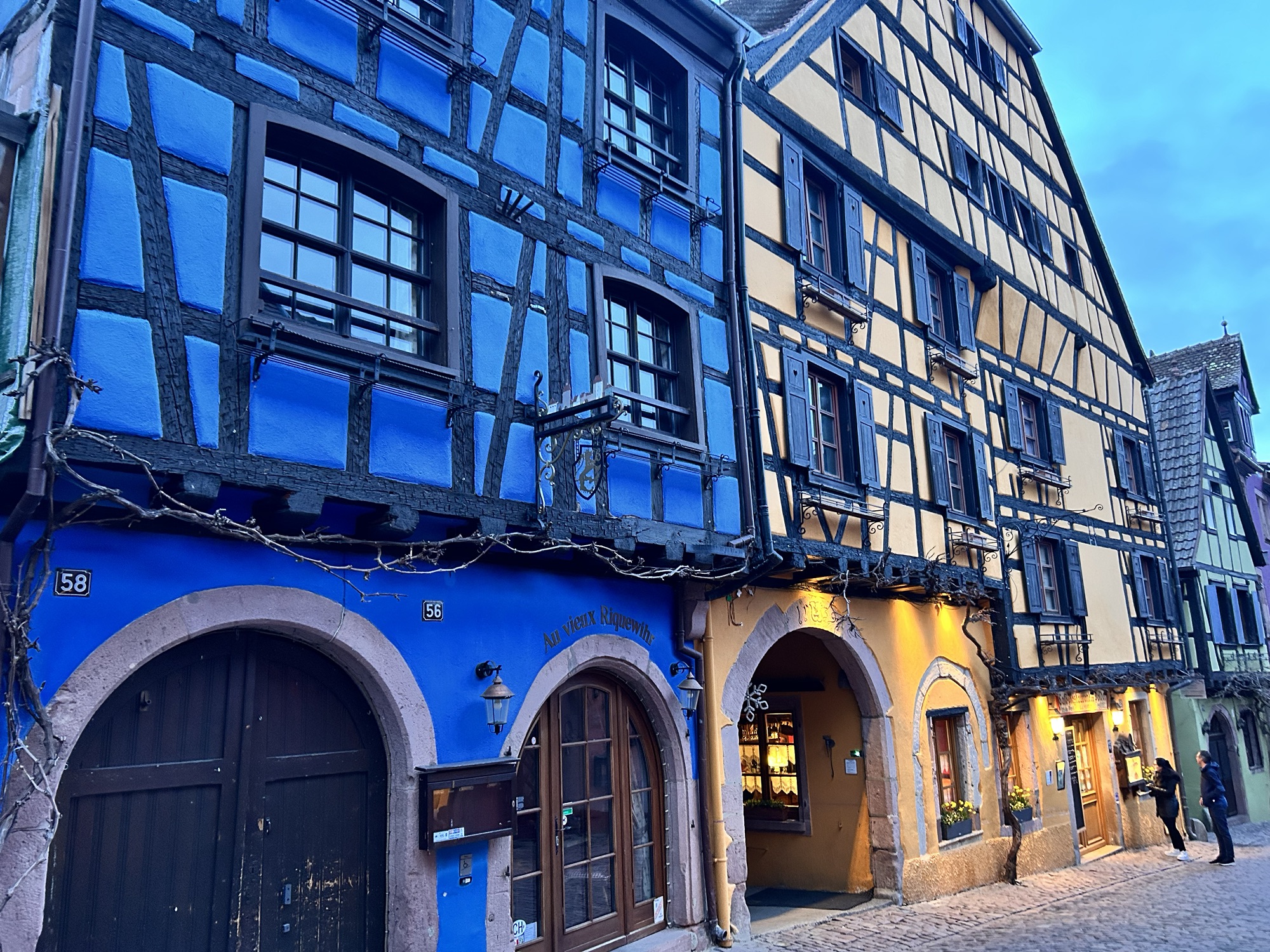
Located a few kilometres from Colmar, Riquewihr is one of those Alsatian villages you absolutely must see if you’re a fan of wine tourism.
The fortified architecture, combined with the typical style of Alsatian houses, makes this village one of the most representative of the local art. Add winemaking excellence to that, and it becomes a paradise on earth for wine lovers.
This village is an extraordinary place that has managed to showcase all of its heritage.
Over the centuries, Riquewihr enjoyed a period of prosperity thanks to its vineyard, producing renowned wines such as Gewurztraminer and Riesling.
Thanks to the preservation of its architectural heritage, Riquewihr draws visitors for its historic charm, its vineyards and its setting within the Ballons des Vosges Regional Nature Park.
Speaking of the vineyard: Riquewihr is famous for its wines thanks to several key factors that contribute to the exceptional quality of its production. Here are a few of the main ones:
Microclimate and exceptional terroirs: Riquewihr benefits from a microclimate and unique terroirs that are ideal for winegrowing. The village is protected from westerly winds by the Vosges massif and enjoys a semi-continental climate with dry, hot, sunny summers.
A thousand-year-old winegrowing tradition: Winegrowing in Riquewihr dates back centuries, allowing winemakers to perfect their methods and pass their expertise down from generation to generation.
Grands Crus: Of the 51 terroirs classified as “Grands Crus” in Alsace, 13 lie in the Ribeauvillé and Riquewihr area, a testament to the superior quality of the wines produced here.
Geological diversity: The Riquewihr vineyard sits on a geological fault line, offering a great diversity of subsoils — from granite to limestone, taking in volcanic and sandstone soils along the way. This diversity lets the different grape varieties thrive to the full.
These elements combined, along with the winemakers’ expertise, make Riquewihr’s wines not only among the best in Alsace but also internationally recognised for their quality.
You only have to wander through the village to see it for yourself:
But we’ll also take the time to linger in the cheese shops and ageing cellars — a rather unique place that carries on a celebrated know-how. Whatever you do, don’t go in! You’ll give in for sure.
As you know, we love sharing our lovely discoveries with exceptional quality-to-price ratios! So we couldn’t end this article without telling you about a charming estate in Riquewihr:
MITTNACHT-KLACK, Domaine Les Tuileries — and we had the chance to taste their lovely Pinot Gris:
That golden colour charmed us, and the Pinot Gris did the rest; at under €15 a bottle, it’s perfect for any occasion.