WineAndTech’

Category: Uncategorized

  • Château Poujeaux 2018

    Château Poujeaux 2018

    Château Poujeaux is a wine estate located in the Moulis-en-Médoc appellation, in the Bordeaux region of France. It’s renowned for its high-quality red wines, mainly from the Merlot, Cabernet Sauvignon, Cabernet Franc and Petit Verdot varieties.

    This property has a long history going back to the 16th century, but its reputation as a wine estate was cemented over the course of the 20th century, under the management of the Theil family. Today it belongs to the Cuvelier family, who also own other great châteaux in Bordeaux.

    I can already see you giving me a funny look, and I can guess your thoughts: “another Moulis!”. Naturally, my recent trip to the area gave me another chance to plunge back into this terroir that binds us by blood. So yes, another Moulis — but not just any one! A lord bearing the number 2018, showing a dark, thick red robe.

    A first nose that’s woody and lightly spiced; I love it, I’m used to it, I find familiar sensations anchored in my subconscious.

    With a little dance, the alcohol comes to tickle your nose — you have to be gentle with this grand gentleman.

    It isn’t easy to make out the flavours, but the red fruits quickly stand out.

    On the palate, the wood is omnipresent, along with spice and leather. It’s a generous, very round wine; it’s powerful, but you sense a slight restraint, a freshness that isn’t unpleasant. The length on the palate is agreeable and persistent — we’re in for a while — and you’ll note a lovely taste of caramel through the length.

    Blackcurrant and raspberry broadly stand out.

    A price around €30, and you can keep it another 4-5 years without any problem. It will only be better for it.

  • Château Chasse-Spleen – Part 2: Art and Living

    Château Chasse-Spleen – Part 2: Art and Living

    What boldness, to marry art with the ancestral — even biblical — practice of wine! And in the end, walking through these gardens, you notice a balance and a craftsmanship entirely in the image of this terroir.

    This work, Lilian Bourgeat’s boots, is now an integral part of the Chasse-Spleen identity. Its incorporation into the label is the absolute recognition of that.

    But the art doesn’t stop at the garden. A quick tour of the cellars and a disconcerting work intrigues us all over again. Felice Varini’s anamorphosis brings out the “Triangles” — but to make them out, you’ll have to find the ideal spot inside the cellar. Here, we’ll help you a little:

    Since we’re in the cellars, let’s take the opportunity to taste a little wine.

    Gressier 2015

    This Moulis is fresh on the nose; the red fruit is secondary and you can sense a touch of youth. On the palate, a little acidity comes right from the start to revive your palate. I really do find it holding back — no doubt opening it earlier would have let us appreciate it better. Without any doubt, it needs a while longer in the cellar.

    Chasse-Spleen 2015

    The nose is very pleasant — red fruit, wood and hints of spice. No doubt about it, we’re no longer in the same dimension.

    On the palate it’s round, enveloping, fresh and very balanced. The aromas detected on the nose confirm their presence without any trouble. This 2015 is already very good to discuss.

    L’Héritage de Chasse-Spleen 2011

    The nose is light; wood and tobacco, over a brownish-red colour.

    On the palate, the red fruit is well present, and the length shifts to hand leadership back to the wood. It’s perfect to drink!

  • Château Chasse-Spleen – Part 1: A Call to Joy and Pleasure

    Château Chasse-Spleen – Part 1: A Call to Joy and Pleasure

    Château Chasse-Spleen is a wine estate located in the Moulis-en-Médoc appellation, in the Médoc wine region of France. It’s renowned for producing wines of great quality, mainly from Cabernet Sauvignon, Merlot and Petit Verdot.

    The boots in front of the château are especially loved, but I’ll tell you about them soon 😉

    The château’s name, “Chasse-Spleen”, has a poetic origin. We’ll come to it a little further down the article, but I love using the phrase “chasing away the spleen” and the idea that tasting its wines brings real joy and drives away melancholy — always in moderation, of course.

    In 1820, the estate was divided in two: one half went to M. Gressier and the other to his sister, Madame Castaing, who then gave rise, in 1863, to the name Chasse-Spleen.

    Two origins are put forward for the name Chasse-Spleen. The first is attributed to Charles Baudelaire, referring to his collection “Les Fleurs du Mal”, which the Bordeaux painter Odilon Redon, a neighbour of the château, illustrated.

    The second would be to the credit of Lord Byron, a great wine lover who, during a visit to Chasse-Spleen in 1821, is said to have remarked that this wine had no equal for chasing away dark thoughts.

    The Castaing family remained owners until 1909, when the German merchant Segnitz took over in turn; the estate was then bought in 1920 by the Lahary family, before being sold on in 1976 to Jacques Merlaut. Céline Villars-Foubet, Jacques Merlaut’s granddaughter, has run Château Chasse-Spleen since 2000. Château Chasse-Spleen has been classified Grand Cru Exceptionnel in the Moulis appellation since 1932.

    The land on which Chasse-Spleen stretches today has been planted with vines for more than 400 years.

    The great witnesses of that era still keep watch — and it’s hard not to notice them at the corner of the property:

    In 1820, Gressier Grand Poujeaux was one of the first Crus Bourgeois of the Médoc and, up to a certain point in time, one of the jewels of the Moulis appellation. Château Gressier Grand Poujeaux always belonged to the same family, the Saint Affrique/Gressiers, from its creation until its sale to its neighbours at Chasse-Spleen in 2003.

    Walking through the vines, you can in fact spot this tribute and this echo of history, thanks to the names of certain plots on the estate.

    If you have the chance to taste a wine from Château Chasse-Spleen, I encourage you to do so and discover for yourself the quality and beauty of its wines.

    The estate produces 5 wines:

    Château Chasse-Spleen

    Oratoire de Chasse-Spleen, the second wine

    Héritage de Chasse-Spleen, previously called Ermitage de Chasse-Spleen, in the Haut-Médoc appellation

    Blanc de Chasse-Spleen

    Château Gressier Grand Poujeaux


    I looked for the most complete site at competitive prices to buy this wine, and here it is here

    That said, the first wine remains exceptional and of great quality, so it will be hard to find below €35 a bottle. The second wines, however — also of very great quality — start at around €15.

    In a future post I’ll take you inside the cellars and we’ll taste a little wine.

  • E. Guigal and Its Côte-Rôtie: The Brune et Blonde Blend

    E. Guigal and Its Côte-Rôtie: The Brune et Blonde Blend

    “Côte-Rôtie is the balance between finesse and power, a symphony of flavours that awakens the senses.”
    Gérard Gauby

    The French vineyards of Côte-Rôtie are nestled on the steep, narrow slopes of the hillsides on the right bank of the Rhône. The soils are mainly composed of schist and mica schist, which give the wines their distinctive character.
    Syrah is the main variety used in Côte-Rôtie wines, bringing deep aromas of black fruit, spice and violet. A small proportion of Viognier, a white variety, can be blended with the Syrah to add complexity and finesse to the wines.

    The Côte-Rôtie appellation has no official classification system. However, the vineyards are often divided into two distinct zones: the Côte Brune to the north, where the soils are richer in iron oxide, and the Côte Blonde to the south, characterised by sandier soils.

    Guigal produces a specific wine called “Brune et Blonde de Guigal” in reference to the two distinct zones of the Côte-Rôtie appellation, the Côte Brune and the Côte Blonde.

    “Brune et Blonde de Guigal” is a cuvée that represents the blending of grapes from these two terroirs. It’s a wine that seeks to capture the qualities of Côte-Rôtie wines that are at once powerful and elegant.

    I’d warned you in previous posts: I’m a fan of this estate, so I’m on the lookout for every good opportunity to discover all the E. Guigal wines.

    Let’s talk a little about this 2019: a deep, thick robe, of a streaming red; on the nose it’s lightly spiced with a leather/tobacco blend, and you can feel it holding back, not wanting to reveal everything to us.

    Softness and depth, but it doesn’t give everything away; it’s decidedly a little young, though the aromas of leather and spice are interesting. The tannins aren’t strong — they’re in balance and don’t make this wine too powerful.

    A length of persistent red fruit; a very light acidity makes way for the fruit, and towards the end I think I detect a little banana.

    The subtlety and complexity of this wine make it very good; it won’t leave anyone indifferent. That said, its price comfortably exceeds €50, which makes it an exceptional wine. But it’s a safe bet, and none of your friends will be left indifferent.

  • 🇫🇷 La Cité du Vin

    🇫🇷 La Cité du Vin

    An interesting article….

    Bordeaux is a true wine city and is surrounded by large vineyards. In the city itself, you will find several museums dedicated to all the wines …

    🇫🇷 La Cité du Vin
  • Château Arcins and the “Crus Bourgeois”

    Château Arcins and the “Crus Bourgeois”


    “The Haut-Médoc represents a safe bet in the world of wine, with its rich, full-bodied and well-balanced wines that perfectly express the region’s exceptional terroir.” – Robert Parker

    Château d’Arcins is a wine estate located in the Haut-Médoc appellation, in the Bordeaux wine region of France. It’s renowned for producing quality red wines.

    Château d’Arcins has a long history going back to the 18th century.

    The varieties grown on the estate are mainly Cabernet Sauvignon, Merlot and Petit Verdot, which are typical of the Haut-Médoc appellation.

    The wines produced by Château d’Arcins are known for their elegance and their structure. They often offer aromas of black fruit, blackcurrant and cherry, along with notes of spice and cedar from their ageing in oak barrels. Château d’Arcins wines can benefit from bottle ageing to develop more complexity and maturity.

    As a Bordeaux wine estate, Château d’Arcins is subject to the region’s own regulations and classifications, such as the Haut-Médoc Appellation d’Origine Contrôlée (AOC), which guarantees the origin and quality of the wines produced in this area.

    The robe is magnificent, a graduated but vivid red. A woody but light nose that comes to tickle your nose gently.

    On the palate it’s long and balanced, with no acidity or aggressiveness; the red fruit isn’t dominant, but it’s present.

    The length is light but persistent.

    Good value for money, for a wine I’d sum up in one word: “lightness”.

    But it’s also a chance for me to tell you about the “Cru Bourgeois” classification that Château d’Arcins holds.

    The Crus Bourgeois classification is a separate system covering the wines of the Médoc region, in particular those not included in the official 1855 Bordeaux classification. This classification has gone through several revisions and controversies over the years. Here’s an overview of how it has evolved:

    • 1932: The first Crus Bourgeois classification is created to identify quality wines in the Médoc region.
    • 2003: A major revision is undertaken, but it is ultimately annulled in 2007 because of legal disputes.
    • 2009: A new classification is introduced, with three levels: Crus Bourgeois Exceptionnels, Crus Bourgeois Supérieurs and Crus Bourgeois.
    • 2010: The 2009 classification is annulled after a legal challenge, and the Crus Bourgeois system is reformed.
    • 2018: A new classification is put in place, with two levels: Crus Bourgeois and Crus Bourgeois Supérieurs. The wines must meet strict quality and traceability criteria, assessed in regular tastings.

    It aims to showcase talented producers and to give consumers a reliable reference for choosing quality wines at more affordable prices.

    The classification is based on a rigorous selection process and on established quality criteria. Here are the main elements to bear in mind:

    1. Application: Médoc wine properties may submit their application to be considered in the classification process. This is done through a formal request to the Alliance des Crus Bourgeois.
    2. Quality assessment: The wines are assessed in blind tastings conducted by a panel of independent experts. The tasters take into account criteria such as balance, structure, aromatic expression and regional typicity.
    3. Classification decision: The wines are ranked in two distinct categories:
      • Crus Bourgeois: Properties that meet the established quality criteria are permitted to use the term “Crus Bourgeois” on their labels.
      • Crus Bourgeois Supérieurs: Among the Crus Bourgeois, a subgroup of properties that stand out still further in terms of quality is raised to the status of “Crus Bourgeois Supérieurs”.
    4. Validity and reassessment: The Crus Bourgeois classification is granted for a period of five years. At the end of that period, properties must submit their wine for a new assessment to maintain or improve their classification status.

    The Crus Bourgeois classification is overseen by the Alliance des Crus Bourgeois, which is responsible for organising the selection process, managing the quality criteria and promoting the Crus Bourgeois to consumers.

  • Pinot Noir and Rosé? Luxembourg Surprises!

    Pinot Noir and Rosé? Luxembourg Surprises!


    “The wines of the Luxembourg Moselle are jewels of the Grand Duchy, with their distinctive aromatic character, their bewitching elegance and their ability to age gracefully.” – Vins & Terroirs Authentiques

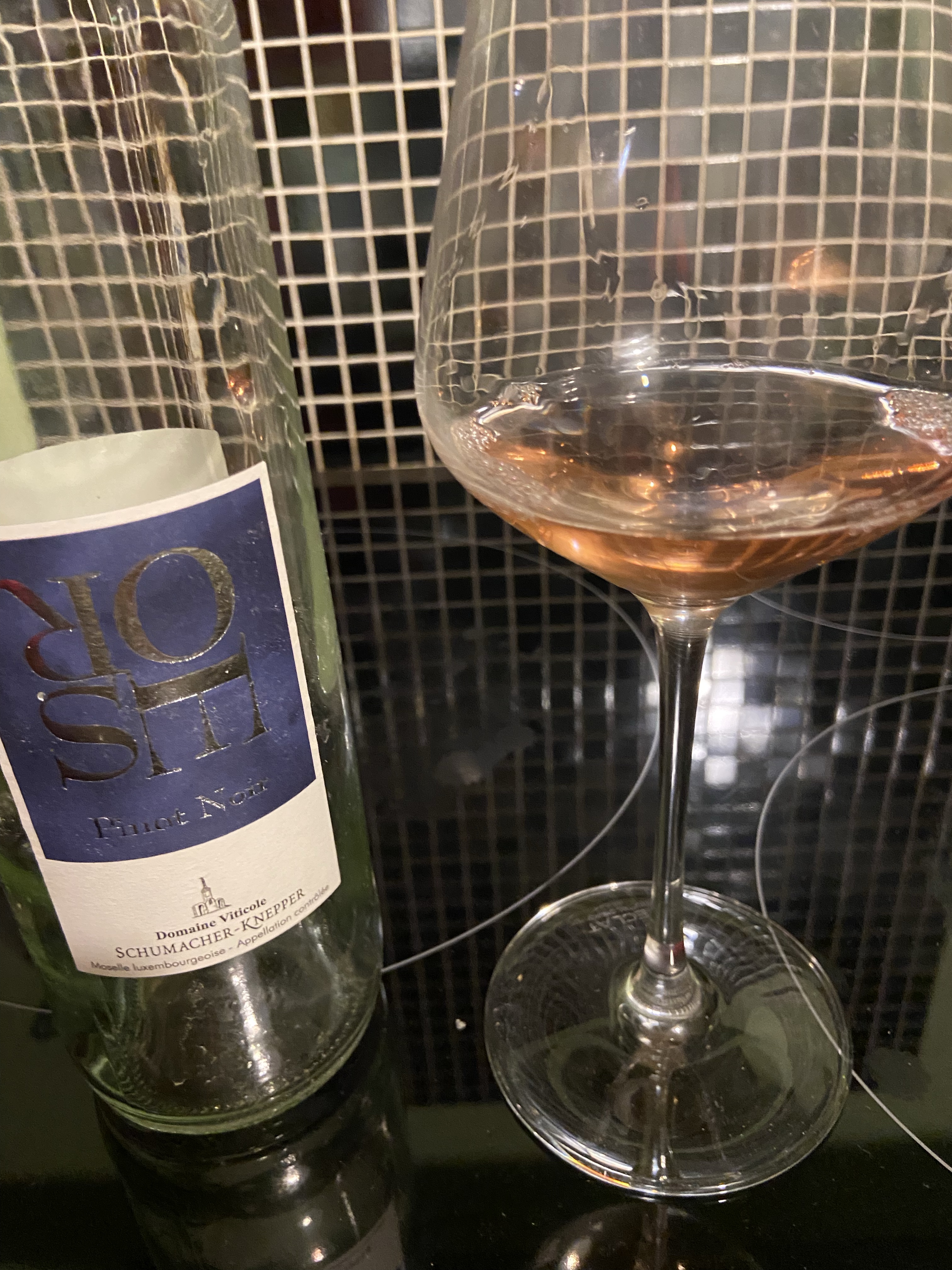
    I’ve already told you about this property, Maison Schumacher-Knepper, but today I’ve decided to share with you a tasting of their Pinot Noir Rosé, a wine much appreciated as this summer season gets under way.

    The robe is a superb salmon pink. A citrus nose, light and pleasant. On the palate it reveals the citrus already spotted on the nose — peach, grapefruit — which begins a length on the palate with a point of acidity.

    In short, a perfect summer wine! I can’t make up my mind: do we keep it a little, or drink it this year?

    I’m going to keep it a while, and we’ll talk about it again next year.

  • E. Guigal Crozes-Hermitage, a Controversial Wine

    E. Guigal Crozes-Hermitage, a Controversial Wine


    “Crozes-Hermitage is one of the most respected appellations of the Rhône Valley, offering wines of great depth, with aromas of black fruit, spice and liquorice.” – Decanter

    From the very start of this little adventure, I set myself a rule of conduct. To write honest articles that look like me, with no fuss — both about wines I’ve enjoyed and about those I haven’t.

    During the first months of writing and tasting, I concentrated mainly on safe bets that I know well and have a handle on; I felt confident and the articles came easily, one after another.

    After that period of confidence, I opened up and decided to venture into grape varieties and countries unknown to my palate. Some wonderful encounters, and tastings that stay with you.

    After a quick search, I decide to taste a white Guigal! E. Guigal — I’d announced it in a previous post: I’m a fan of this house and its production. We’re going for a Crozes-Hermitage; lovely reviews of this wine scroll across my screen and help make up my mind.

    Right, let’s taste!

    A lovely pale, mineral robe — astonishing purity. A fruity, fresh, pleasant nose… I amuse myself picking out citrus with scents of peach and mango.

    In we go! Very mineral from the outset, almost dry but fresh; it’s soft, agreeable — and then the wood quickly asserts itself and there it turns. My palate isn’t used to it: the power of that aroma makes me think of liquorice. That flavour will dominate right through to the end.

    I have to admit this tasting threw me. It’s a subtle balance, and I struggle to hold on to a feeling of satisfaction.

    I hesitated for a long time before writing this article; as I’ve said before, I’m a fan of the Guigals. It’s a peculiar feeling, something like disappointment.

    But there it is…

    I don’t regret this tasting; I even have a particular memory of it that has stayed with me. As I often say to people who have me taste wine, I try to be fair most of the time — these wines are always lovely discoveries. It’s rare, but from time to time I explain (in nice words, all the same) that I didn’t entirely enjoy a wine; I try to be precise and to bring out the positive points as well as those I liked less. This wine falls into that category.

    So I’m giving it a new WordPress category, created for the occasion: “unsettling”.

    But I’ll let you be the judge!

    Don’t worry, this won’t stop me being a fan and holding E. Guigal’s production in high respect. I fully intend to give Crozes-Hermitage another chance and try a different vintage.

    Go on! Step out of your comfort zone, because every tasting is an adventure!

  • Number 2: Maucaillou’s Second Wine, of Very Great Quality

    Number 2: Maucaillou’s Second Wine, of Very Great Quality

    “Moulis-en-Médoc produces wines of character, combining power and finesse, and offering excellent value for money.” – Decanter

    Château Maucaillou is a wine estate located in the Médoc region of France. It sits in the commune of Moulis-en-Médoc, in the Gironde département. The estate has a long history going back to the 17th century.

    The property makes its wines from classic Bordeaux varieties such as Cabernet Sauvignon, Merlot, Cabernet Franc and Petit Verdot.

    The estate covers around 90 hectares, of which 75 are planted with vines. The vines benefit from a quality terroir, with soils of gravel, clay and limestone. The harvest is picked by hand, which allows for rigorous selection of the grapes.

    The château itself is a magnificent building, typical of Bordeaux architecture. It’s surrounded by gardens and vines, offering a picturesque and peaceful setting; personally, I love crossing the railway line and strolling in front of the gardens.

    I’ll point you to the website if the history of this building interests you: https://www.maucaillou.com/maucaillou/le-chateau-maucaillou/

    What sets this château apart is its museum and its cellar tour — few estates in the Médoc offer this kind of experience. You can wander around and enjoy the wine with the guide’s advice, for just a few euros. You can normally turn up without booking, but a quick phone call the day before is advisable.

    I’m usually very critical of “second” wines. I’ve often been disappointed: you get the impression the big brother is so imposing that it commandeers the best vines and takes all the cellar team’s attention. What’s more, in the past the Maucaillou estate spread itself rather thin, creating a large number of wines that weren’t always successful.

    With this No. 2, Château Maucaillou has made a wine that has forged its own identity. It’s very different from its elder, naturally, but it must be pampered by its parents. You notice a strength, a care in its design — it’s impossible not to feel that great quality.

    Its robe is intense, a lovely ruby at the surface.

    Its nose is marked by wood and spice; powerful, with the wood clearly standing out. On the palate it’s round, and the aromas of wood, blackcurrant and vanilla are in subtle balance — it’s really very pleasant. The tannins are powerful, granted, but everything fits together perfectly. Even the length is a pleasure. For me, this 2019 is already ready to drink, but it can stay a few more years in your cellar.

    At under €15, this wine offers value for money that’s almost impossible to find in the Médoc at that price! No need to hesitate — it deserves a place in your cellar.

  • The She-Wolf of Alsace

    The She-Wolf of Alsace

    “The wines of Alsace are a dance between tradition and innovation, where respect for the terroir meets the winemaker’s creativity.” – Olivier Humbrecht

    Founded in 1902, the Wolfberger house is one of the oldest winegrowing cooperatives in the Alsace region of France.

    It owns more than 900 hectares of vineyards, spread across the region’s finest terroirs, notably at Eguisheim, Pfaffenheim and Rouffach.

    Maison Wolfberger offers a wide range of wines, from whites to reds, taking in rosés, Crémants d’Alsace and late-harvest wines. The region’s typical varieties — Riesling, Gewurztraminer, Pinot Gris and Pinot Noir — are carefully grown and vinified to express all their complexity and character.

    La Louve, in Pinot Noir! This wine takes its name from the legend of the founding of the town of Eguisheim, home to part of Maison Wolfberger’s vineyards.

    La Louve in Pinot Noir is a versatile wine that can be enjoyed on its own or with dishes such as light meats, roast poultry, sautéed mushrooms or soft cheeses.

    All in all, Maison Wolfberger’s La Louve in Pinot Noir is a refined red that reflects the quality of the wines produced in Alsace, as well as the house’s know-how and its commitment to crafting exceptional wines.

    My tasting of this 2020:

    A nose of wood and red cherry fruit; I make out an aroma of pear.
    On the palate I seem to detect blackcurrant and vanilla, with a lovely, heightened taste of grenadine.
    Through the length, the pomegranate fruit comes to dominate, leaving little room for a few spikes of acidity.
    A lovely balance! In short, a benchmark Alsace wine — a Wolfberger.

    At under €10, the value for money is exceptional, and you shouldn’t be put off by its youth: it can proudly grace your table this very year.