“Coats of arms are the heraldic symbols that capture the essence and the history of an entity, be it a family, a region or a community. They are the guardians of traditions and values that transcend generations.”
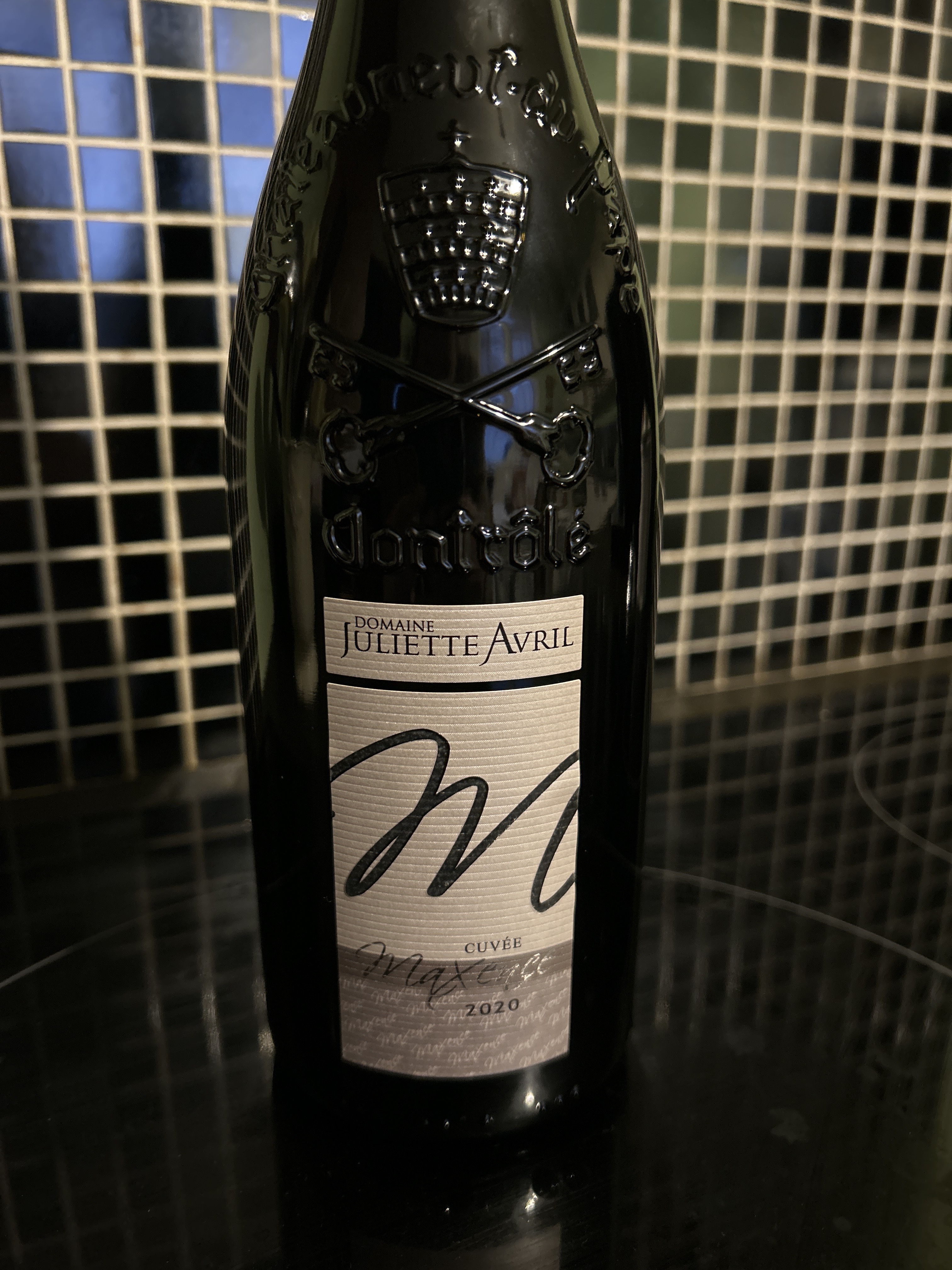
The coat of arms of Châteauneuf-du-Pape generally shows interlaced keys, symbolising the keys to Saint Peter’s kingdom, in reference to the papacy and the village’s history.
The Châteauneuf-du-Pape coat of arms may also depict a medieval castle with a pope wearing a three-crowned tiara, in reference to the region’s history. In the 14th century, the popes established their residence in Avignon, close to Châteauneuf-du-Pape, and played an important role in the development of local winegrowing.
The embossing of the coat of arms on Châteauneuf-du-Pape bottles dates back to the 1930s. It was at that time that France’s National Institute of Origin and Quality (INAO) was created to regulate and protect appellation wines. The INAO granted Châteauneuf-du-Pape its appellation d’origine contrôlée (AOC) in 1936, making it one of the first AOCs in France.
The use of the coat of arms on bottles was introduced to distinguish the wines of Châteauneuf-du-Pape from other wines produced in the Rhône region. The arms, showing the castle and the pope, were chosen to reflect the region’s history and its link with the Avignon popes.
Since then, embossing the coat of arms on Châteauneuf-du-Pape bottles has become standard practice to guarantee the origin and compliance of the wines produced in this renowned appellation.
Beyond Châteauneuf-du-Pape, there are other wine appellations that use coats of arms on their bottles.
Here are a few examples — though they’re much rarer to find than in Châteauneuf, where the bottles are marked systematically.
Hermitage (Rhône Valley, France) sometimes uses arms depicting a hermit, in reference to the legend of the hermit who lived on the hill of Hermitage.
Rioja (Spain): the Rioja appellation often uses a coat of arms on its bottles, notably showing historic armorial bearings and symbols linked to Spanish culture.
Ribera del Duero (Spain): wines from the Ribera del Duero appellation may sometimes display arms depicting a bunch of grapes, a bull or heraldic symbols.
Saint-Émilion (Bordeaux, France) often uses coats of arms on its bottles, showing heraldic symbols such as lions, escutcheons and crowns.
Sauternes (Bordeaux, France), known for its sweet wines, may carry arms depicting symbols such as bunches of grapes, bees or heraldic elements.
Barolo (Piedmont, Italy), renowned for its powerful reds, sometimes uses coats of arms on its bottles, depicting symbols such as crowns, escutcheons and lions.
Chianti Classico (Tuscany, Italy) often uses arms on its bottles, showing symbols such as roosters, bunches of grapes and heraldic escutcheons.
Douro (Portugal) may use coats of arms on its bottles, depicting symbols linked to the wine region and to the history of Port.
Barbaresco (Piedmont, Italy) sometimes uses arms on its bottles, showing heraldic symbols and elements linked to the region.
A special nod to the Tavel appellation, proud of its majestic “T”, set off by a shield proud to carry the colours of this exceptional rosé.
“Châteauneuf-du-Pape is an exceptional wine, one that deserves to be tasted with respect and admiration, like a masterpiece of nature and of man.” – Robert M. Parker Jr., American wine critic and founder of The Wine Advocate.
I knew Châteauneuf, naturally, but it was a friend who passed on his passion for these wines. Châteauneuf-du-Pape has barely 2,500 inhabitants; I like to compare it to Saint-Émilion, a small town that produces wines known the world over!
I’ve chosen here to tell you about a lovely discovery: Le Télégramme, from the Châteauneuf-du-Pape appellation, produced by Domaine du Vieux Télégraphe. The wine’s name refers to the estate’s history, as it was once used as a telegraph station.
It’s the result of a skilful blend of different varieties typical of the region, notably Grenache, Mourvèdre, Syrah and Cinsault. The grapes are hand-harvested and the wine is aged in oak barrels for around 10 months.
The result is a rich, powerful red, with aromas of black fruit, spice and garrigue. On the palate the wine is full-bodied with firm tannins and a long, persistent finish. This wine can be enjoyed young, but it’s also known to age remarkably well in the cellar.
Le Télégramme is considered one of the finest wines of Châteauneuf-du-Pape, an appellation renowned for its rich and complex reds. Domaine du Vieux Télégraphe is also famous for its other wines, notably the traditional Châteauneuf-du-Pape, which is even more complex and elegant than Le Télégramme.
My tasting of the 2019 vintage:
A woody nose right from the start with a marked red fruit — blackcurrant — and a little vanilla at the end. You’ll note a lovely brownish colour along the upper edges; it stays a dark red. No doubt about it, it shows its colours from the outset.
This generous wine has a length marked by wood; the red fruit isn’t omnipresent, but personally I’m fond of that. The wine is round and powerful. This one won’t disappoint me — like every Châteauneuf I’ve had the chance to drink. What consistency in the quality of these wines!
This wine goes beyond €30 a bottle, which is no small budget, I’ll grant you. All the same, if you have the opportunity to keep it in your cellar, don’t hesitate.
What’s more, there’s no need to wait: this 2019 is already ready to drink.
“The wine of Saint-Émilion is a symbol of French excellence, a wine that embodies tradition and innovation, passion and patience.” – François Hollande
Jean-Louis Frouinard bought the estate in 2006, with the aim of producing a wine of great quality while respecting the environment and the traditions of the Saint-Émilion region.
Château Franc La Rose uses around 70% Cabernet Franc and 30% Merlot. The wine is vinified in stainless-steel vats before being aged in French oak barrels for 12 months.
On the nose, it gives off a lovely woody blackcurrant.
On the palate, the wood is ample and dominant, but I personally very much enjoyed the balance that emerges. The red fruits aren’t, to my mind, quite so omnipresent — contrary to what I’ve read elsewhere.
The mark left by this wine is nonetheless subtle and lightly pronounced; then, as if to remind you that it’s a lord of Saint-Émilion, a little touch of acidity comes along to wake up your palate.
You will have to wait, though, for it to express itself a little more — you can feel it’s holding back. Keep it in the cellar and let your patience be rewarded by this lovely cru.
At around €20, this wine offers interesting value for money. It’s one of my favourites — I love this wine.
Note: The label is particularly well crafted, with roses highlighting the wine’s name. I love it…
“Châteauneuf-du-Pape is an eternal wine, one that can be enjoyed from its youth but which gains depth and complexity with age.” – Robert M. Parker Jr.
Domaine Juliette Avril is a family estate covering around 22 hectares of vines, set on the rolled-pebble soils typical of the region. The vineyard is farmed sustainably and the harvest is picked by hand.
The estate produces a range of red and white wines, but its main production is its red Châteauneuf-du-Pape. This wine is made from a blend of Grenache, Syrah and Mourvèdre, aged in oak barrels for 12 to 18 months.
How about we move on to the tasting:
A spicy, light nose with lovely leathery scents; discreetly, red fruit comes through and makes itself known. On the palate it’s soft, but it gradually builds to let a touch of acidity appear at the end of the journey. The wood is present and ample. Through the length it’s light — I’m a little disappointed on that point. This wine is good, pleasant, but it will need more time. This 2020 is without doubt one to keep.
“The wines of the Moselle, on the slopes around Metz, have this quality of being light and leaving a subtle taste on the palate.” – Didier Van Cauwelaert
Château de Vaux – Les Hautes-Bassières
I don’t know whether it’s since I started taking the time to break wines down, but here’s one I’m not about to forget.
A Pinot Noir from the Moselle! Put like that, you might well think: yeah, OK, so what?
This wine will make you forget every preconception about Pinot Noir, and even more so about the wines of the Moselle.
On the nose it will already have you doubting! An impressively woody nose for a Pinot Noir, and the subtle spices will already tell you that this wine wasn’t thrown together in a hurry!
On the palate it’s powerful, and the Pinot Noir only appears in a second wave.
The spices, the wood — I’m astounded by the taste of this wine. I can’t make out the other aromas beyond the wood; it’s ample and wraps around the whole palate.
On the finish it’s quick, and that isn’t its strong point — but the rest more than makes up for that slight lapse. We’ve just been reminded that we have a Pinot Noir in the glass!
Since 2013, Château de Vaux has produced wines with organic and biodynamic certification. Rest assured, this wine is good, very good — don’t let the label worry you, quite the opposite.
Château de Vaux is a wine estate located in the Moselle region of France, near the city of Metz. It’s renowned for the quality of its wines, notably its whites from the Auxerrois variety and its reds made from Pinot Noir and Gamay.
The estate covers 13 hectares, planted on steep, south-east-facing slopes that enjoy optimal sunshine for ripening the grapes. The vines are farmed with respect for the environment and biodiversity, with particular attention paid to the quality of the fruit.
The Château de Vaux estate is also a place to visit, where you can discover the vines and the cellars, as well as taste the estate’s wines: https://chateaudevaux.com
“Apremont is a wine that breathes the mountain and tastes of altitude.” – Nicolas Gonin
Apremont wines are made from the Jacquère grape, which has been grown in the mountains of Savoie for centuries. The Apremont vineyards sit on steep slopes, at an average altitude of 450 metres, and enjoy a cool, dry climate.
Apremont wines are known for their freshness and lightness, as well as for their floral and fruity aromas, such as apple, pear and lime. On the palate they are generally dry and mineral, with a lively acidity and flinty flavours.
Philippe Viallet’s white wines are particularly renowned. They’re made from local varieties such as Jacquère and Altesse, grown on steep slopes in the mountains of Savoie. These whites are fresh, light and mineral, with aromas of white fruit and flowers.
For this 2021, a robe of mineral clarity; I make out aromas of pear. Highly pleasant and lightly spiced, we’ll taste it with pleasure.
On the palate this wine is light and the fruit is subtle. At 11.5 degrees and with a touch of chill, it’s agreeable, and it followed me right through the meal — after the main course, it delighted us with its company alongside the cheese.
Apremont wines offer exceptional value for money; to go without them is sacrilege.
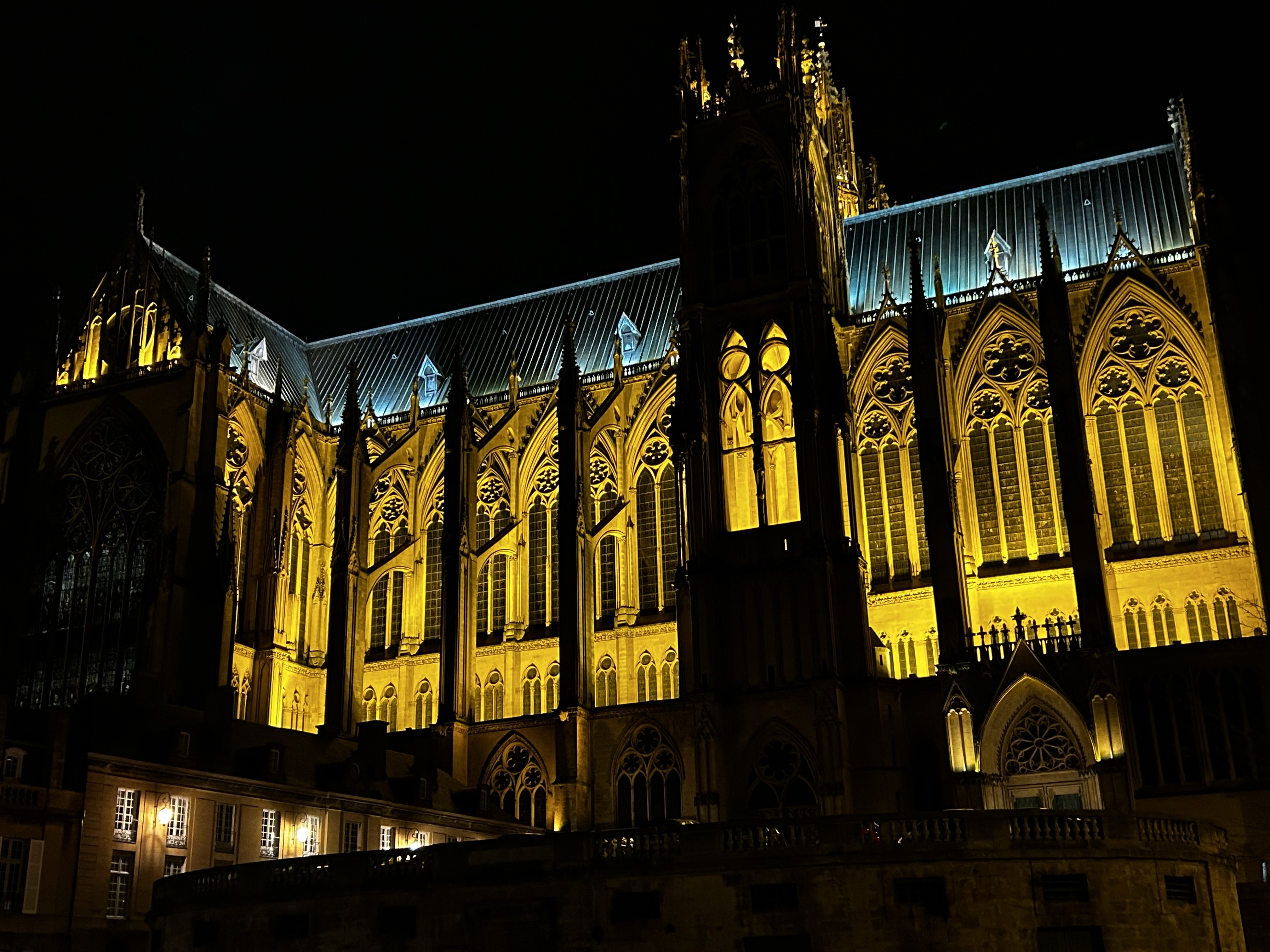
“Metz is a city that has known many wars, but which has also known moments of peace and great prosperity. It is a city rich in history and culture.” – François Hollande, former President of the French Republic.
For St Patrick’s Day 2023, we decided to celebrate in our own way and head to a wine bar, “La Quille”, on Place de Chambre.
Intimate and refined in its decor, we were warmly welcomed, and I recommend the place:
We were sensible, and I let myself be tempted by a wine from Chinon.
The estate is located in the village of Cravant-les-Coteaux, around 8 kilometres south-west of the town of Chinon. It covers about 12 hectares of vineyards, all on the left bank of the Vienne, the region’s main river. The vines are planted on clay-limestone soils and farmed using environmentally friendly methods.
The owner explains that he selects his wines for their commitment to the environment. The wines of Domaine Fabrice Gasnier are renowned for their elegance, their freshness and their finesse.
Let’s pair it with a little something to nibble on and see what happens!
This wine is beautiful and very pleasant. Oh, it’s no Beaujolais — but I make out an aroma of banana!
It announces a quick, light wine; I’m worried, and then experience puts me back on track! Don’t judge by appearances! And indeed, this wine turns out to be a real treat. Thanks La Quille for this lovely discovery…
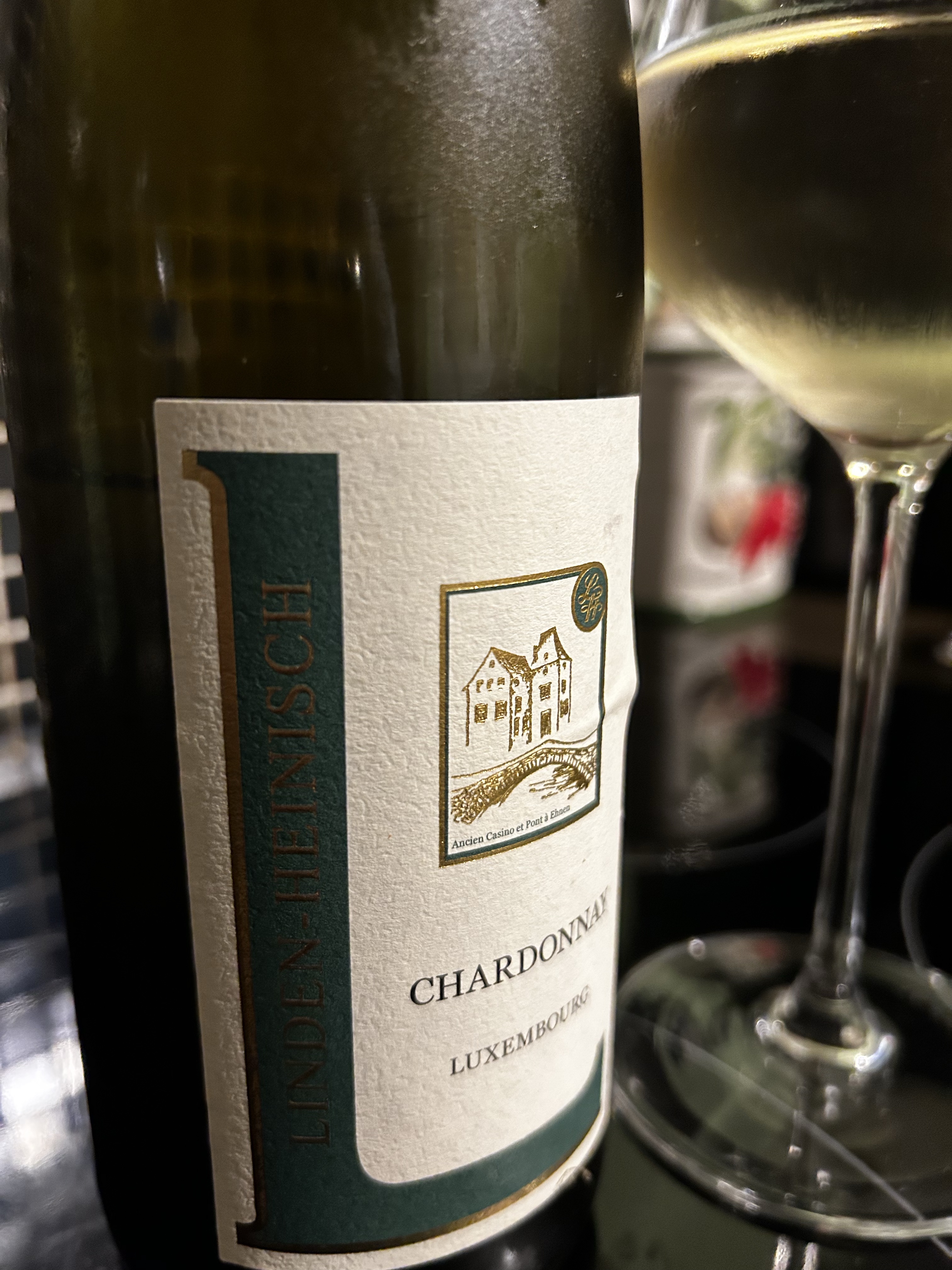
“Chardonnay is like love: it can be soft and tender, or rich and powerful, but it is always exciting.” – James Halliday
I can’t help loving this grape variety… Chardonnay…
They’re beautiful and always surprising, with a lovely robe that’s never the same twice. This is a declaration of love: I adore these white wines. But why?
Might a woman be behind all this? It’s true that when you read certain reviews, you sometimes wonder whether the author is talking about a wine or about a woman.
Wine is often compared to a woman, for its sophistication, its beauty. Just like a woman, wine can be elegant, refined and subtle, with delicate aromas and flavours that gradually reveal their richness and depth — a unique and fascinating personality, with infinite nuances and variations that testify to its complexity and its character.
If I brought her the taste for wine, my wife has, without any doubt, made me love white wines and Chardonnays in particular. Those little moments together tasting these wines always remain special and intimate.
Now that we’ve talked about love, let’s go and taste this wine:
A pale, mineral robe; it’s very pure and discreet.
A nose scented with orange zest and citrus; I make out a little walnut, but I’m not sure — I hesitate.
With a touch of chill, its scent is undeniably in lovely balance — so pleasant that I stayed several minutes without drinking it, just enjoying the sensation.
On the palate, that walnut — I really can’t dismiss it; the sensation comes back and my palate reminds me not to forget it. But naturally it goes and hides just behind that wood which comes to wrap the whole thing.
Through the length it lingers as a lovely suspended moment, and it’s true you don’t want it to stop…