A family meal comes together on the spur of the moment, and the host comes up from the cellar with this bottle. As if it were nothing, he says: shall we taste this one? Let me tell you, I nearly fell off my chair — and there was no need to say it twice.
For those unfamiliar with Château Talbot, it’s a wine estate in Saint-Julien-Beychevelle. It is ranked a fourth growth in the official 1855 Bordeaux Wine Classification. It owes its name to an English commander, John Talbot, who was killed at the Battle of Castillon in 1453.
Owned by the Bignon-Cordier family since 1918, the estate produces quality wines known for their unique taste and elegance. The vineyard spans 110 hectares, of which 105 are planted with red varieties (Cabernet Sauvignon, Merlot and Petit Verdot) and 5 with white varieties (Sauvignon Blanc and Sémillon).
The family currently owns other properties too, such as Domaine Saint-Andrieu in the Provençal hinterland and Château Sénéjac near Le Pian-Médoc.
Château Talbot also offers cellar tours, a chance to discover its exceptional terroir and craftsmanship. It’s a place steeped in history and passion that I invite you to explore — especially when you see these cellars, capable of housing up to 1,800 barrels; it’s monumental!
So it’s an estate that blends history, tradition and modernity, offering quality wines recognised for their unique taste and elegance.
Now, on to this 2004 vintage:
Despite the excitement of the moment, we took our time with this bottle, letting it adjust to room temperature for several hours. Then, uncorking it two hours before the meal let it quietly breathe and slowly open up. In short… we were careful not to rush it.
At 20 years old, it catches the eye with its dark, deep red, revealing tones of glazed wood — you can tell it’s ready to show its power.
After the customary swirl, it releases aromas of tobacco, blackberry, Morello cherry and liquorice. The barrel wood has done its work, wrapping it all in its protective presence.
On the palate, there’s no doubt — we’re in the realm of Bordeaux’s great lords. Wood is the first thing I pick out, making a resounding entrance. Rich and generous, blackberry and cherry soon coat the palate. On the finish, a very discreet acidity balances the whole. The finish shows the perfect mastery of the people behind it — and also the precise work of time.
Despite this undeniable craftsmanship, the price is quite high, around €70 a bottle for the more recent vintages.
That said, the estate also produces a second wine called “Connétable Talbot” for under €30 — no doubt it will thrill us as much as its big brother, and we’ll tell you more soon. We wouldn’t be complete without mentioning that the estate also makes a white, “Caillou Blanc”, which you’ll find around €40 a bottle at your favourite wine merchant.
“Where we live, people ought to be born happier and more joyful than elsewhere, for I believe happiness comes to those who are born where good wine is found.”
Leonardo da Vinci
This quote reflects the cultural and historical importance of wine in the region and how it is woven into people’s lives. Colmar is often nicknamed the “capital of Alsatian wines” and plays a key role in the region’s wine route.
But Colmar is also home to priceless architectural heritage:
Saint-Martin Collegiate Church: A major work of Gothic architecture in Alsace, built between 1235 and 1365. It briefly served as a cathedral and is an important landmark for the people of Colmar.
Saint-Martin Collegiate Church
The Covered Market (Marché Couvert): A historic building designed in 1865, which today houses a market where visitors can find fresh local produce.
The Covered Market
A magnificent wine cellar belonging to the Meyer house, just steps from the collegiate church.
Meyer wine cellar
La Petite Venise (Little Venice): This is the name given to the stretch of the Lauch river in Colmar, famous for its colourful houses lined up along the water, echoing the famous Italian city. The perfect spot to enjoy a Colmar beer and a tarte flambée.
Colmar beer – La Petite Venise district
Alsace is so rich in local products that give the town its whole identity — wine, of course, but not only!
The macarons de Riquewihr are a gourmet speciality of the Alsace region of France. Here are a few interesting details about these treats:
Macarons de Riquewihr
Origin: The Macaron Coco, also known as Kokosmàkrenele, is a small coconut cake created in 1996 in the first shop of the Maison Alsacienne de Biscuiterie in Riquewihr.
A unique recipe: The original recipe, unchanged since its creation, stands out for its combination of coconut and cane sugar, offering a one-of-a-kind taste experience.
We couldn’t end this stay in Colmar without stopping by one of the most iconic cellars and wine estates in Alsace.
In 2022, it celebrated 120 years of expertise and innovation in the service of the Alsatian vineyard. With more than 450 cooperative winegrowers, Wolfberger is an ambassador for the Alsatian terroir, producing a wide range of products, including Alsace white wines, crémants and eaux-de-vie (fruit brandies).
The vineyard stretches over more than 100 km, from Marlenheim in the north to Thann in the south, and reflects the diversity of Alsatian terroirs across its 1,200 hectares of vines and 13,000 plots. The wines are made from seven distinctive grape varieties, offering a range from dry, fresh whites to spicy, fruity whites, as well as fruity, low-tannin reds.
Wolfberger shop
Here are a few of the wines that stand out in particular:
Riesling Grand Cru Rangen 2020: A wine of great finesse, with remarkable aromatic complexity and a lovely structure.
Gewurztraminer Grand Cru Eichberg 2017: Known for its spicy, fruity character, this wine is a textbook example of this emblematic Alsatian variety.
Crémant d’Alsace Rosé – Collection Signature: This rosé crémant is prized for its finesse and the lightness of its bubbles.
Pinot Gris Saisons Fauves 2021: A dry white with fruity notes, perfect to pair with a variety of dishes.
Pinot Noir La Louve de Wolfberger 2022: A fruity, low-tannin red that captures the freshness of Alsatian Pinot Noir beautifully.
“When he hears the word ‘bouchon’, the pessimist thinks straight away of traffic jams; the optimist, of a good bottle of wine.”
Bernard Pivot
We decided to talk to you about a small but crucial element for our beloved nectars: corks!
The corks of wine bottles play a very important role in preserving and developing wine. Their history, manufacture, purpose and evolution are rich and fascinating.
A little history…
In ancient times, amphorae used for storing and transporting wine were sealed with stoppers made from various materials such as ceramic, wax or wood.
The Romans often used clay stoppers sealed with pitch or wax.
As winemaking techniques evolved, cork stoppers began to be used in Spain and Portugal.
In the 16th century, cork became increasingly popular thanks to its ability to hermetically seal wine bottles and allow controlled maturation.
The invention of the modern wine bottle with a narrow neck in England in the 17th century encouraged the use of cork stoppers.
In the 18th century, Dom Pérignon, a Benedictine monk, used cork stoppers for his sparkling wines, contributing to their success.
Making cork stoppers
Cork comes from the bark of the cork oak, mainly grown in Spain, Portugal and certain Mediterranean regions.
The bark is harvested every 9 to 12 years without harming the tree.
The cork planks are boiled to clean and soften them. They’re then left to dry for several months. The stoppers are cut from the cork planks and sorted by quality. They’re often sanded and treated to improve their impermeability and uniformity.
But what’s the point of wine corks?
Cork stoppers hermetically seal bottles, preventing oxygen from entering and altering the wine. They do, however, allow micro-oxygenation, which is essential for ageing wines meant to be laid down. The cork contributes to the wine’s maturation by allowing a controlled exchange of gases between the inside of the bottle and the outside.
This is why wine is stored horizontally!
When the cork stays in contact with the wine, it doesn’t dry out. A dry cork can shrink and let air into the bottle, accelerating the wine’s oxidation. A moist cork stays swollen and ensures a better seal, keeping air from getting into the bottle.
Evolution and modernisation
Synthetic stoppers
Since the 1990s, synthetic plastic stoppers have been developed to offer a cheaper alternative and avoid contamination by TCA (trichloroanisole), which is responsible for cork taint.
Screw caps:
Increasingly popular, especially for white wines and wines meant to be drunk young, screw caps offer a perfect seal and are easy to open.
Glass stoppers:
Glass stoppers, attractive and reusable, are starting to gain ground in prestige wines.
Technology and sustainability:
Innovations include stoppers made from composite materials and efforts to make cork stoppers more sustainable and traceable. Producers are seeking to minimise their environmental impact by optimising the management of cork oak forests and recycling used corks.
Wine-bottle stoppers — whether cork, plastic, metal or glass — play a crucial role in preserving and developing wine. Their history illustrates the evolution of the techniques and materials used to ensure the best possible tasting experience.
That said, it’s still hard to replace cork for wines meant to be laid down, because cork’s intrinsic properties make it the best travelling companion to help a wine grow and flourish over the years.
After opening the bottle?
Once opened, the cork loses its preservative properties because of the pulling and stretching it undergoes. The wine is then exposed to oxygen, leading to gradual oxidation. It becomes difficult to keep it for more than 24 hours just by putting the cork back.
For better preservation, vacuum-pump stoppers are inexpensive and very effective.
More expensive systems using inert-gas injection allow the wine to be kept in perfect condition for several months.
Use of drones, sensors and artificial intelligence to optimise wine production and quality.
Multispectral imaging is widely used in many fields, including vineyard monitoring. By using multispectral imaging, wine producers can better understand the condition of their vines and make informed decisions to maximise the quality and quantity of their grape production.
One of the main advantages of multispectral imaging in vineyard monitoring is its ability to provide a comprehensive and detailed view of the condition of each vine. By using different wavelengths, wine producers can obtain a complete image of the vine, including its leaves, stems and fruit. This information allows wine producers to monitor the state of their vines and quickly detect any problems, such as diseases or pest infestations.
Furthermore, multispectral imaging can also help wine producers optimise the growth and production of their vines. By using multispectral images, wine producers can monitor the condition of their vines’ leaves and fruit and adjust their cultivation practices accordingly.
For example, by monitoring the ripeness of the fruit, wine producers can determine the ideal time for harvest, which can maximise the quality and quantity of their grape production. Multispectral imaging is also very useful for producers who want to monitor the effectiveness of their cultivation practices. Using images, they can measure the effects of different practices — such as watering, fertilisation and chemical treatments — on the condition of their vines. This helps them optimise their cultivation practices to maximise the quality and quantity of their grape production.
Let’s take an example: downy mildew is a fungal disease that can affect vine plants and cause severe damage to the grape harvest. Early, rapid detection of downy mildew is therefore crucial for producers who want to protect their production. This is where multispectral imaging comes into play. By using specific wavelengths, wine producers can see changes in the chlorophyll of vine leaves, which are often the first signs of the disease. This allows them to take measures to treat it before it becomes uncontrollable and severely affects the harvest.
Multispectral imaging is also particularly useful for monitoring the effectiveness of treatments against downy mildew. By comparing multispectral images before and after treatment, wine producers can measure how effective their treatment methods are and adjust their practices accordingly.
Furthermore, multispectral imaging is also useful for monitoring the extent of downy mildew contamination. By using multispectral images, wine producers can quickly assess how far the contamination has spread and take measures to control it.
Drones are used for a multitude of tasks, from vineyard monitoring to water management and disease control. When equipped with special sensors, drones can monitor the amount of water in the soil and the amount used by the vines.
Drones can provide detailed images of grape clusters, allowing winemakers to determine which varieties are ready to be harvested.
Thanks to their advanced technology, they can collect precise data on temperature, humidity and rainfall, allowing winemakers to adjust their practices accordingly.
Winemakers now have the option of using drone spraying to treat their vines.
Drones, combined with artificial intelligence, could enable even more precise and personalised vineyard management. Imagine a drone able to analyse the data it collects in real time and make decisions accordingly: now that starts to scare me!
Amphorae are among humanity’s oldest inventions for storing and transporting liquids. Traces of them go back as far as the 4th millennium BC, notably in Mesopotamia and Egypt, but it was above all the Georgians who were the true pioneers of the oenological use of amphorae.
In Georgia, qvevris — large terracotta jars buried in the ground — have been used for over 8,000 years to ferment, age and store wine. This tradition is so deeply rooted that it has been listed by UNESCO as intangible cultural heritage of humanity.
Abandoned, then rediscovered
Over time, amphorae were gradually replaced by wooden barrels, more practical for transport and volume management. But since the 1990s–2000s, a new generation of winemakers has begun to re-explore this ancestral method, particularly within the natural-wine and biodynamic movements.
Why this comeback? Because the amphora offers unique technical and philosophical advantages:
✨ Natural micro-oxygenation with no mechanical intervention 🍇 Aromatic neutrality: no oaky notes, the wine expresses only the fruit and the terroir 🌡️ Good thermal inertia: the temperature changes slowly, which benefits fermentation
A use that’s spreading, even to Bordeaux
The amphora is no longer the preserve of marginal or “alternative” winemakers. Today it’s winning over prestigious estates, including in traditional regions deeply attached to the barrel, such as Bordeaux.
For example:
Château Pontet-Canet (5th Grand Cru Classé in Pauillac) uses concrete or clay amphorae for part of its ageing. Château Durfort-Vivens incorporates them into all its wines — for some cuvées, amphora ageing even accounts for 80%.
Château La Dominique in Saint-Émilion has introduced amphorae for micro-vinifications in order to preserve the purity of the fruit. Château Le Puy, a benchmark for natural Bordeaux wine, also works with terracotta.
They’re also found in estates in the Loire, the Languedoc, the Rhône, in Burgundy, in Italy (notably at COS or Gravner), in Spain (tinajas), and of course in Georgia.
Not only for wine
The use of amphorae isn’t limited to the wine world. They’re also found:
In olive growing: for fermenting or storing certain high-end olive oils. In craft brewing: some spontaneously fermented beers are aged in amphorae. In natural perfumery and cosmetics: for macerating ingredients without chemical interaction. In ecological architecture: used as natural humidifying elements in certain bioclimatic buildings.
Gentle technology in the service of wine
What we now call “gentle technology” in wine is a form of mastery without artifice, where shape, material and environment are enough to positively influence how the wine develops. Amphorae are a perfect illustration of this.
They’re neither backward-looking nor merely symbolic: they offer a serious alternative to the barrel and to stainless steel, particularly for wines where the expression of the grape takes precedence over the style of the ageing.
📌 In summary
Amphorae are one of the oldest winemaking tools, with 8,000 years of history. Their return to modern cellars is part of a search for purity, balance and authenticity. Today they’re used by innovative winemakers… and even by great Bordeaux names. More than a passing fad, they embody a sustainable, artisanal vision of wine.
The use of robotics in the vineyard is growing fast, profoundly transforming winegrowing practices through automation, the precision of onboard sensors and real-time data analysis. Here’s an overview of the main technological applications and the concrete benefits these innovations bring.
🔧 Applications of Robotics in Winegrowing
Weeding and Soil Maintenance
Autonomous robots such as Naïo Technologies’ Oz or Ted are designed to maintain the soil without continuous human intervention. Equipped with lidar, RGB cameras and RTK (Real-Time Kinematic) GPS, these robots navigate between the rows with centimetre precision.
They carry out tasks such as hoeing, mowing or the localised application of plant-protection products with mechanical arms controlled by computer-vision algorithms. The result: herbicide use cut by up to 80% and soil aerated mechanically, without resorting to chemicals.
Transporting Heavy Loads
Robotic platforms such as Vitibot’s Bakus or the Carré Anatis can carry crates of grapes, clear away prunings or automatically follow an operator using visual tracking systems or UWB (Ultra Wide Band) beacons.
Some models can plan a return route autonomously or connect to plot-management software to synchronise logistics operations during the harvest.
Monitoring the Health of the Vines
Robots fitted with multispectral cameras, infrared sensors and onboard artificial intelligence can detect early signs of water stress, diseases (such as downy mildew or powdery mildew) or pest infestations.
For example, the VineScout project in Spain developed a robot able to measure leaf temperature and soil moisture in real time, then generate a vigilance map at plot scale. This data is then fed into agronomic decision-support systems (DSS) for localised, effective interventions.
✅ Technological Benefits of Winegrowing Robotics
Reduced physical strain: robots take on physically demanding tasks, particularly on rough terrain or in difficult weather conditions.
Greater precision: thanks to AI, 3D mapping and ultra-precise GPS data, interventions are targeted, limiting losses and improving grape quality.
Resource optimisation: automation allows sparing use of water, fuel and chemical inputs, in line with the goals of sustainable winegrowing.
Data collection and use: robotics is a driver of precision agriculture. Every pass is a source of useful data to refine growing practices and anticipate risks.
🚧 Challenges and Future Prospects
Adopting these robots raises economic (high purchase cost), technical (adapting to the terrain, energy autonomy) and regulatory (safety, CE approval) issues.
However, advances in mobile robotics, long-life batteries and integration into interconnected digital ecosystems (agricultural IoT, digital twin of the estate) are opening the way to a form of winegrowing resolutely turned towards innovation.
Robotics, combined with AI and big-data collection, is a strategic lever for meeting the climatic and economic challenges of the wine sector. In the medium term, it could even play a key role in the agroecological transition.
In this world of tradition, where a few pioneers have led the way, it’s fascinating to see how modern, analytical technologies will marry with it.
When we talk about wine in France, the appellations are often seen as sacred safeguards. AOC, IGP, terroir, specifications… and then there’s Vin de France, the category that flips the table and reshuffles the deck.
Often seen as a “lesser” category, it has nonetheless become a fascinating playground for many winemakers.
But what does the Vin de France label really hide? And above all, is it an advantage or a compromise?
The Vin de France category has officially existed since 2009. It replaces the old “vin de table” (table wine) label, with a clear ambition:
👉 to give producers more freedom.
A Vin de France can be:
made from French grapes, with no region indicated single-varietal or free blend vinified without strict geographical constraint sold with the vintage and grape variety stated (which wasn’t allowed before)
It’s the only official category where creativity comes before the map
🍇 Total freedom for the winemaker
No imposed specifications on grape varieties, yields, winemaking methods, or the precise origin of the grapes
A winemaker can blend a Rhône Syrah with a Loire Cabernet if they wish. Unthinkable under AOC.
experimental micro-cuvées natural or atypical wines, trials of new grape varieties styles that don’t conform to local standards.
This is where many wines are born that resemble nothing… and sometimes something brilliant.
🌍 Easier reading for the consumer
For an international or novice audience, the grape variety speaks louder than the appellation — “Vin de France – Chardonnay” is more legible than some obscure appellation. It’s a powerful lever for export.
💰 A lighter economic burden
Fewer inspections, lower administrative costs, more flexibility on volumes — for some producers, it’s a matter of economic survival.
🗺️ No claimed terroir
No region, no village, no identified soil — for terroir lovers, it’s a frustration, even a deal-breaker. The wine tells less of an origin than of an intention.
🏷️ A sometimes devalued image
Despite how it has evolved, Vin de France still drags along a reputation as a bottom-shelf wine, an industrial wine, a soulless wine. A perception that’s often unfair, but very real.
🎯 Very uneven quality
Freedom is a strength… and a risk.
In this category you’ll find brilliant cuvées, very average wines and sometimes the worst — without a framework, everything rests on the producer’s seriousness.
🧭 Fewer bearings for seasoned enthusiasts
Without an appellation, it’s hard to compare and anticipate a style — and hard to find your way around a cellar. It calls for more curiosity, fewer reflexes.
Vin de France: a category for the future?
Vin de France is neither a sub-category nor a heresy. It’s a philosophy. It appeals to more and more young winemakers, unconventional figures, curious enthusiasts tired of standardisation
In a wine world in flux, Vin de France is often where things are happening
Here are a few great winemakers and renowned estates that have chosen to leave their AOP to produce wines under the “Vin de France” label, often for more creative freedom or to innovate outside the strict AOP specifications:
Domaine Jean-Yves Mizelle (formerly AOP Languedoc): a pioneer in moving to Vin de France for experimental cuvées.
Clos du Moulin aux Moines (formerly AOP Bourgogne): opted for Vin de France on certain cuvées to explore blends not permitted under AOP.
Domaine Duseigneur (formerly AOP Lirac, Côtes-du-Rhône): now produces Vin de France wines for bold projects, notably single-varietals or original blends.
Château de la Selve (formerly AOP Bordeaux): some vintages are vinified as Vin de France to get around AOP constraints.
Domaine de l’Enchantoir (formerly AOP Roussillon): uses the Vin de France label for natural wines or grape varieties not traditional to the region.
Baron Maxime Borie de Maurel (formerly AOP Bordeaux): launched Vin de France cuvées for experiments on marginal terroirs or rare grape varieties.
The Domaine de la Rosière (formerly AOP Minervois) abandoned its AOP to produce a 100% Syrah as Vin de France, a move praised by critics for its quality and originality.
The Cartuxa vineyard is located in the Alentejo wine region of Portugal. It is run by the Eugénio de Almeida Foundation, a philanthropic organisation created in 1963 to perpetuate the cultural and historical heritage of the city of Évora.
Today, the Cartuxa vineyard is one of the most highly regarded in the Alentejo, with more than 400 hectares of vines planted on clay and schist soils. The winery produces a range of red, white and rosé wines, as well as dessert wines, all crafted with care and passion to deliver wines of excellent quality.
Their range includes top-end wines such as Pêra-Manca, considered one of the finest Portuguese wines. Sadly I haven’t been able to taste it yet, but I haven’t given up hope….
Back to this tasting:
The Cartuxa Colheita Tinto 2018 is made from traditional Portuguese grape varieties, notably Aragonez, Trincadeira and Castelão.
Despite its youth, it offers a lovely robe and sets the tone: this one will have character.
On the palate it’s full-bodied — you can tell it made the most of that Portuguese sun — and it reveals unsuspected spices; this Portuguese wine is a delight, balanced and very pleasant.
Without a doubt, this wine will take you travelling to the heart of Portugal, into the vines of Évora.
Even at a price of around €23, it will make you forget the outlay.
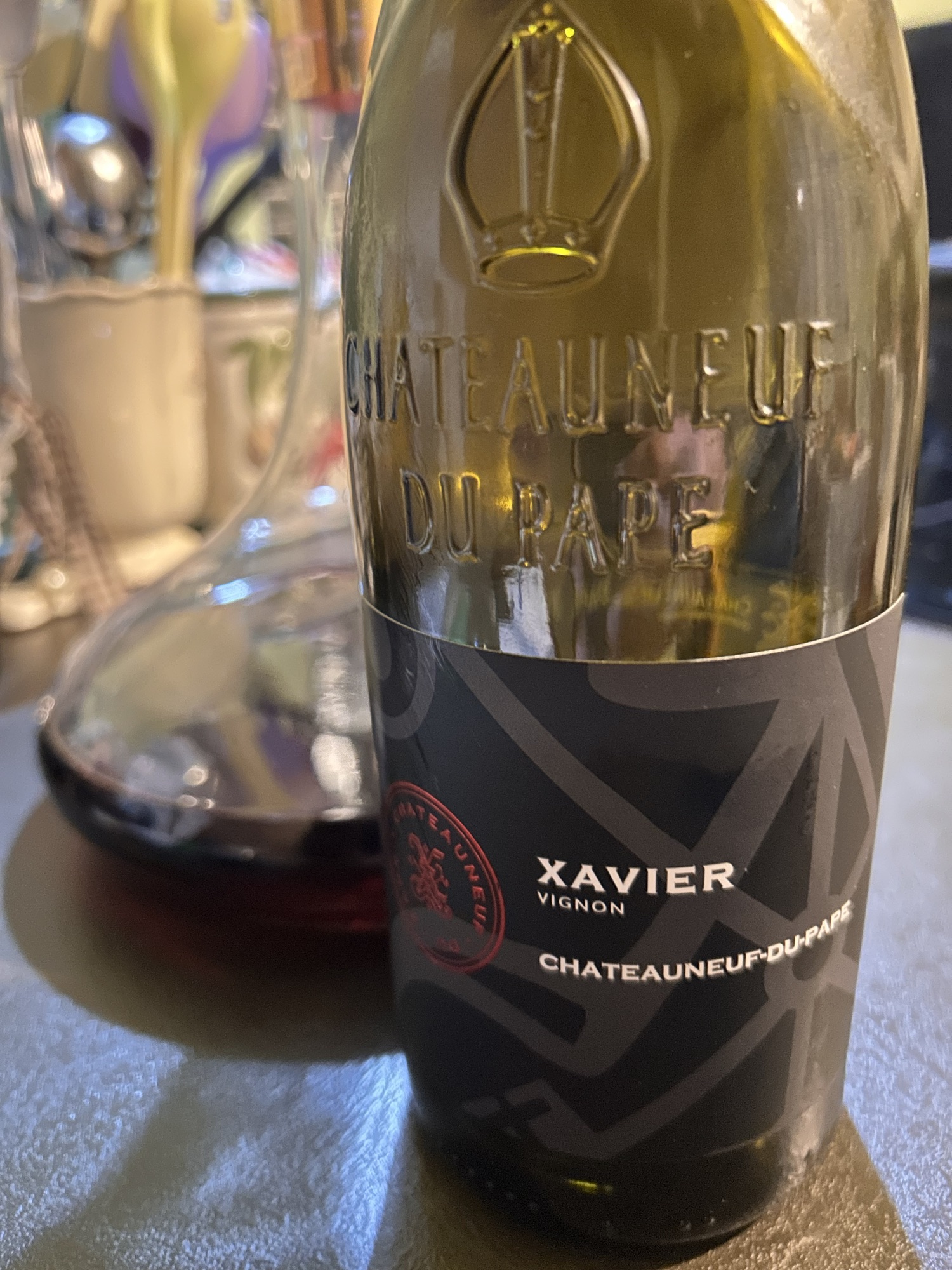
The Xavier Vignon estate is a Rhône Valley wine producer offering a varied and original range of cuvées. Xavier Vignon is an oenologist passionate about blending, who creates wines by breaking free from traditional codes. In particular, he draws on reserve wines from several vintages, rare grape varieties and innovative ageing techniques.
Xavier Vignon’s most popular wines are those that reflect his bold, creative blending style, which lets him produce original, high-quality cuvées:
The Anonyme cuvée from Châteauneuf-du-Pape, a blend of 25% Merlot, 25% Grenache Noir, 25% Mourvèdre and 25% Syrah — highly unusual for this appellation. This wine is powerful, complex and elegant, with aromas of black fruit, spices, liquorice and chocolate. Price: under €50
The Arcane Le Pape cuvée from Châteauneuf-du-Pape, a blend of 17 different vintages, from 1998 to 2016. This wine is a genuine technical feat, offering exceptional aromatic richness, with notes of candied fruit, flowers, honey, truffle and undergrowth. Price: under €100
The Réserve cuvée from Châteauneuf-du-Pape, a tribute to Champagne’s reserve wines, bringing together several earlier vintages. This wine is harmonious, fresh and fruity, with nuances of red fruit, peach, lemon and brioche. Price: under €50
With a price range between €10 and €100, Xavier Vignon’s wines suit every budget — but always with enormous pleasure in the tasting.
Xavier Vignon is a devotee of blending, which allows him to create complex, harmonious wines that express the potential of each grape variety and each terroir.
Xavier Vignon’s Châteauneuf-du-Pape “Red” is a red wine from the Châteauneuf-du-Pape appellation in the Rhône Valley. It comes from a blend of 75% Grenache Noir, 10% Syrah, 10% Mourvèdre and 5% Clairette.
We tasted the 2019 vintage:
This wine is defined by its richness, complexity and elegance, with aromas of red and black fruit, spices, tobacco, flowers and liquorice. It has a lovely ruby colour and a full, velvety palate — red fruit, chocolate, tobacco — with a long, fresh, fruity finish.
This wine can be enjoyed now or kept until 2030.
It’s a perfect match for meat dishes such as bœuf bourguignon or roast wild boar. Price: under €50
A little over a year since Wineandtech got going and, with more than 70 wines tasted in 2023 (all right, we started a bit before that…), it’s time to take stock! It was very, very hard to narrow it down to just a few references. Every wine that inspired us last year could have been in this round-up. But we’ve tried to keep the favourites, and above all the wines that produced a “Wooow, what is this wine?”
2023 was a real wine odyssey, in which we had the pleasure of tasting and discovering a plethora of captivating wines, each offering a unique sensory story. Among the many gems tasted, here are a few of the wines that particularly marked our palates and our minds during this memorable year:
Côte-Rôtie Brune et Blonde – E. Guigal
A true treasure of the Rhône Valley, the Côte-Rôtie by E. Guigal embodies the elegance and finesse of this iconic region’s wines. It was impossible not to include this estate’s wines in the selection. With its bewitching aromas of red fruit, spice and violet, this captivating red reveals a delicate structure and silky tannins on the palate. Every sip is an invitation to explore the richness and complexity of the Côte-Rôtie terroirs, while savouring the exceptional craftsmanship of the Guigal house.
Guigal’s Brune et Blonde is an emblematic Côte-Rôtie cuvée, coming from two distinct areas of the appellation: the Côte Brune and the Côte Blonde. The Côte Brune is renowned for its soils rich in iron and manganese, which yield powerful, tannic, structured wines. The Côte Blonde is characterised by its lighter, sandier soils, which produce finer, more elegant and aromatic wines.
At a price approaching €50, this wine is pricier than the ones we usually want to introduce you to, but if you can, don’t hesitate to keep a few bottles in your cellar — you won’t regret it.
We simply had to include the Guigal house in this first selection, so much did this estate amaze us with such high-quality production; we could also have mentioned their famous Côtes du Rhône red, a wine under €10 with EXCEPTIONAL value for money! The Guigal house is a benchmark, and it won’t be hard to find at your favourite wine merchant.
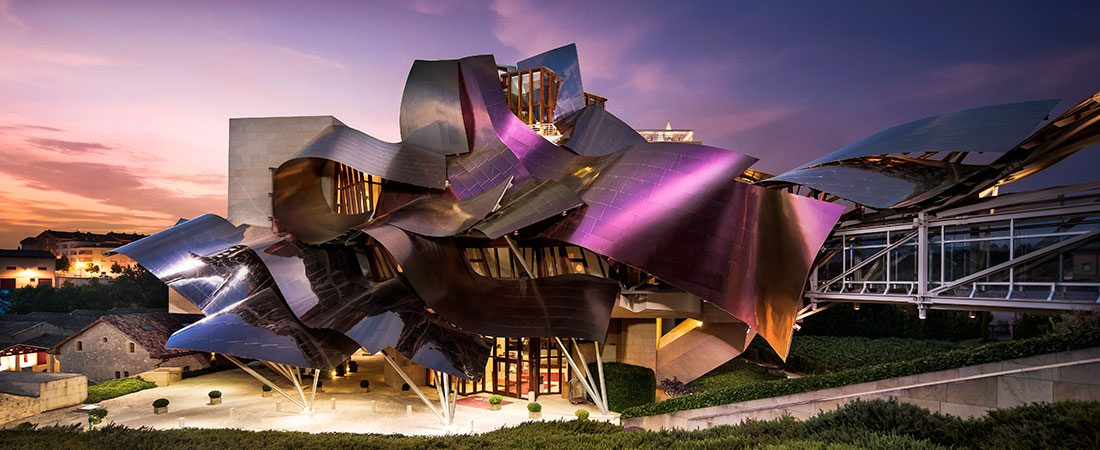
Rioja wines are renowned for their distinctive character and remarkable quality, and the Marqués de Riscal Rioja is no exception. This emblematic red, made from Tempranillo, Graciano and Mazuelo, offers an unforgettable sensory experience, with its notes of ripe fruit, vanilla and subtle oak. It reflects the region’s unique terroir and the centuries-old expertise of the Marqués de Riscal cellar, which has been producing wines since 1858.
This wine perfectly embodies the wines we look for: “characterful on the palate and light on the wallet”. At under €20, it will find its place on your table. It surprised us with the strength of its tannins and its incredible value for money. A Rioja, by definition, will be tannic and fruity, but also balanced and persistent. By heading here, you’ll find it easily.
The Château de Vaux – Molozay, “les Hautes-Bassières”, is a Pinot Noir that dazzled us with its quality and originality. This wine from the French Moselle is one of the great discoveries of 2023, and we’re delighted to have unearthed it right at the start of our Wineandtech adventure. It’s this wine that inspired us for this story, because it defies convention. It’s powerful, tannic, complex, and it reveals all the richness and diversity of Pinot Noir, at an affordable price. It’s a wine that enchants us, all the more so as it comes from a region little known for its red wines. Don’t hesitate to go to their website to order online here; the shipping costs are reasonable.
Just before summer, we tested a multitude of wines — whites, rosés, reds, sparklings. We were looking for a “go-anywhere” wine to open at the start of an aperitif and that could also go with grilled food and salads. We’d already discovered a New Zealand Sauvignon Blanc with refreshing citrus, which I’ll tell you about later, but we wanted something else, a wine out of the ordinary. Once again, the Moselle surprised us with this 8-9° wine (you read that right!), fruity, fresh and lightly sparkling. It’s smooth and pleasant on the palate, and always at a small price. This pretty blue bottle adds charm to the wine, ideal for a refreshing, summery experience: the Frizzant d’Été! You’ll have to go through the Moselle to find it, or through here.
Rimapere is a wine estate in New Zealand, in the Marlborough region, the result of a collaboration between Benjamin de Rothschild and Terry Peabody, owner of Craggy Range. The name Rimapere means “five arrows” in Maori, a nod to the Rothschild family emblem and to New Zealand culture. Rimapere is an exquisite white wine that expresses all the typicity of the New Zealand terroir. It gives off bewitching aromas of tropical fruit, lime and white flowers, which charm from the very first glass. Its vibrant freshness and lively palate make it an ideal partner for fresh seafood and summer salads. We were won over by its freshness and its exoticism, heightened by citrus notes. Even though we’ve known it for a few years, it felt essential to place it in the first WineandTech selection. At around €20, you’ll find it mainly on specialist sites such as Twil.
The Domaine Père Benoit – Brouilly is a red wine that illustrates the authenticity and tradition of Beaujolais, an emblematic wine region. This Brouilly gives off seductive aromas of cherry, blackberry and sweet spices, heralding an elegant, fine palate, with supple tannins and a persistent, slightly vanilla-tinged finish.
This wine is one of those incredible discoveries we made over the course of our visits and encounters. We wandered, we crossed paths, we chatted, and the magic happened. Located in Saint-Lager, this property has belonged to the Brunier family for six generations; the estate produces red, white and rosé wines from varieties such as Gamay, Chardonnay and Pinot Noir, on clay-limestone and granitic soils. The Brouilly is a red wine made from Gamay, from vines more than 90 years old, on the foothills of Mont Brouilly.
What we loved at this estate was meeting a family of passionate winemakers offering an exceptional wine at a reduced price. Made from century-old vines, this Beaujolais, at under €20 a bottle, is one of our “must-haves”. Don’t hesitate to order from their online shop here; other interesting references are available.
2023 was a remarkable year for wine exploration, letting us discover exceptional wines from the four corners of the globe. We travelled through the iconic wines of Bordeaux and the Rhône Valley, but also through the more surprising wines of Beaujolais, such as Brouilly, or of Châteauneuf-du-Pape. We also explored the wines of the world, with New Zealand, Spain, Italy, Portugal, Luxembourg, and our little-known treasures from the Moselle, like the Frizzant d’Été. Every tasting was an enriching experience that made us appreciate the diversity and richness of the world of wine. In 2024, WineandTech has other surprises in store for you, to help you discover even more flavours and terroirs.
Don’t hesitate to follow us on Instagram so you don’t miss any of our wine adventures.