A Blockchain is like “a very large ledger, which everyone can read freely and for free, on which everyone can write, but which is impossible to erase and indestructible.”
Jean-Paul Delahaye – Mathematician

A bit of definition to start with: it was in 2008, just before the emergence of Bitcoin, that the first “Blockchain” came into existence, primarily to accelerate the development of cryptocurrencies. This technology for storing and transmitting information, in the form of a “chain of blocks”, is known for providing secure traceability of transactions.
The name “Blockchain” is explained by the fact that transactions between network-connected users are grouped into blocks. Data sharing happens quickly and without intermediaries.
Source: Bercy Entreprises Infos
That’s all well and good, but how can blockchain technology transform the wine industry? Here are a few key points on its use:
Traceability and transparency:
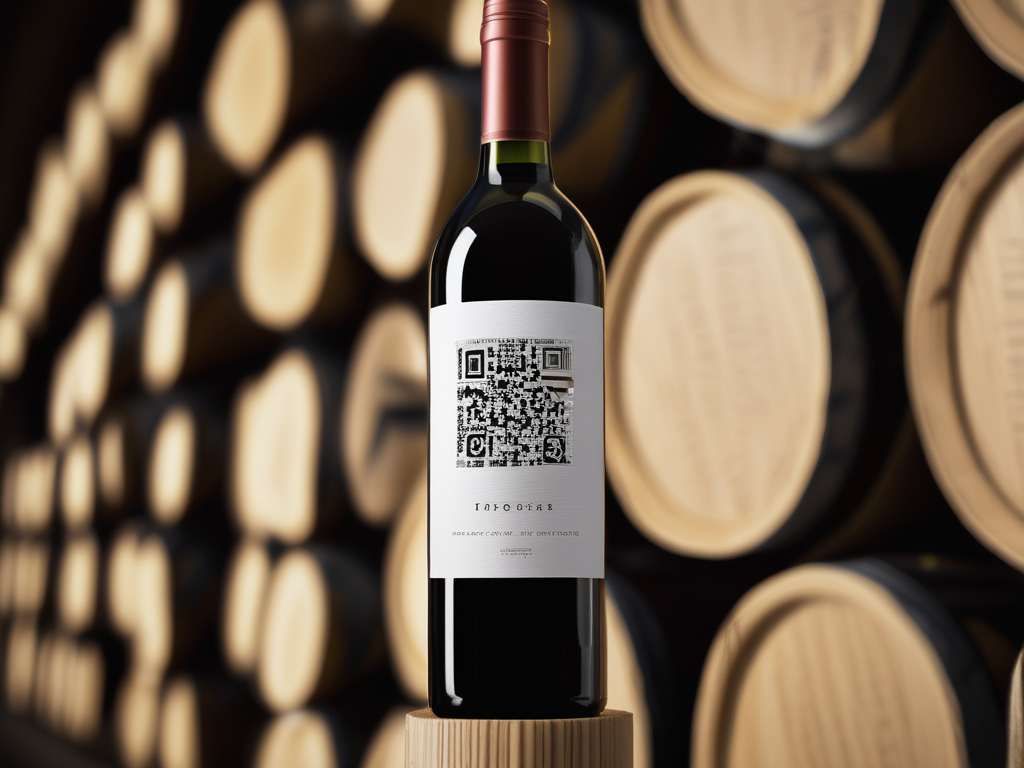
Blockchain makes it possible to track every step of wine production, from the vine to the bottle. Information such as the grape variety, geographic location, growing methods and harvest dates can be recorded securely and immutably. This lets consumers verify the authenticity and quality of the wine they buy by scanning a QR code on the bottle or an RFID tag.

Fight against counterfeiting:

Counterfeiting is a major problem in the wine industry, especially for fine wines. By using technologies such as RFID or NFC chips combined with blockchain, each bottle can be uniquely authenticated. This significantly reduces the risk of counterfeiting and reassures consumers that they’re buying a genuine product.
RFID tags can help authenticate wine bottles, reducing the risk of counterfeiting. Consumers can scan the tag to verify the product’s authenticity.
Inventory management:
Producers and distributors can use RFID readers to monitor stock in real time. This helps reduce management errors and optimise logistics processes.
RFID tags can also include sensors to monitor storage conditions, such as temperature and humidity, ensuring the wine is kept in optimal conditions.

Tokenisation and NFTs:

Blockchain also enables the tokenisation of wines, where each bottle can be represented by a digital token (NFT). This opens up new possibilities for selling and collecting wine, allowing consumers to buy, sell and trade wines securely and transparently.
Here is a concrete example of NFTs being used in the wine world:
Château Angélus, a prestigious Bordeaux estate, has launched a limited series of wine bottles linked to NFTs. Each NFT represents a unique bottle of their 2020 vintage. These NFTs guarantee the authenticity and provenance of each bottle, giving buyers immutable proof of the wine’s origin.
Buyers can also access exclusive content, such as virtual tours of the estate, videos on the winemaking process, and invitations to private events. This creates an immersive, interactive experience for collectors and wine lovers.
Supply chain optimisation:
By integrating blockchain into the supply chain, producers can improve the efficiency and profitability of their operations. Data on production, transport and distribution can be securely shared among all the players in the chain, reducing errors and fraud.

Leave a Reply