WineAndTech’

Author: Jean-Sébastien LASSERE

  • Château Arcins and the “Crus Bourgeois”

    Château Arcins and the “Crus Bourgeois”


    “The Haut-Médoc represents a safe bet in the world of wine, with its rich, full-bodied and well-balanced wines that perfectly express the region’s exceptional terroir.” – Robert Parker

    Château d’Arcins is a wine estate located in the Haut-Médoc appellation, in the Bordeaux wine region of France. It’s renowned for producing quality red wines.

    Château d’Arcins has a long history going back to the 18th century.

    The varieties grown on the estate are mainly Cabernet Sauvignon, Merlot and Petit Verdot, which are typical of the Haut-Médoc appellation.

    The wines produced by Château d’Arcins are known for their elegance and their structure. They often offer aromas of black fruit, blackcurrant and cherry, along with notes of spice and cedar from their ageing in oak barrels. Château d’Arcins wines can benefit from bottle ageing to develop more complexity and maturity.

    As a Bordeaux wine estate, Château d’Arcins is subject to the region’s own regulations and classifications, such as the Haut-Médoc Appellation d’Origine Contrôlée (AOC), which guarantees the origin and quality of the wines produced in this area.

    The robe is magnificent, a graduated but vivid red. A woody but light nose that comes to tickle your nose gently.

    On the palate it’s long and balanced, with no acidity or aggressiveness; the red fruit isn’t dominant, but it’s present.

    The length is light but persistent.

    Good value for money, for a wine I’d sum up in one word: “lightness”.

    But it’s also a chance for me to tell you about the “Cru Bourgeois” classification that Château d’Arcins holds.

    The Crus Bourgeois classification is a separate system covering the wines of the Médoc region, in particular those not included in the official 1855 Bordeaux classification. This classification has gone through several revisions and controversies over the years. Here’s an overview of how it has evolved:

    • 1932: The first Crus Bourgeois classification is created to identify quality wines in the Médoc region.
    • 2003: A major revision is undertaken, but it is ultimately annulled in 2007 because of legal disputes.
    • 2009: A new classification is introduced, with three levels: Crus Bourgeois Exceptionnels, Crus Bourgeois Supérieurs and Crus Bourgeois.
    • 2010: The 2009 classification is annulled after a legal challenge, and the Crus Bourgeois system is reformed.
    • 2018: A new classification is put in place, with two levels: Crus Bourgeois and Crus Bourgeois Supérieurs. The wines must meet strict quality and traceability criteria, assessed in regular tastings.

    It aims to showcase talented producers and to give consumers a reliable reference for choosing quality wines at more affordable prices.

    The classification is based on a rigorous selection process and on established quality criteria. Here are the main elements to bear in mind:

    1. Application: Médoc wine properties may submit their application to be considered in the classification process. This is done through a formal request to the Alliance des Crus Bourgeois.
    2. Quality assessment: The wines are assessed in blind tastings conducted by a panel of independent experts. The tasters take into account criteria such as balance, structure, aromatic expression and regional typicity.
    3. Classification decision: The wines are ranked in two distinct categories:
      • Crus Bourgeois: Properties that meet the established quality criteria are permitted to use the term “Crus Bourgeois” on their labels.
      • Crus Bourgeois Supérieurs: Among the Crus Bourgeois, a subgroup of properties that stand out still further in terms of quality is raised to the status of “Crus Bourgeois Supérieurs”.
    4. Validity and reassessment: The Crus Bourgeois classification is granted for a period of five years. At the end of that period, properties must submit their wine for a new assessment to maintain or improve their classification status.

    The Crus Bourgeois classification is overseen by the Alliance des Crus Bourgeois, which is responsible for organising the selection process, managing the quality criteria and promoting the Crus Bourgeois to consumers.
  • Pinot Noir and Rosé? Luxembourg Surprises!

    Pinot Noir and Rosé? Luxembourg Surprises!


    “The wines of the Luxembourg Moselle are jewels of the Grand Duchy, with their distinctive aromatic character, their bewitching elegance and their ability to age gracefully.” – Vins & Terroirs Authentiques

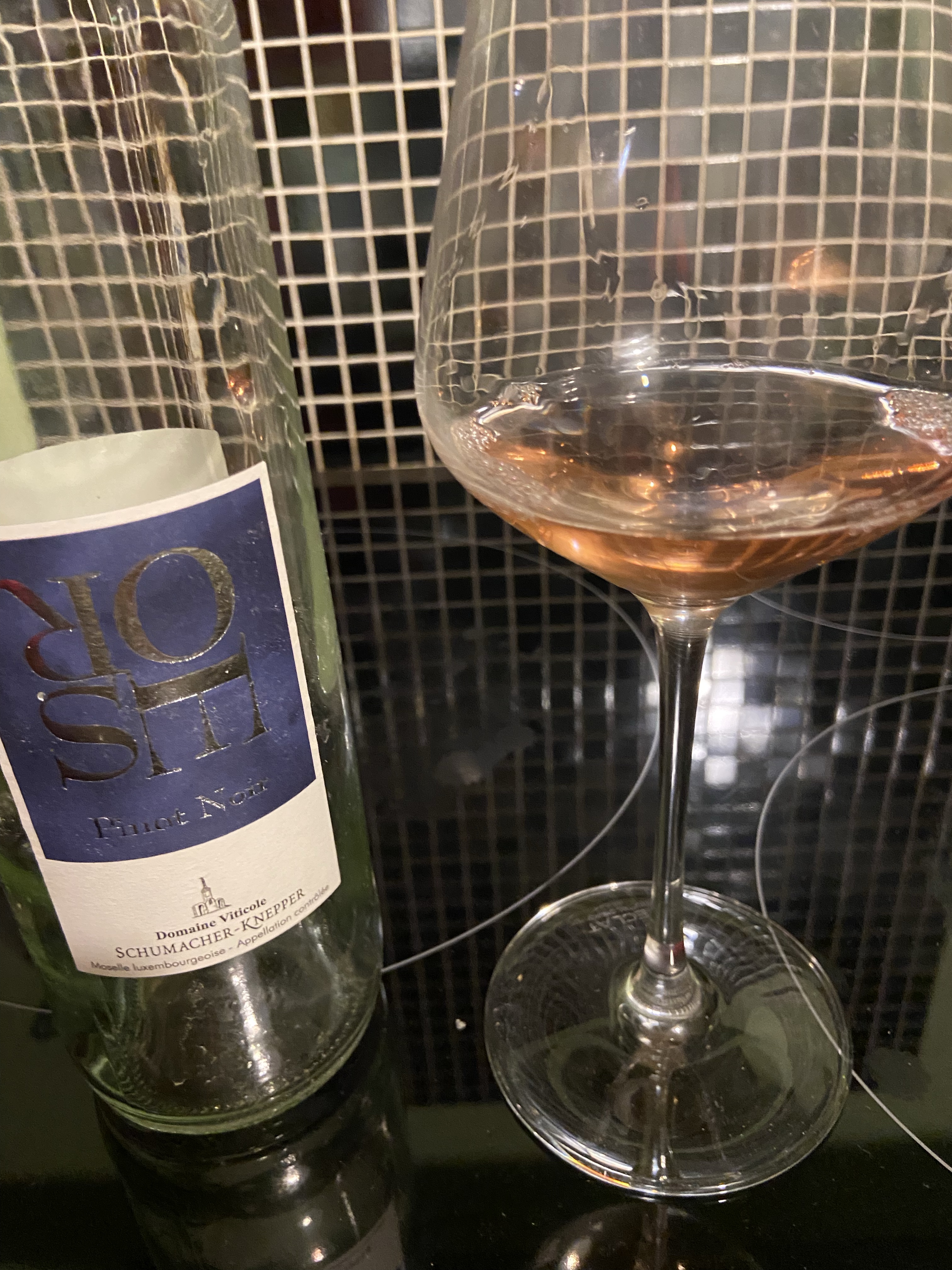
    I’ve already told you about this property, Maison Schumacher-Knepper, but today I’ve decided to share with you a tasting of their Pinot Noir Rosé, a wine much appreciated as this summer season gets under way.

    The robe is a superb salmon pink. A citrus nose, light and pleasant. On the palate it reveals the citrus already spotted on the nose — peach, grapefruit — which begins a length on the palate with a point of acidity.

    In short, a perfect summer wine! I can’t make up my mind: do we keep it a little, or drink it this year?

    I’m going to keep it a while, and we’ll talk about it again next year.

  • E. Guigal Crozes-Hermitage, a Controversial Wine

    E. Guigal Crozes-Hermitage, a Controversial Wine


    “Crozes-Hermitage is one of the most respected appellations of the Rhône Valley, offering wines of great depth, with aromas of black fruit, spice and liquorice.” – Decanter

    From the very start of this little adventure, I set myself a rule of conduct. To write honest articles that look like me, with no fuss — both about wines I’ve enjoyed and about those I haven’t.

    During the first months of writing and tasting, I concentrated mainly on safe bets that I know well and have a handle on; I felt confident and the articles came easily, one after another.

    After that period of confidence, I opened up and decided to venture into grape varieties and countries unknown to my palate. Some wonderful encounters, and tastings that stay with you.

    After a quick search, I decide to taste a white Guigal! E. Guigal — I’d announced it in a previous post: I’m a fan of this house and its production. We’re going for a Crozes-Hermitage; lovely reviews of this wine scroll across my screen and help make up my mind.

    Right, let’s taste!

    A lovely pale, mineral robe — astonishing purity. A fruity, fresh, pleasant nose… I amuse myself picking out citrus with scents of peach and mango.

    In we go! Very mineral from the outset, almost dry but fresh; it’s soft, agreeable — and then the wood quickly asserts itself and there it turns. My palate isn’t used to it: the power of that aroma makes me think of liquorice. That flavour will dominate right through to the end.

    I have to admit this tasting threw me. It’s a subtle balance, and I struggle to hold on to a feeling of satisfaction.

    I hesitated for a long time before writing this article; as I’ve said before, I’m a fan of the Guigals. It’s a peculiar feeling, something like disappointment.

    But there it is…

    I don’t regret this tasting; I even have a particular memory of it that has stayed with me. As I often say to people who have me taste wine, I try to be fair most of the time — these wines are always lovely discoveries. It’s rare, but from time to time I explain (in nice words, all the same) that I didn’t entirely enjoy a wine; I try to be precise and to bring out the positive points as well as those I liked less. This wine falls into that category.

    So I’m giving it a new WordPress category, created for the occasion: “unsettling”.

    But I’ll let you be the judge!

    Don’t worry, this won’t stop me being a fan and holding E. Guigal’s production in high respect. I fully intend to give Crozes-Hermitage another chance and try a different vintage.

    Go on! Step out of your comfort zone, because every tasting is an adventure!

  • Number 2: Maucaillou’s Second Wine, of Very Great Quality

    Number 2: Maucaillou’s Second Wine, of Very Great Quality

    “Moulis-en-Médoc produces wines of character, combining power and finesse, and offering excellent value for money.” – Decanter

    Château Maucaillou is a wine estate located in the Médoc region of France. It sits in the commune of Moulis-en-Médoc, in the Gironde département. The estate has a long history going back to the 17th century.

    The property makes its wines from classic Bordeaux varieties such as Cabernet Sauvignon, Merlot, Cabernet Franc and Petit Verdot.

    The estate covers around 90 hectares, of which 75 are planted with vines. The vines benefit from a quality terroir, with soils of gravel, clay and limestone. The harvest is picked by hand, which allows for rigorous selection of the grapes.

    The château itself is a magnificent building, typical of Bordeaux architecture. It’s surrounded by gardens and vines, offering a picturesque and peaceful setting; personally, I love crossing the railway line and strolling in front of the gardens.

    I’ll point you to the website if the history of this building interests you: https://www.maucaillou.com/maucaillou/le-chateau-maucaillou/

    What sets this château apart is its museum and its cellar tour — few estates in the Médoc offer this kind of experience. You can wander around and enjoy the wine with the guide’s advice, for just a few euros. You can normally turn up without booking, but a quick phone call the day before is advisable.

    I’m usually very critical of “second” wines. I’ve often been disappointed: you get the impression the big brother is so imposing that it commandeers the best vines and takes all the cellar team’s attention. What’s more, in the past the Maucaillou estate spread itself rather thin, creating a large number of wines that weren’t always successful.

    With this No. 2, Château Maucaillou has made a wine that has forged its own identity. It’s very different from its elder, naturally, but it must be pampered by its parents. You notice a strength, a care in its design — it’s impossible not to feel that great quality.

    Its robe is intense, a lovely ruby at the surface.

    Its nose is marked by wood and spice; powerful, with the wood clearly standing out. On the palate it’s round, and the aromas of wood, blackcurrant and vanilla are in subtle balance — it’s really very pleasant. The tannins are powerful, granted, but everything fits together perfectly. Even the length is a pleasure. For me, this 2019 is already ready to drink, but it can stay a few more years in your cellar.

    At under €15, this wine offers value for money that’s almost impossible to find in the Médoc at that price! No need to hesitate — it deserves a place in your cellar.

  • The She-Wolf of Alsace

    The She-Wolf of Alsace

    “The wines of Alsace are a dance between tradition and innovation, where respect for the terroir meets the winemaker’s creativity.” – Olivier Humbrecht

    Founded in 1902, the Wolfberger house is one of the oldest winegrowing cooperatives in the Alsace region of France.

    It owns more than 900 hectares of vineyards, spread across the region’s finest terroirs, notably at Eguisheim, Pfaffenheim and Rouffach.

    Maison Wolfberger offers a wide range of wines, from whites to reds, taking in rosés, Crémants d’Alsace and late-harvest wines. The region’s typical varieties — Riesling, Gewurztraminer, Pinot Gris and Pinot Noir — are carefully grown and vinified to express all their complexity and character.

    La Louve, in Pinot Noir! This wine takes its name from the legend of the founding of the town of Eguisheim, home to part of Maison Wolfberger’s vineyards.

    La Louve in Pinot Noir is a versatile wine that can be enjoyed on its own or with dishes such as light meats, roast poultry, sautéed mushrooms or soft cheeses.

    All in all, Maison Wolfberger’s La Louve in Pinot Noir is a refined red that reflects the quality of the wines produced in Alsace, as well as the house’s know-how and its commitment to crafting exceptional wines.

    My tasting of this 2020:

    A nose of wood and red cherry fruit; I make out an aroma of pear.
    On the palate I seem to detect blackcurrant and vanilla, with a lovely, heightened taste of grenadine.
    Through the length, the pomegranate fruit comes to dominate, leaving little room for a few spikes of acidity.
    A lovely balance! In short, a benchmark Alsace wine — a Wolfberger.

    At under €10, the value for money is exceptional, and you shouldn’t be put off by its youth: it can proudly grace your table this very year.

  • Which Glasses for Which Uses?

    Which Glasses for Which Uses?

    It’s often worth remembering that the glass, and its shape, matter when tasting a wine.

    Here’s a nice article (in French) that explains the basics:

    You may already have noticed, but there are several types of wine glass. In truth, there are countless numbers of them, every maker…

    Service : Quels verres pour quels usages ?
  • American Excellence?

    American Excellence?

    Schrader Cellars Beckstoffer To Kalon Vineyard RBS Cabernet Sauvignon 2012, Napa Valley, California

    It is time for my #FridayCabernetfix. This is a wonderful Cabernet Sauvignon from Napa Valley. Full bodied, smooth and elegant, with a pretty nose. …

    Schrader Cellars Beckstoffer To Kalon Vineyard RBS Cabernet Sauvignon 2012, Napa Valley, California
  • Châteauneuf-du-Pape and Its Coat of Arms

    Châteauneuf-du-Pape and Its Coat of Arms

    “Coats of arms are the heraldic symbols that capture the essence and the history of an entity, be it a family, a region or a community. They are the guardians of traditions and values that transcend generations.”

    The coat of arms of Châteauneuf-du-Pape generally shows interlaced keys, symbolising the keys to Saint Peter’s kingdom, in reference to the papacy and the village’s history.

    The Châteauneuf-du-Pape coat of arms may also depict a medieval castle with a pope wearing a three-crowned tiara, in reference to the region’s history. In the 14th century, the popes established their residence in Avignon, close to Châteauneuf-du-Pape, and played an important role in the development of local winegrowing.


    The embossing of the coat of arms on Châteauneuf-du-Pape bottles dates back to the 1930s. It was at that time that France’s National Institute of Origin and Quality (INAO) was created to regulate and protect appellation wines. The INAO granted Châteauneuf-du-Pape its appellation d’origine contrôlée (AOC) in 1936, making it one of the first AOCs in France.

    The use of the coat of arms on bottles was introduced to distinguish the wines of Châteauneuf-du-Pape from other wines produced in the Rhône region. The arms, showing the castle and the pope, were chosen to reflect the region’s history and its link with the Avignon popes.

    Since then, embossing the coat of arms on Châteauneuf-du-Pape bottles has become standard practice to guarantee the origin and compliance of the wines produced in this renowned appellation.

    Beyond Châteauneuf-du-Pape, there are other wine appellations that use coats of arms on their bottles.

    Here are a few examples — though they’re much rarer to find than in Châteauneuf, where the bottles are marked systematically.

    1. Hermitage (Rhône Valley, France) sometimes uses arms depicting a hermit, in reference to the legend of the hermit who lived on the hill of Hermitage.
    2. Rioja (Spain): the Rioja appellation often uses a coat of arms on its bottles, notably showing historic armorial bearings and symbols linked to Spanish culture.
    3. Ribera del Duero (Spain): wines from the Ribera del Duero appellation may sometimes display arms depicting a bunch of grapes, a bull or heraldic symbols.
    4. Saint-Émilion (Bordeaux, France) often uses coats of arms on its bottles, showing heraldic symbols such as lions, escutcheons and crowns.
    5. Sauternes (Bordeaux, France), known for its sweet wines, may carry arms depicting symbols such as bunches of grapes, bees or heraldic elements.
    6. Barolo (Piedmont, Italy), renowned for its powerful reds, sometimes uses coats of arms on its bottles, depicting symbols such as crowns, escutcheons and lions.
    7. Chianti Classico (Tuscany, Italy) often uses arms on its bottles, showing symbols such as roosters, bunches of grapes and heraldic escutcheons.
    8. Douro (Portugal) may use coats of arms on its bottles, depicting symbols linked to the wine region and to the history of Port.
    9. Barbaresco (Piedmont, Italy) sometimes uses arms on its bottles, showing heraldic symbols and elements linked to the region.

    A special nod to the Tavel appellation, proud of its majestic “T”, set off by a shield proud to carry the colours of this exceptional rosé.

  • Italy: Tuscany — Promis, Nothing but Pleasure

    Italy: Tuscany — Promis, Nothing but Pleasure

    “The wines of Tuscany are wines that reflect the beauty and elegance of this region, and that have an extraordinary capacity for ageing.” – Wine Spectator

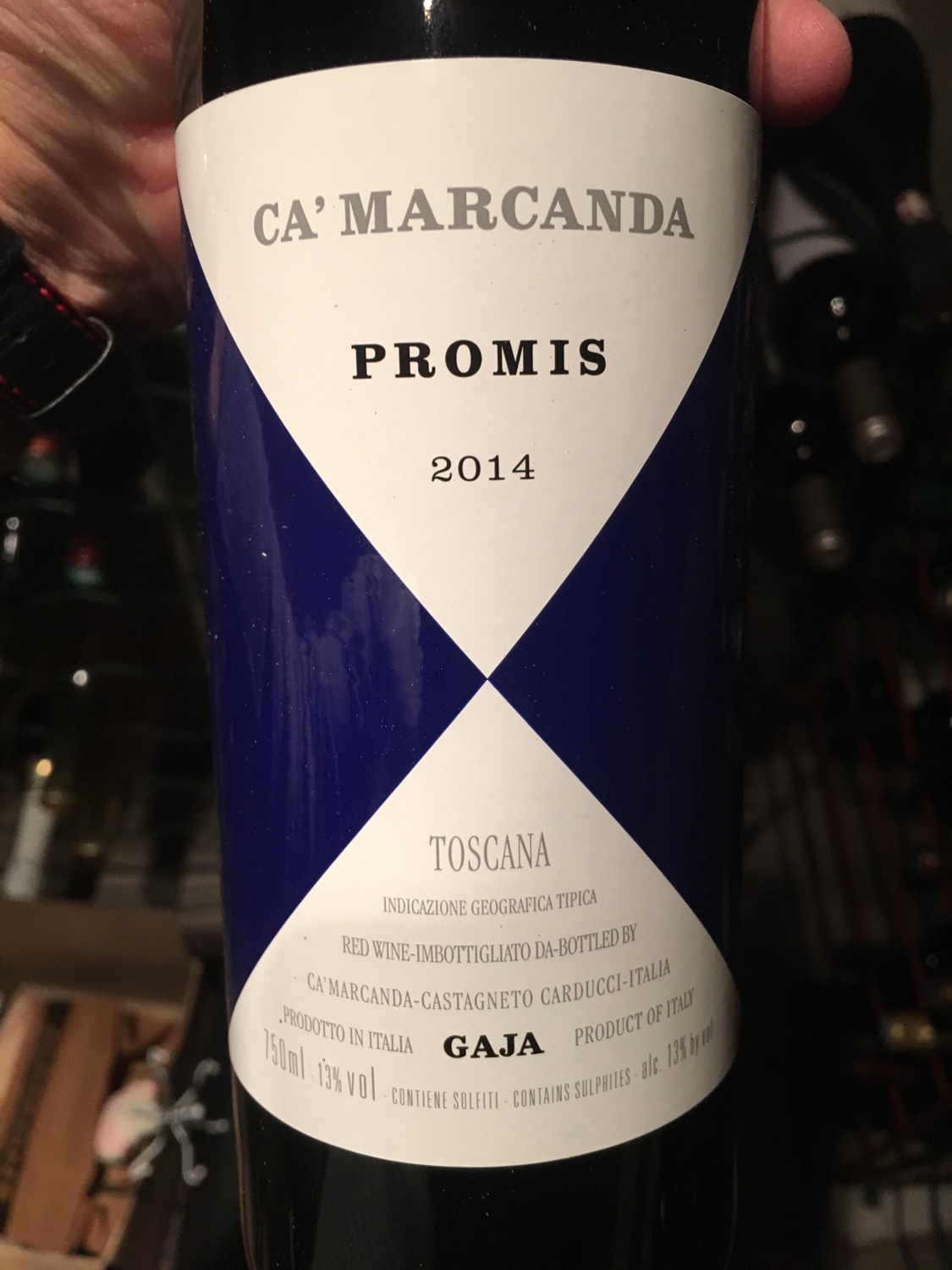
    Promis is produced by the Ca’Marcanda estate, located in the Bolgheri region of Tuscany. This estate belongs to the famous Gaja family of wine producers, who have a long winemaking tradition in Italy.

    Ca’Marcanda was founded by Angelo Gaja in 1996, with the aim of producing wines that reflect the unique terroir of the Bolgheri region. The estate covers around 150 hectares of vineyards, planted mainly with Bordeaux varieties such as Cabernet Sauvignon, Merlot, Cabernet Franc and Petit Verdot.

    Ca’Marcanda is known for producing wines of great quality, combining complexity, elegance and power. Besides Promis, the estate also produces several other prestigious wines, such as Magari, Camarcanda and Ca’Marcanda Vistamare.

    The 2019 vintage of Ca’Marcanda’s Promis is considered an excellent vintage in Tuscany. This wine is a blend of three varieties: Merlot, Syrah and Sangiovese.

    On the nose, Promis 2019 offers intense aromas of red and black fruit, such as cherry, blackberry and plum, along with notes of sweet spice and vanilla from its ageing in French oak barrels.

    On the palate, the wine is rich, powerful and structured, with firm tannins and a balanced acidity. The red and black fruit flavours are confirmed on the palate, along with notes of liquorice, tobacco and dark chocolate.

    Ca’Marcanda’s Promis is often considered a wine for keeping, one that can be cellared for several years and that improves with age. It’s recommended to serve Promis 2019 at a temperature of 16 to 18 degrees Celsius, and it pairs very well with rich meat dishes, such as roasts and game, as well as with mature cheeses.

  • Can Le Télégramme Rival the Very Best?

    Can Le Télégramme Rival the Very Best?

    “Châteauneuf-du-Pape is an exceptional wine, one that deserves to be tasted with respect and admiration, like a masterpiece of nature and of man.” – Robert M. Parker Jr., American wine critic and founder of The Wine Advocate.

    I knew Châteauneuf, naturally, but it was a friend who passed on his passion for these wines. Châteauneuf-du-Pape has barely 2,500 inhabitants; I like to compare it to Saint-Émilion, a small town that produces wines known the world over!

    I’ve chosen here to tell you about a lovely discovery: Le Télégramme, from the Châteauneuf-du-Pape appellation, produced by Domaine du Vieux Télégraphe. The wine’s name refers to the estate’s history, as it was once used as a telegraph station.

    It’s the result of a skilful blend of different varieties typical of the region, notably Grenache, Mourvèdre, Syrah and Cinsault. The grapes are hand-harvested and the wine is aged in oak barrels for around 10 months.

    The result is a rich, powerful red, with aromas of black fruit, spice and garrigue. On the palate the wine is full-bodied with firm tannins and a long, persistent finish. This wine can be enjoyed young, but it’s also known to age remarkably well in the cellar.

    Le Télégramme is considered one of the finest wines of Châteauneuf-du-Pape, an appellation renowned for its rich and complex reds. Domaine du Vieux Télégraphe is also famous for its other wines, notably the traditional Châteauneuf-du-Pape, which is even more complex and elegant than Le Télégramme.

    My tasting of the 2019 vintage:

    A woody nose right from the start with a marked red fruit — blackcurrant — and a little vanilla at the end.
    You’ll note a lovely brownish colour along the upper edges; it stays a dark red. No doubt about it, it shows its colours from the outset.

    This generous wine has a length marked by wood; the red fruit isn’t omnipresent, but personally I’m fond of that. The wine is round and powerful. This one won’t disappoint me — like every Châteauneuf I’ve had the chance to drink. What consistency in the quality of these wines!

    This wine goes beyond €30 a bottle, which is no small budget, I’ll grant you. All the same, if you have the opportunity to keep it in your cellar, don’t hesitate.

    What’s more, there’s no need to wait: this 2019 is already ready to drink.